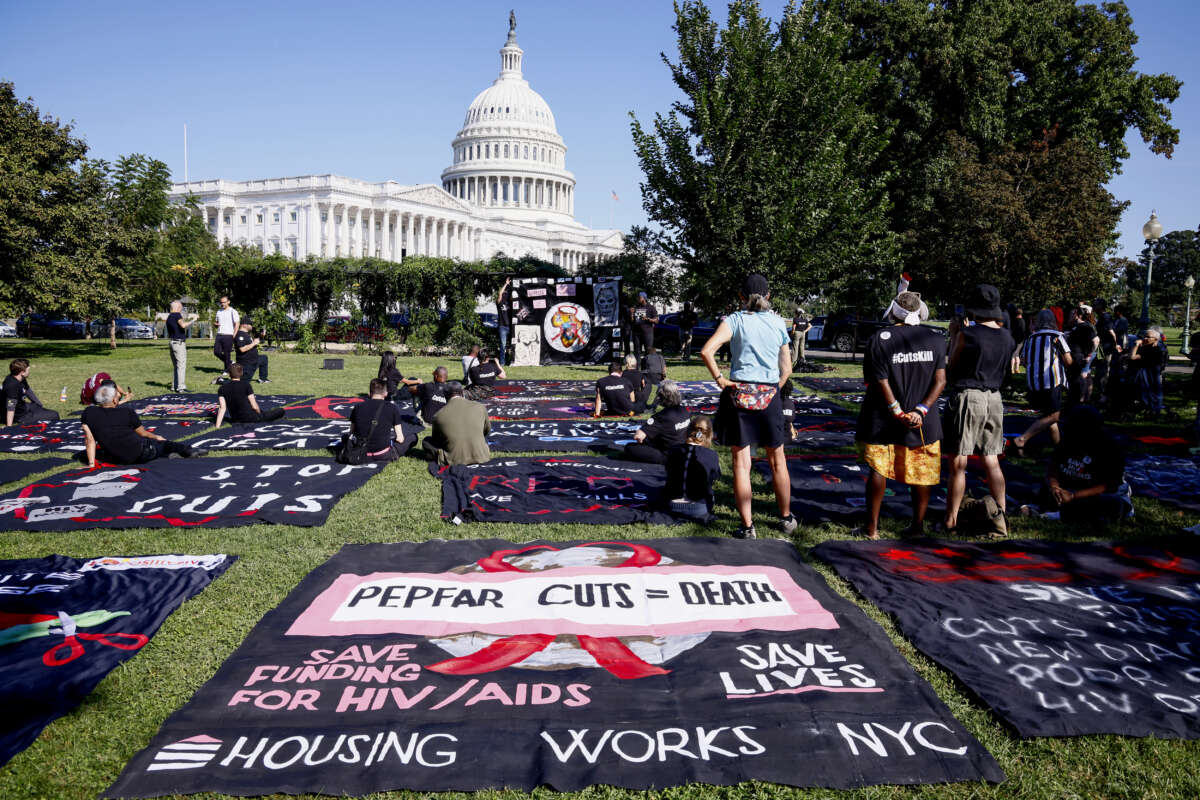
URGENT UPDATE: Key HIV programs in the United States are facing significant funding cuts that could devastate treatment and prevention efforts for millions of Americans living with HIV. Public health experts warn that these developments, driven by the Trump administration, threaten decades of progress and could lead to a public health crisis.
Authorities confirm that funding for pivotal federal programs is on the chopping block, just as medical advancements are making HIV treatment more accessible than ever. The Centers for Disease Control and Prevention (CDC) is reportedly tasked with dismantling its HIV prevention division, raising alarms among health officials about the implications for nationwide treatment and prevention strategies.
Researchers are particularly concerned as they witness the potential for groundbreaking advancements, like a new twice-yearly dose of PrEP (pre-exposure prophylaxis), stall due to decreased funding and support. This new treatment, approved by the Food and Drug Administration earlier this year, promises to significantly improve access to HIV prevention, but affordability remains a critical issue.
In a shocking move, the Trump administration has proposed slashing nearly $2 billion from essential HIV programs, including the Ryan White HIV/AIDS Program, which serves as a safety net for individuals losing healthcare coverage. With approximately 40% of Americans living with HIV relying on Medicaid, these cuts could jeopardize their access to critical medical services.
As new paperwork requirements are set to take effect in 2027, advocates fear that many individuals will struggle to renew their coverage, leaving them vulnerable to health crises. “For HIV-positive people right now, I think this is a very depressing moment,” said Perry Halkitis, dean of the Rutgers School of Public Health. “All of the energy and all of the excitement we’ve had about bringing an end to the AIDS epidemic … has just completely had the wind taken out of its sails.”
Health experts express deep concern that without the CDC’s funding, critical monitoring of new HIV cases and large-scale testing initiatives will collapse, leading to unchecked outbreaks. “There will be more consequences. There will be people who get diagnosed later, perhaps already with opportunistic infections,” warned Jeremiah Johnson, executive director of PrEP4All. “This threatens to undermine everything.”
The proposed cuts come amid a broader political climate that is increasingly hostile to public health initiatives, particularly regarding HIV prevention. Experts are alarmed that the White House is prioritizing budget cuts over the health and well-being of vulnerable populations, including transgender individuals who are at a higher risk for HIV.
“This is not just about funding; it’s about lives,” stated Lindsey Dawson, director of LGBTQ health policy at KFF. “If trans people are too afraid to be honest with their doctor, then they won’t access the treatments they need.”
As public health professionals grapple with these alarming changes, they emphasize the urgent need for advocacy and support to protect vital HIV services. “Ending the HIV epidemic is still possible, but the likelihood of a resurgence is high if these services are cut,” Johnson concluded. “We don’t want to learn the hard way what happens when you take that away.”
The implications of these funding cuts extend not only to the individuals living with HIV but to the entire healthcare system, which is already under strain. Experts fear that without adequate support, millions could face dire health consequences that could have been preventable.
As this situation develops, advocates continue to call for immediate action to restore funding and ensure that vital HIV prevention and treatment programs remain operational. The future of public health hangs in the balance, and the time for action is now.