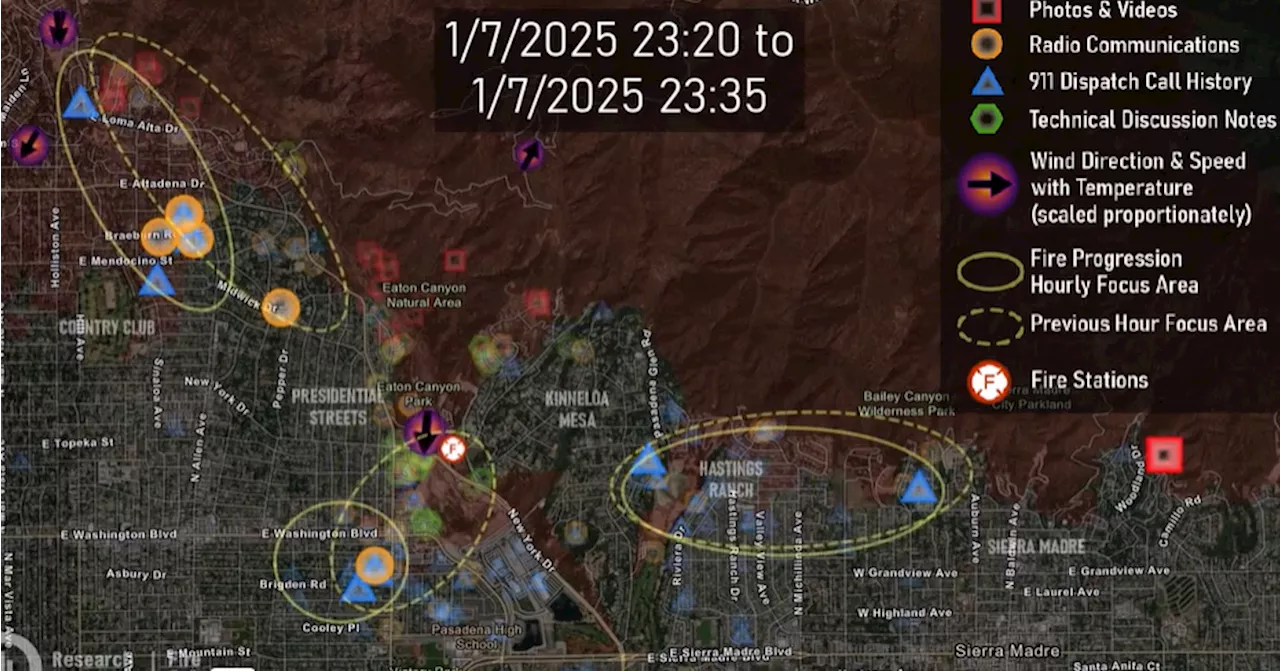
UPDATE: A comprehensive report detailing the devastating January 2025 wildfires in Southern California has just been released, exposing critical failures in emergency response. Commissioned by the Office of the Governor of California, the 350-page analysis focuses primarily on the Eaton and Palisades fires, highlighting a timeline of events and the overwhelming challenges faced by fire agencies.
According to the report from the UL Research Institutes, the analysis draws on data from 911 calls, resident documentation, and real-time weather statistics. It confirms that the Southern California region is plagued by “persistent conditions conducive to wildfires,” exacerbated by drought-stricken vegetation and rapid, wind-driven fire spread.
The report illustrates that on January 6, 2025, just one day before the fires ignited, the National Weather Service issued a Particularly Dangerous Situation Red Flag Warning. This alert, reserved for extreme conditions, warned residents of a high risk of property damage and loss of life. The fires, which originated in the foothills north of populated areas, were fueled not just by natural vegetation but by structural elements and household contents, leading to catastrophic losses.
As the report states, “the responding fire and emergency service agencies in this area were overwhelmed” by the simultaneous severity of multiple fires. The multi-agency response was critically hindered by fallen trees and utility poles that blocked evacuation routes, alongside dangerous wind conditions that grounded aircraft and damaged water distribution systems.
The report emphasizes the alarming impact of changing land use patterns. Native vegetation has been increasingly replaced by non-native, fire-prone species, creating highly flammable conditions. The analysis warns that these shifts have led to more severe wildfires across the Santa Monica and San Gabriel Mountains.
Moreover, the report notes the remarkable response of ordinary citizens and first responders, stating, “Losses of life and property occurred despite the herculean efforts… to save countless lives, homes, and businesses.”
Looking ahead, the upcoming Phase Two of the report promises to provide in-depth details on prevention and preparedness measures, including evacuation and fire suppression strategies. As the situation develops, residents are urged to stay informed about fire safety protocols in light of these alarming findings.
This urgent report sheds light on the dire need for improved wildfire management and preparedness in California, as the state braces for future fire seasons under increasingly volatile conditions.
For more details and to stay updated, follow our coverage on this developing story.