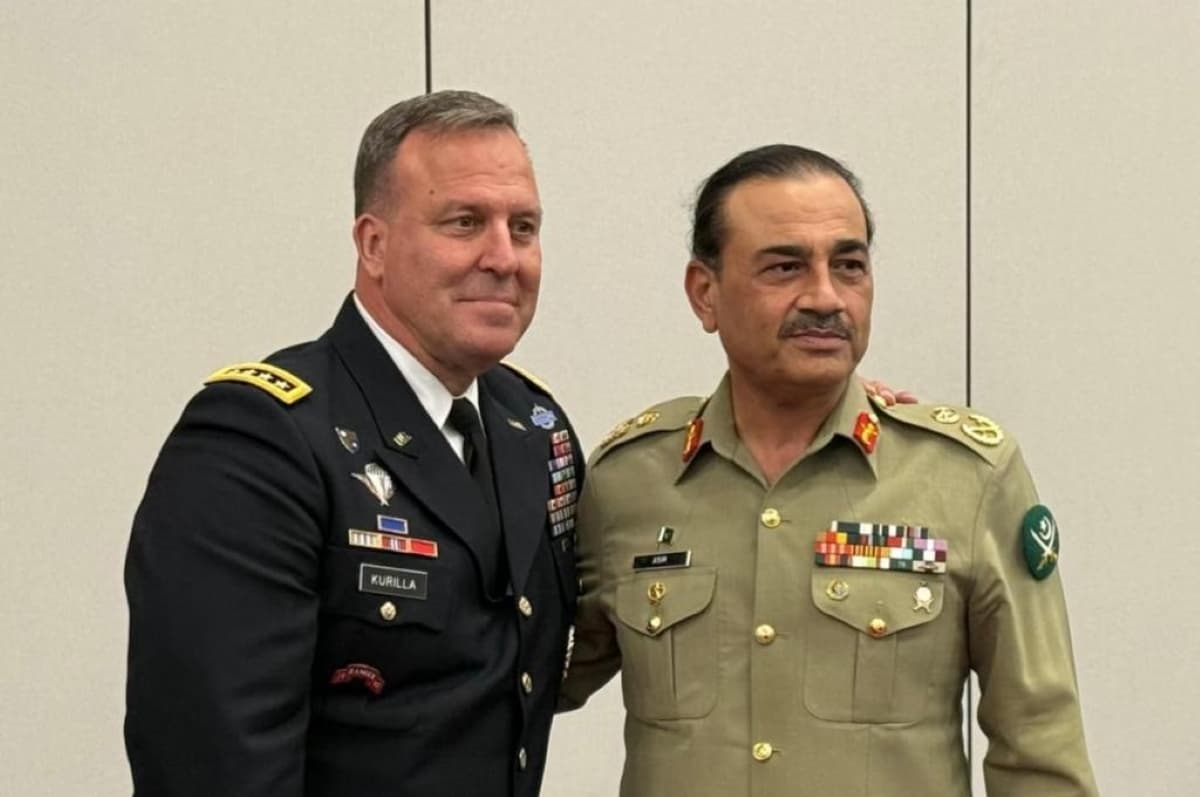
BREAKING NEWS: In a dramatic shift of power, Pakistan’s military chief, Field Marshal Asim Munir, is consolidating authority amidst renewed ties with the United States. This urgent development raises concerns about Pakistan’s commitment to counter-terrorism efforts and its alignment with extremist groups.
Just last Thursday, the Pakistani Parliament passed a sweeping constitutional amendment, enhancing Munir’s power and granting him lifetime immunity from arrest or prosecution. This legislation marks a significant step towards military dominance in Pakistan, a nation historically characterized by an army-led governance structure.
The timing is critical. As the U.S. increases engagement with Pakistan, including two recent visits by Munir to the White House, the implications for regional security are profound. Washington appears eager to strengthen military and economic ties, potentially sidelining its relationship with India.
Reports indicate that while the U.S. seeks a reliable partner in the fight against terrorism, Pakistan’s actions tell a different story. Following India’s Operation Sindoor aimed at dismantling terror bases within Pakistan and Pakistan-Occupied Kashmir, intelligence sources suggest Islamabad has actively supported terrorist groups. Allegations surface that Islamabad facilitated the relocation and resourcing of groups like Jaish-e-Mohammed, which has openly conducted recruitment rallies in Khyber Pakhtunkhwa under police protection.
In a troubling pattern, the Jaish-e-Mohammed terror outfit held a recruitment rally on September 14, 2023, where the group’s regional leader praised Munir for military support during funerals of terrorists killed by India. The ramifications of such actions are dire, with Indian authorities linking a recent car bomb explosion near Delhi that killed 13 people directly to Jaish-e-Mohammed.
Adding to the complexity, Pakistan’s strategic influence is waning. Once viewed as a key geostrategic ally, the country’s reliance on the Taliban for regional stability is diminishing. The Taliban now pursue their national interests, significantly reducing Pakistan’s leverage. On October 9, 2023, Pakistani airstrikes targeted positions of the Tehreek-e-Taliban Pakistan in Kabul, coinciding with Afghanistan’s foreign minister’s first official visit to India, highlighting Islamabad’s escalating concerns about Taliban-India relations.
The consolidation of power by Munir reflects not strength, but rather an atmosphere of insecurity within Pakistan’s ruling elite. As India emerges as a technological superpower and a pivotal player in South Asian politics, Pakistan’s retreat into authoritarianism risks severe economic consequences and potential fragmentation.
With growing Pashtun resistance to Punjabi dominance and the rise of Baloch separatism, Pakistan faces internal challenges that could threaten its unity. The Taliban’s shift away from being a controlled proxy for Islamabad only exacerbates this crisis.
As the U.S. recalibrates its strategy in South Asia, prioritizing Pakistan over India could prove detrimental. The reality is clear: Pakistan’s ability to influence regional dynamics is diminishing, while India’s power continues to surge.
The world watches closely as Pakistan grapples with these developments, raising critical questions about the future of its governance, regional stability, and international alliances. As this situation unfolds, the implications for global security and diplomacy remain profound and urgent.