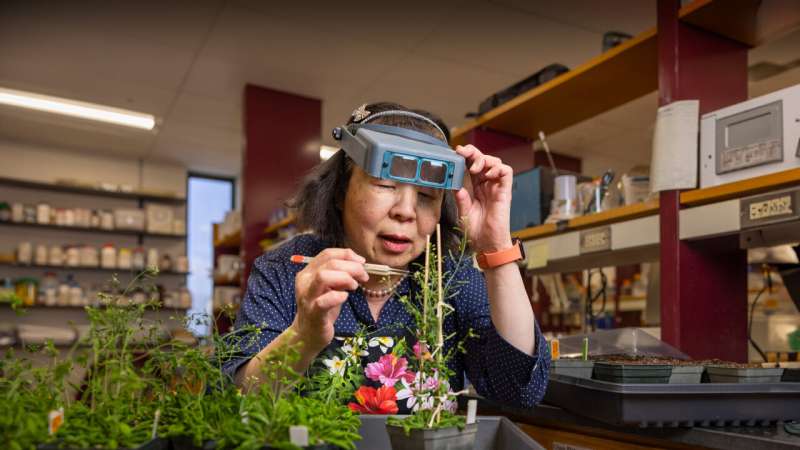
A significant advancement in plant breeding research may lead to the development of new crop species, according to a study published in the journal Science on November 21, 2025. An international team from the University of Massachusetts Amherst and Shandong Agricultural University has made strides in understanding how flowering plants interact with pollen from different species, a process critical for food security and agricultural innovation.
The research focuses on a phenomenon known as “interspecific incompatibility” (ISI), which prevents pollen from certain species within the same plant family from fertilizing one another. This mechanism is essential for avoiding unwanted hybrids, such as a cross between broccoli and kale, which the researchers humorously dubbed “kale-occoli.” The study aims to shed light on how plants can recognize and reject pollen from less closely related species while promoting breeding strategies that could enhance crop traits.
Alice Cheung, a Distinguished Professor of Biochemistry and Molecular Biology at the University of Massachusetts Amherst, led the research effort. She pointed out that while many plants have developed “self-incompatibility” to prevent inbreeding, the molecular workings of ISI remain poorly understood. Cheung noted that this knowledge gap limits the potential for breeding improved crops that can contribute to global food security.
The team focused on plants from the Brassicaceae family, which includes widely consumed vegetables such as cabbage, broccoli, and canola. Their research revealed a complex interaction during the pollination process, where plants employ a series of chemical signals to communicate. The key protein involved in this process is called SRK, which recognizes a specific chemical signal known as SIPS on pollen from other species. When SRK encounters SIPS, it triggers a reaction that leads to the production of a highly reactive chemical, ROS (reactive oxygen species), effectively blocking the pollen from entering the female reproductive organ.
In addition to elucidating these mechanisms, Cheung and her colleagues proposed a novel breeding strategy to overcome the incompatibility barriers between different Brassicaceae species. This approach could accelerate the development of new crop varieties with desired traits, ultimately benefiting agricultural productivity.
The implications of this research extend beyond just the Brassica family. As global food demands continue to increase, understanding the intricacies of plant breeding will be crucial for developing resilient crop varieties that can thrive under changing environmental conditions.
The findings from this study represent a critical step forward in plant biology, offering hope for advancements in agricultural practices. The insights gained into how plants communicate during pollination can pave the way for innovative breeding techniques that enhance crop yield and quality.
For further details, refer to the original study: Yunyun Cao et al, “Pan-family pollen signals control an interspecific stigma barrier across Brassicaceae species,” Science (2025). DOI: 10.1126/science.ady2347.