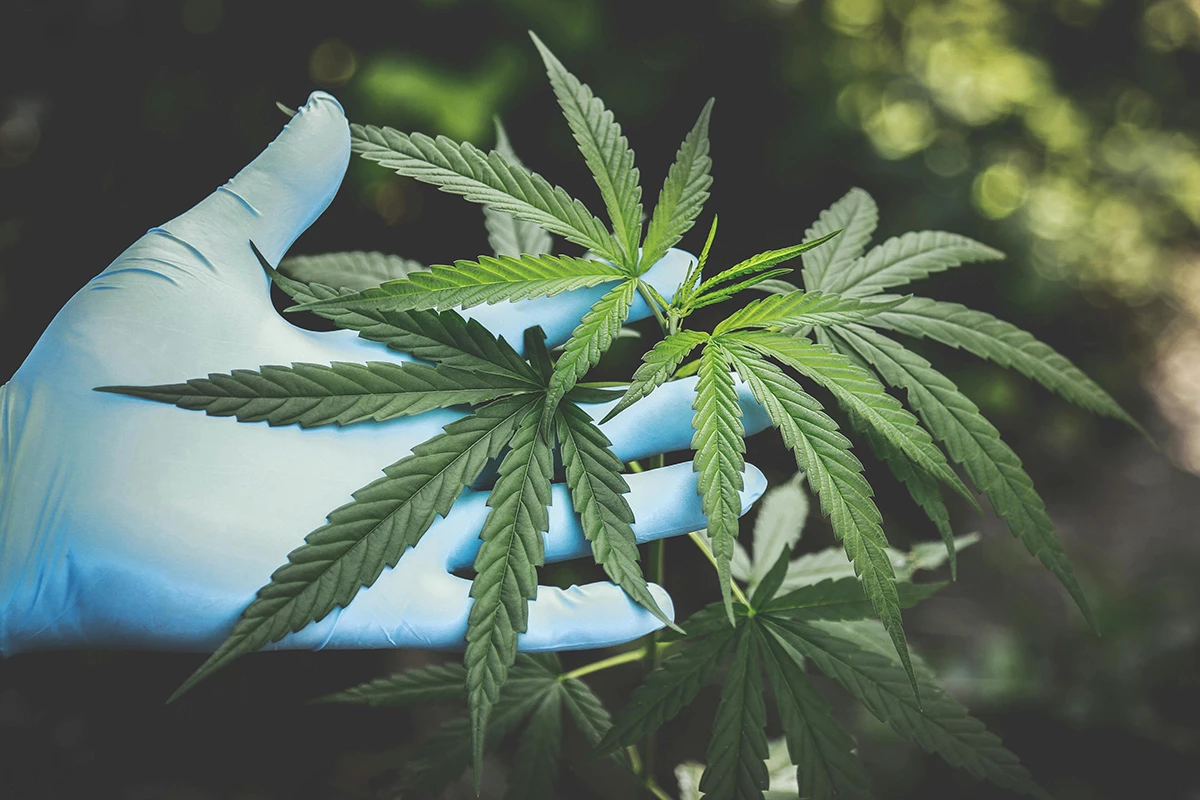
A team of biologists from The University of Adelaide has introduced a groundbreaking scanning device capable of accurately determining the potency of cannabis plants before harvest. This technology is particularly vital for medical cannabis growers who must adhere to strict regulations concerning the levels of Tetrahydrocannabinol (THC), the psychoactive compound responsible for the intoxicating effects of cannabis.
Understanding the THC content is essential for both medical cultivators and industrial hemp farmers, as exceeding legal limits can lead to significant consequences. Dr. Aaron Phillips, who led the study published in Industrial Crops and Products this month, emphasized the importance of early detection. He stated, “The capacity to predict cannabinoid profiles weeks before harvest has significant implications for cannabis production, enabling growers and breeders to enhance product quality, reduce costs, and ensure regulatory compliance.”
Innovative Leaf-Scanning Technology
The new scanning method utilizes a technique known as fan leaf hyperspectral reflectance (FLHR), which allows growers to obtain instant readings from intact fan leaves. This innovation eliminates the need for traditional laboratory methods, such as high-performance liquid chromatography (HPLC) or gas chromatography coupled to mass spectroscopy (GC-MS), both of which are expensive and time-consuming.
Using specialized broadband halogen lighting and a spectroradiometer, the device measures the wavelengths of light reflected from the leaf, thereby revealing its biochemical composition. The researchers capture spectral data across 2,151 wavelength bands, which is then analyzed using machine learning algorithms. These models identify patterns in the data that correlate with desirable cannabinoid concentrations, enabling accurate predictions of the final cannabinoid content in mature plants.
To ensure the reliability of their machine learning model, the study employed a “leave-one-out” validation scheme. This involved training the model on data from nearly all plants in the experiment and testing it on one previously unseen plant. This rigorous process was repeated for all 70 plants studied, providing a robust evaluation of the model’s performance.
Future Developments and Applications
The research team plans to enhance this technology by including additional plant genotypes and determining the earliest growth stages at which accurate cannabinoid predictions can be made. They are also collaborating with Compolytics, a German spectral sensing company, to develop a device compact enough to resemble a supermarket barcode scanner.
Looking ahead, Dr. Phillips expressed a desire to scale the technology further, with ambitions to eventually employ drones for scanning large hemp fields. This would enable farmers to quickly identify plants exceeding legal THC thresholds, streamlining compliance with regulations.
The advancements made by this team not only promise to improve the efficiency of cannabis cultivation but also hold the potential to significantly impact the industry by ensuring product safety and quality. As the demand for cannabis products continues to grow, innovations like this scanner will play a crucial role in shaping the future of cannabis agriculture.