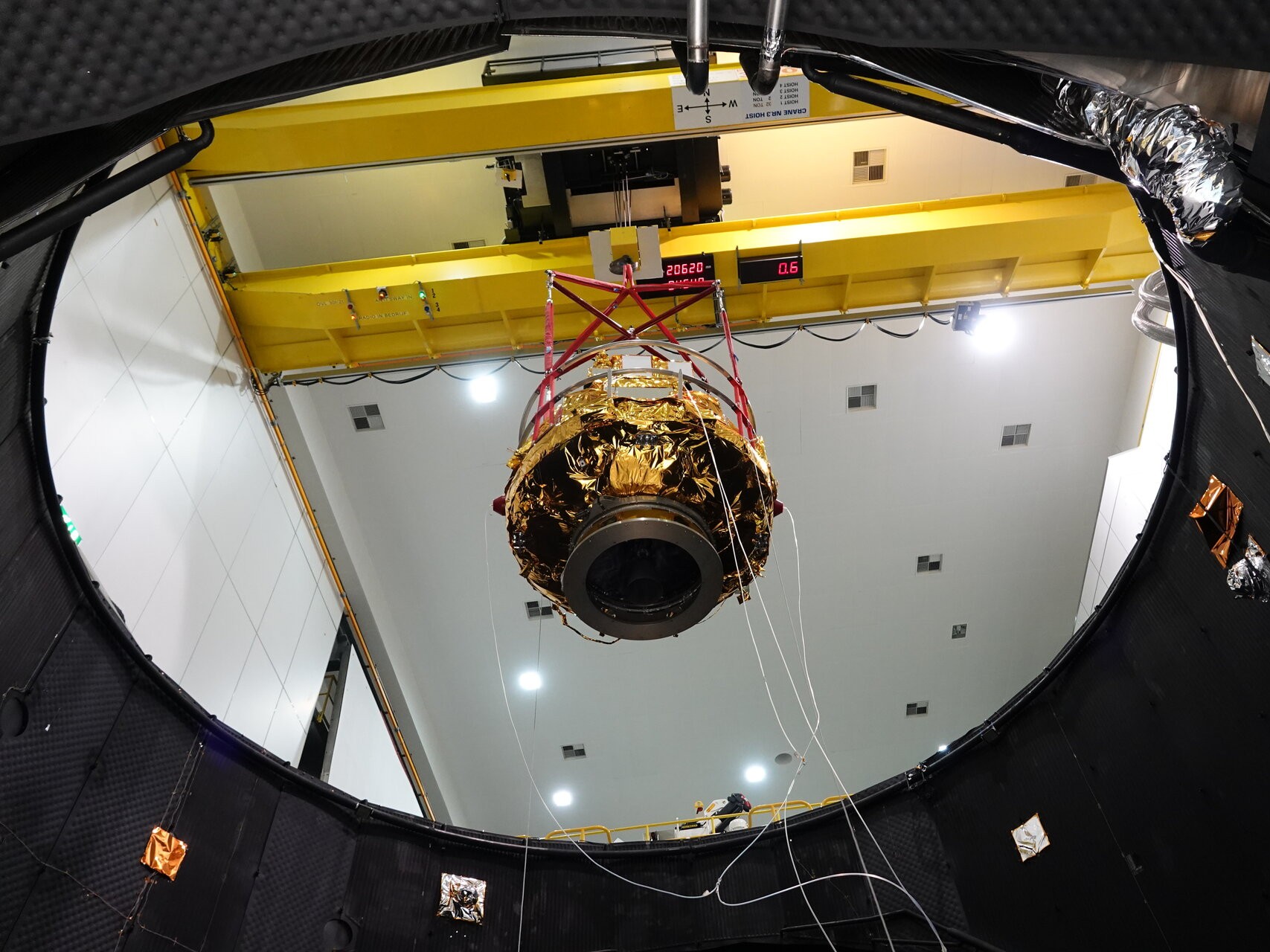
The European Space Agency (ESA) is on the verge of a groundbreaking mission that aims to provide the first comprehensive understanding of how Earth interacts with radiation emitted by the Sun. Scheduled to launch in March 2024, this initiative will deploy the Solar Orbiter spacecraft, which is designed to capture critical data on solar activity and its effects on our planet.
The Solar Orbiter will embark on its mission from the European Space Operations Centre located in Darmstadt, Germany. This innovative spacecraft will fly closer to the Sun than any previous mission, reaching distances that will allow it to study solar phenomena in unprecedented detail. The data collected will be invaluable for understanding the mechanisms behind solar radiation and its impact on Earth’s atmosphere.
Significance of Solar Research
The implications of this research extend beyond academic interest. Understanding solar radiation is vital for predicting space weather events that can disrupt satellite communications, navigation systems, and even power grids on Earth. According to ESA officials, this mission will significantly enhance our ability to forecast such events, potentially safeguarding technological infrastructure.
ESA’s Director of Science, David Parker, emphasized the importance of the mission, stating, “The Solar Orbiter will provide a unique perspective on solar activity. This data is crucial for developing effective strategies to mitigate the effects of solar storms on our daily lives.” With a cost of approximately €1.5 billion, the mission reflects a significant investment in space research.
Additionally, the collaboration between ESA and NASA has strengthened the mission’s capabilities. NASA’s contributions include advanced instruments that will work in tandem with those developed by ESA. This partnership highlights the shared commitment of international agencies to enhance our understanding of solar dynamics.
Mission Timeline and Objectives
The Solar Orbiter’s launch is expected to occur on March 1, 2024, using a powerful rocket that will propel it toward the Sun. Once in orbit, the spacecraft will conduct a series of flybys, collecting data on solar winds, magnetic fields, and other phenomena that influence Earth’s environment.
The mission is designed to last approximately seven years, during which time scientists will analyze the data to uncover the intricate relationship between solar activity and atmospheric changes on Earth. Researchers anticipate that findings will lead to improved models for predicting solar storms and other space weather events.
The Solar Orbiter is not just a leap forward in solar research; it represents a collaborative effort that underscores the importance of international cooperation in space exploration. As the mission progresses, scientists around the globe will be eagerly awaiting insights that could redefine our understanding of the Sun’s influence on Earth.
In summary, the upcoming ESA mission marks a significant step in unraveling the complexities of solar radiation and its effects on our planet. With the potential to improve predictions of solar events, this initiative is poised to have a lasting impact on both scientific research and everyday life.