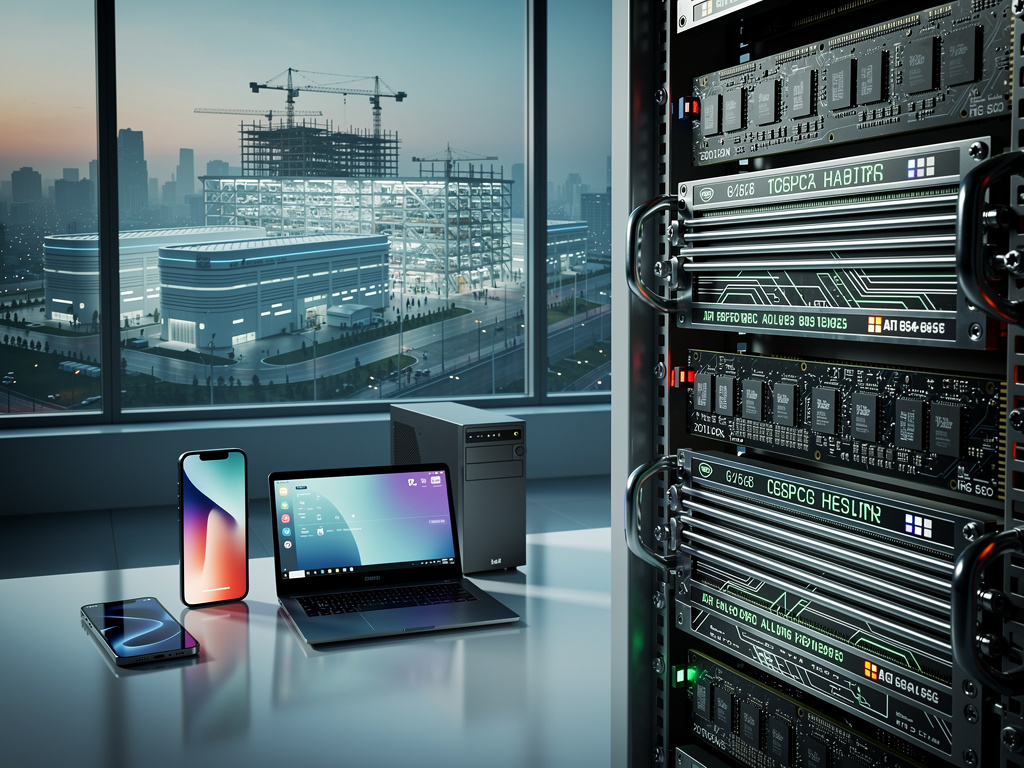
The rapid expansion of artificial intelligence (AI) applications is causing significant disruptions in the technology sector, particularly impacting the availability of memory chips essential for smartphones and personal computers. A recent report from the International Data Corporation (IDC) indicates that as chip manufacturers shift their focus to meet the high demand from AI data centers, consumers may experience reduced device specifications, higher prices, and declining sales by 2026.
The growing requirement for high-performance memory components such as dynamic random-access memory (DRAM) and NAND flash storage is at the center of this challenge. Companies like Samsung Electronics, SK Hynix, and Micron Technology are reallocating their production capacity toward high-bandwidth memory (HBM), which is tailored for AI workloads. This pivot occurs against a backdrop of already strained global supply chains, leading to anticipated shortages of traditional memory types that are crucial for consumer electronics.
According to IDC, if the shortages persist, smartphone shipments could see a contraction of up to 5.2%, while PC sales may decline by as much as 8.9%. The report suggests that the explosive growth of AI is the primary driver behind this shift, as data centers require vast amounts of efficient memory to support complex computations. Consequently, prices for memory chips have surged, which will likely translate into higher costs for consumers purchasing devices reliant on these components.
Manufacturers Navigate Shifting Chip Market
The economic landscape is compelling chipmakers to prioritize AI-related products over consumer electronics. The price for HBM often exceeds that of standard DRAM, prompting fierce competition among companies for limited supplies. A report from Reuters highlights that the acute global shortage is forcing manufacturers to raise prices for essential components rapidly.
For instance, Samsung has redirected cleanroom space, specialized facilities for chip fabrication, toward HBM production. While this strategy enhances profitability from AI sales, it simultaneously limits the output of legacy memory chips. Similar adjustments by SK Hynix and Micron are exacerbating supply issues, leading to a bottleneck that affects the smartphone and PC markets.
The repercussions are becoming evident as smartphone manufacturers grapple with choices: absorb increased costs, transfer them to consumers, or lower device specifications to manage expenses. Tech influencer Utsav Techie noted on social media platform X that widespread reductions in RAM and storage could occur across phone models, with high-end devices potentially dropping from 16GB to 12GB configurations.
Consumer Impact and Future Projections
Research from Counterpoint Research indicates that the average selling price of smartphones could increase by 6.9% in 2026 due to chip shortages, compounding existing inflationary pressures in the technology sector. This trend could result in budget-conscious consumers being priced out of emerging markets. Additionally, IDC’s analysis suggests that laptop and desktop prices may rise, with effects lingering into 2027. Manufacturers may opt for lower-spec components to maintain profit margins, potentially leading to quicker obsolescence of devices.
Concerns among consumers and industry analysts are growing. Posts from users on X highlight the competition between AI data centers and consumer PCs for memory resources, with expectations of price hikes in laptops and desktops. One user shared insights from Bloomberg that emphasized a projected 2.1% decline in global smartphone shipments, attributing it to rising chip costs.
Looking at individual companies, Apple may experience significant impacts on its iPhone lineup. Analysts speculate that future models could be forced to compromise on memory configurations due to cost pressures. Similarly, Samsung, which operates in both semiconductor manufacturing and device production, faces a dual challenge. While its semiconductor division benefits from AI demand, its mobile sector may suffer from internal supply constraints, leading to adjustments in production lines and scaled-back specifications in mid-range Galaxy phones.
Smaller manufacturers, like Xiaomi, are already feeling the pinch, announcing price hikes and adjustments for their models, such as the 17 Ultra. This trickle-down effect threatens to stifle innovation in the budget segment, where thin margins leave little room for absorbing increased costs.
The memory chip shortage has broader economic implications as well. The technology sector, a vital driver of global economic growth, could experience slowed expansion if consumer spending on devices decreases. Emerging economies—where smartphone penetration is still increasing—may find themselves delayed in adopting new technologies, further widening the digital divide.
Investors are closely monitoring the situation. Stock prices for memory chip giants like Micron have fluctuated in response to these developments, with analysts from Bloomberg Intelligence discussing the outlook for PC hardware firms as they navigate increasing component costs in a competitive landscape.
Exploring Solutions and Future Directions
In response to the ongoing crisis, some manufacturers are exploring alternative strategies to mitigate the impact of chip shortages. Efforts to diversify supply chains include investments in new fabrication plants, although such initiatives require significant time to materialize. Governments are stepping in as well; the U.S. CHIPS Act aims to bolster domestic production, which may alleviate long-term shortages.
Innovations in memory technology also present potential pathways forward. Advances in more efficient chip designs could help reduce overall demand for raw materials, benefiting both AI and consumer sectors. Yet, as an analysis by IndexBox predicts, prices are likely to continue rising through 2026, further constraining supplies for consumer electronics.
Industry insiders suggest that collaboration between chipmakers and device manufacturers could create a more balanced approach to resource allocation. Long-term contracts for memory allocation could stabilize supplies for smartphones and PCs, even as AI demand continues to grow. However, with AI’s trajectory showing no signs of slowing, the tension between enterprise needs and consumer markets is expected to persist.
At its core, this memory chip shortage highlights the human element at play in technological advancement. Engineers and executives at companies like Micron face challenging decisions regarding resource allocation, weighing short-term profits against the long-term health of the market. Consumers may choose to delay device upgrades, opting to extend the life of existing technology through software updates or repairs.
The situation also raises critical discussions around sustainability, as the environmental impact of ramping up chip production requires vast energy and rare materials. Initiatives focused on recycling electronics and developing greener manufacturing processes could help alleviate some of these pressures.
While the demand for memory chips driven by AI poses challenges to traditional consumer markets, it also accelerates the push for efficiency and diversification. By 2027, as new production capacities come online, it is possible that some shortages will ease. However, the lessons learned during this period will undoubtedly influence the technology industry’s resource management strategies for years to come.