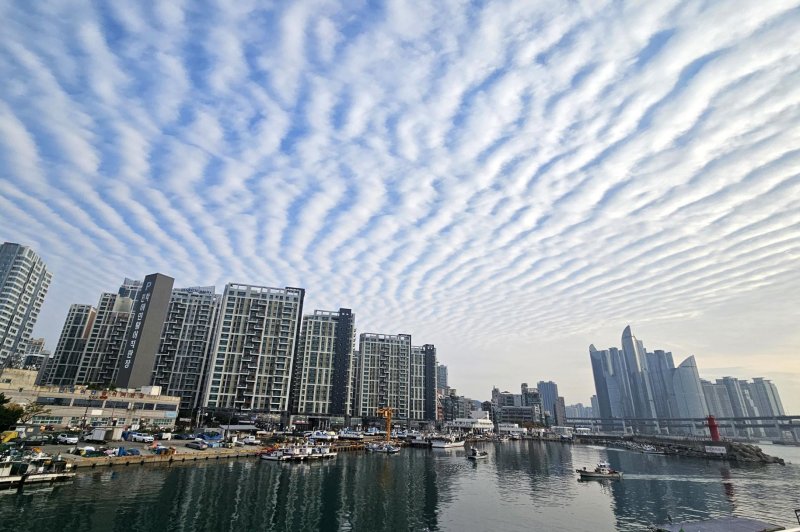
South Korea’s Ministry of Oceans and Fisheries has announced plans to initiate a trial container ship service from Busan to Rotterdam via the Arctic shipping route. This pilot program is scheduled to commence in September 2024 and forms part of a larger initiative to establish Busan as a “maritime capital region.” Acting Minister of Oceans and Fisheries, Kim Sung-beom, revealed the details during a press conference held at the ministry’s Busan office on January 6, 2024.
During the conference, Kim outlined five key policy priorities that will shape the ministry’s direction in the coming years, declaring 2026 as the beginning of what he refers to as the ministry’s “Busan era.” Among the first steps in this ambitious plan is the pilot operation of a 3,000 TEU container ship, where one TEU is equivalent to a 20-foot container. The ministry aims to support the development of polar-capable vessels, including icebreakers, and enhance ice-strengthened container ship technology.
In his address, Kim highlighted the necessity of training seafarers for polar routes and indicated a potential for cooperation with Russian authorities in the first half of this year. He acknowledged the complexities introduced by international sanctions on Russia and emphasized the ministry’s intent to devise a strategy that accommodates Arctic navigation while adhering to Western sanctions. Details regarding the recruitment of shippers and cargo will be revealed as plans progress.
Development of Maritime Capital Region
The ministry is also set to finalize a Maritime Capital Region Development Strategy within the first half of 2024, with a draft potentially ready by the end of March. This strategy aims to create a maritime cluster in the southeastern region by consolidating maritime-related companies, public institutions, and maritime courts, ultimately enhancing the global competitiveness of Busan Port.
In addition to fostering maritime logistics, the ministry is prioritizing eco-friendly and smart shipping initiatives. Plans include expanding policy financing, facilitating fractional investments, and providing tax incentives to encourage the transition to cleaner vessels. The ministry has committed to investing 600 billion won ($415 million) in research and development for fully autonomous ship technologies by 2032.
Another ambitious goal is the transformation of Busan’s Jinhae New Port into what is envisioned as the world’s largest smart container port by 2045.
Policy Changes for Fisheries and Coastal Economies
On the fisheries front, Kim stated that the government will pursue necessary industry changes to adapt to climate change impacts. This includes replacing aging fishing fleets, enhancing productivity, and eliminating what he termed “unnecessary regulations.” The ministry plans to expand aquaculture into deeper waters with more stable temperatures, targeting areas such as the East Sea to mitigate damage from extreme water conditions.
To spearhead innovation in the fisheries sector, the ministry intends to invest 167.5 billion won ($116 million) by 2030 into a Smart Fisheries Innovation Leading District located in Goheung, South Jeolla Province. This initiative aims to establish artificial intelligence-based aquaculture facilities, thereby modernizing the industry.
Additionally, the government has set a target to shift seaweed production towards processing, aiming for $1.5 billion in exports by 2030, which translates to approximately 2.17 trillion won.
To bolster coastal regional economies, the ministry is planning a 1 trillion won ($691 million) integrated marine leisure tourism city, along with dedicated funds for marine living zones and profit-sharing models related to the expansion of offshore wind power.
In terms of enforcement measures, Kim indicated a shift in strategy against illegal fishing by Chinese vessels, moving from an expulsion-focused approach to one that emphasizes the seizure of illegal catches. The maximum fine for these infractions will increase significantly, from 300 million won ($207,000) to 1 billion won ($691,000).
These initiatives reflect the South Korean government’s commitment to enhancing its maritime infrastructure and fostering sustainable practices in the shipping and fisheries sectors. As plans unfold, further details will emerge regarding each aspect of this comprehensive strategy.