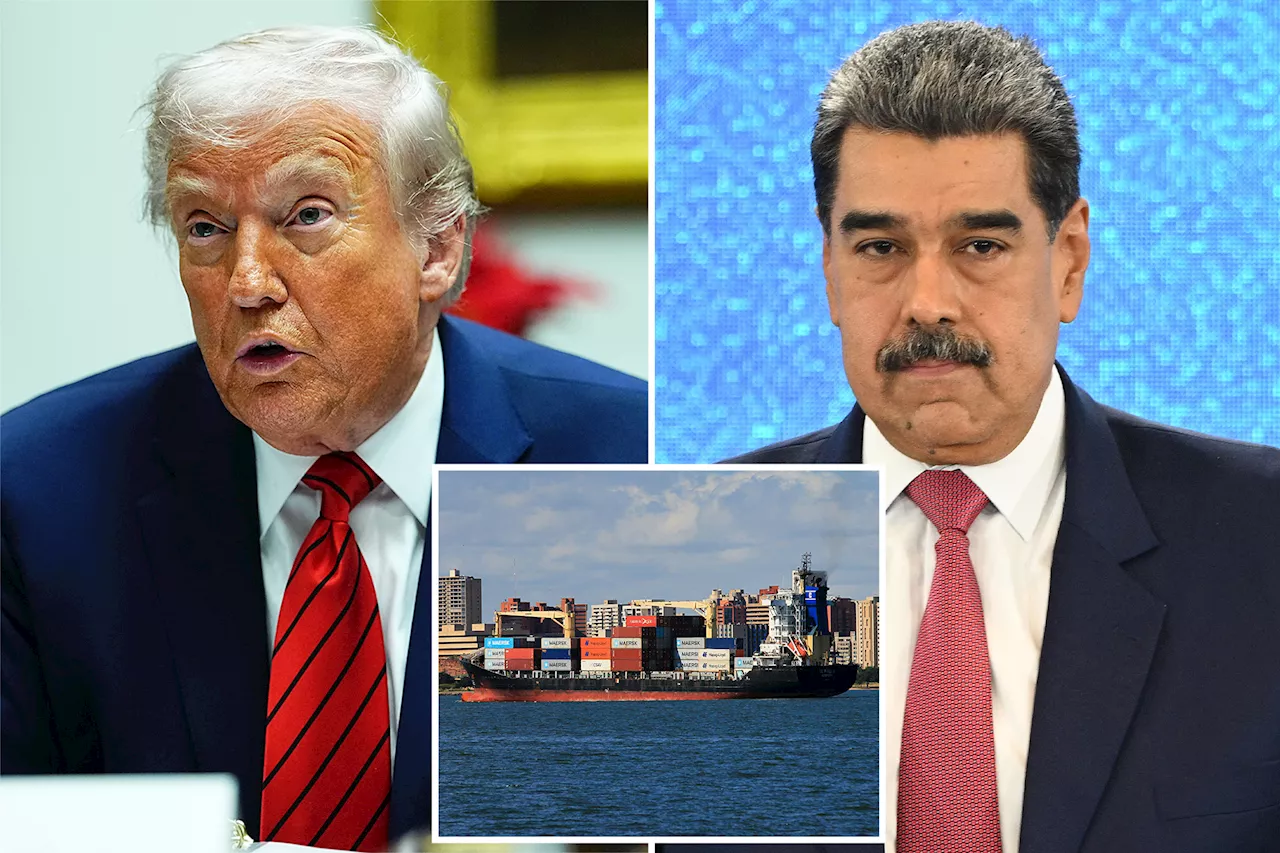
Venezuelan President Nicolás Maduro has directed the country’s navy to escort vessels transporting oil-based products, openly defying a blockade announced by President Donald Trump. This move marks a significant escalation in tensions between the two nations, as Maduro seeks to ensure the flow of vital resources despite growing international pressure.
On December 18, 2025, the Venezuelan navy escorted three tankers loaded with various petroleum products, including urea and petroleum coke, towards Asian markets. According to maritime tracking data from Kpler, none of the vessels involved were listed under U.S. sanctions, at least for now. However, U.S. defense analysts have cautioned that this action heightens the risk of military confrontation in the region.
This naval mobilization comes on the heels of Trump’s declaration on December 11, which aimed to tighten restrictions on oil shipments to and from Venezuela. In a bold statement, Trump asserted, “It will only get bigger, and the shock to them will be like nothing they have ever seen before.” He accused Maduro’s regime of using oil revenues to fund activities such as drug trafficking and human rights violations.
Maduro’s decision to deploy naval escorts follows the recent withdrawal of four Panama-flagged vessels that turned back from their approach to Venezuela just one day after the U.S. military seized an oil tanker en route to the country. The seized vessel, now near Cuba, is reportedly headed towards the U.S. coast.
The situation has further escalated as the U.S. has intensified its focus on Venezuelan drug trafficking operations. Since September, the U.S. military has been targeting narcotraffickers in the region, with recent operations resulting in the deaths of 99 Venezuelan traffickers. This aggressive strategy underscores the Trump administration’s commitment to dismantling what it perceives as Maduro’s criminal enterprises.
While Maduro has avoided military responses in the past, his recent actions signal a willingness to confront U.S. pressures directly. The Venezuelan leader frames Trump’s blockade as an act of aggression and colonialism, challenging the narrative of U.S. interventionism in Latin America.
As these international tensions mount, the implications for Venezuela’s economy, heavily reliant on oil exports, remain uncertain. The potential for military engagement raises concerns not only for the region but for global oil markets as well.
The unfolding situation in Venezuela is closely monitored by international observers, who are wary of the broader consequences of this confrontation between two leaders with starkly opposing visions for their nations.