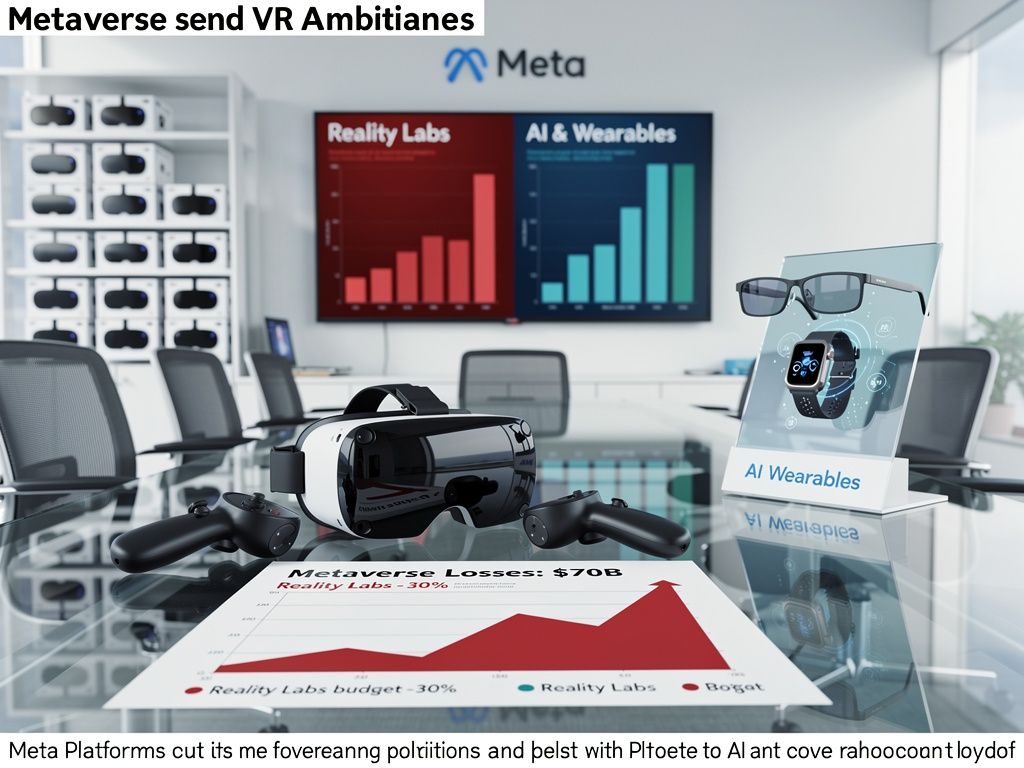
Mark Zuckerberg’s ambitious vision for the metaverse faces a significant setback as Meta Platforms Inc. announces a budget reduction of up to 30% for its Reality Labs division by 2026. This decision stems from ongoing financial losses that have exceeded **$70 billion** since the company’s rebranding from Facebook in 2021. The shift reflects a strategic pivot towards artificial intelligence (AI) and wearable technology, marking a departure from expansive virtual reality initiatives.
According to reports, internal discussions at Meta have centered on these budget cuts, with potential layoffs anticipated as early as January 2024. The cuts will primarily impact key products such as Horizon Worlds and the Quest VR headset line, both of which have struggled to attract a substantial user base despite considerable marketing efforts. Instead, resources will be reallocated to AI-driven projects, including Llama models and Ray-Ban smart glasses, reflecting a growing pressure from investors for profitability.
Financial Struggles and Market Reactions
Reality Labs, Meta’s innovation hub focused on metaverse development, reported an operating loss of **$4.7 billion** in the third quarter of 2023. This contributed to cumulative losses surpassing **$70 billion** since the rebranding effort aimed at positioning virtual and augmented reality as the future of the company. While sales of the Quest headsets have seen modest growth, they have not sparked widespread market demand. Moreover, engagement on Horizon Worlds has dwindled significantly, with monthly active users remaining below **one million**.
The news of impending budget cuts had an immediate positive impact on Meta’s stock, which rose by **3%** to approximately **$620** on December 4, 2023. This uptick indicates a sense of relief among investors concerned about the financial drain associated with the metaverse strategy. Analysts, including those from Bank of America, have characterized the adjustments as a sensible move towards more lucrative opportunities in AI and consumer wearables.
Shifts in Leadership and Strategic Focus
The discussions surrounding budget cuts gained momentum after Zuckerberg reportedly conceded in private meetings that the metaverse initiative “is not working.” Initially, he had pledged to invest **$10 billion** annually into Reality Labs, but the focus has now shifted to hardware projects like the Orion AR glasses. This transition includes recruiting talent from Apple to enhance Meta’s hardware design capabilities.
Meta’s broader efficiency strategy has already seen substantial layoffs, totaling **21,000 jobs** since 2022. With a workforce of over **10,000** in Reality Labs, budget reductions are expected to yield significant savings, allowing funds to be redirected toward AI infrastructure where Meta competes vigorously with companies like OpenAI and Google.
Despite these cuts, Meta remains committed to research and development in the metaverse. The company aims to produce lightweight AR devices for everyday use, exemplified by its partnerships with EssilorLuxottica on smart glasses. This evolution suggests a shift from bulky VR setups to more integrated augmented reality experiences.
Zuckerberg’s upcoming earnings call is anticipated to address these strategic changes, providing insights into the future of Reality Labs amid Meta’s substantial cash reserves of **$200 billion**. The ongoing adjustments reflect a broader recognition within the tech industry of the challenges associated with virtual reality adoption and the increasing dominance of AI technologies.
In summary, as Meta recalibrates its focus away from the metaverse, the implications for its product strategy and market position will be closely scrutinized by investors and industry observers alike. The company’s ability to adapt to changing market dynamics will be crucial in defining its future trajectory.