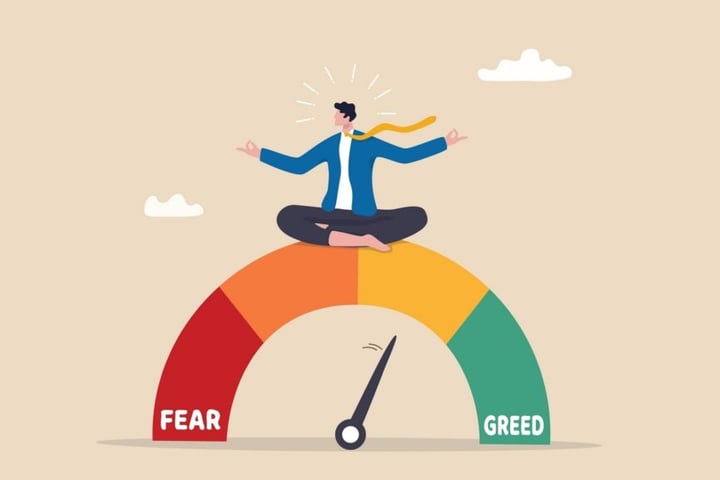
U.S. stocks faced downward pressure on January 12, 2024, with the Dow Jones Industrial Average closing approximately 0.2% lower. The overall market sentiment showed some signs of improvement, yet the CNN Money Fear and Greed Index remained firmly in the “Greed” zone, indicating heightened investor optimism.
During the trading session, the Dow Jones slipped by around 83 points, settling at 49,359.33. The broader S&P 500 experienced a slight decline of 0.06%, finishing at 6,940.01, while the Nasdaq Composite also dipped 0.06% to close at 23,515.39. These losses follow a week where the S&P 500 fell 0.4% and the Dow recorded a 0.3% drop.
Despite the overall market downturn, some companies reported positive earnings. M&T Bank (NYSE:MTB) announced robust fourth-quarter earnings, contributing to a mixed market response. Notably, shares of Micron Technology Inc. (NASDAQ:MU) surged approximately 8% after board member Mark Liu purchased $7.8 million worth of company shares, boosting investor confidence in the stock.
In terms of economic indicators, the Federal Reserve Bank of New York reported a rise in the general business activity index, climbing to -16.1 in January from -20.0 the previous month. Additionally, U.S. industrial production increased by 0.4% month-over-month in December, matching the previous month’s performance and surpassing market expectations of 0.1%.
Most sectors within the S&P 500 ended positively, with the energy, industrials, and real estate sectors experiencing the largest gains. Conversely, communication services and healthcare stocks deviated from this trend, closing lower on Friday.
Investors are now looking ahead to upcoming earnings results from notable corporations including 3M Co. (NYSE:MMM), D.R. Horton Inc. (NYSE:DHI), and Netflix Inc. (NASDAQ:NFLX), which are anticipated to provide further insight into market conditions.
The CNN Money Fear and Greed Index, which gauges market sentiment, recorded a score of 62 on Friday, slightly up from a previous reading of 61. This index operates on the understanding that higher levels of fear can exert downward pressure on stock prices, while increased greed tends to have the opposite effect. It is calculated using seven equal-weighted indicators, with values ranging from 0 (maximum fear) to 100 (maximum greed).
As the market continues to navigate through these fluctuations, investors remain vigilant, weighing economic indicators and corporate performances to inform their strategies. The interplay between fear and greed will likely shape trading activities in the coming weeks, underscoring the dynamic nature of the current financial landscape.