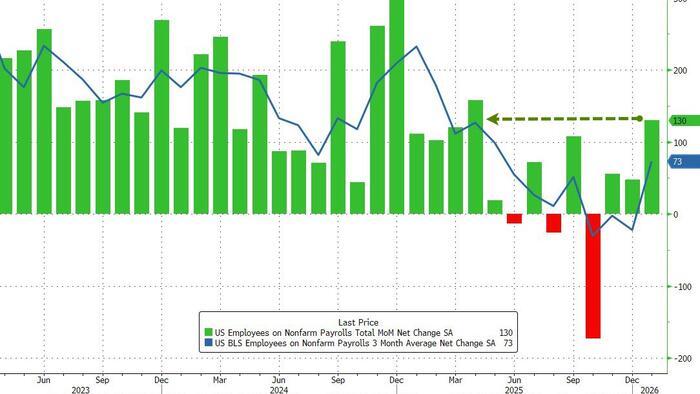
The United States economy added an unexpected 130,000 jobs in January 2025, marking the largest monthly increase since December 2024. This figure significantly surpassed the median estimate of 65,000 jobs anticipated by economists, coming as a surprise to many, particularly following a series of negative revisions in previous months.
In the lead-up to the jobs report, members of the Trump administration, including Peter Navarro and Kevin Hassett, expressed concerns about potentially disappointing numbers. Navarro cautioned that expectations needed to be revised downward, while Hassett advised audiences to “expect slightly smaller job numbers” and not to panic if the labor data proved weak. Given these warnings, the general sentiment among traders and market analysts was one of pessimism, leading to a whisper number of only 35,000 ahead of the official announcement.
Surprisingly, the report from the Bureau of Labor Statistics (BLS) indicated a robust job growth figure, which was double the median consensus. The revised employment numbers for December also reflected a slight improvement, with the previous addition of 48,000 jobs, adjusted from an initial estimate of 50,000. This upward revision in December is a rare occurrence, as the trend has largely been downward, with 25 out of the last 26 reports revised lower.
The better-than-anticipated jobs report brought about a decline in the unemployment rate, which fell to 4.3% from 4.4% in December. This unexpected drop was observed across various demographic groups: the unemployment rate for teenagers decreased to 13.6%, while rates for adult men, adult women, and various ethnic groups showed modest improvements.
Additionally, the labor force participation rate increased to 62.5%, slightly above expectations. Average hourly earnings also saw a notable rise, climbing 0.4% month-over-month, surpassing the 0.3% estimate. Year-on-year, average hourly earnings grew by 3.7%, consistent with previous figures.
A deeper look into the employment data shows job gains primarily concentrated in the health care and construction sectors. Specifically, health care added 82,000 jobs, with significant contributions from ambulatory health care services and hospitals. Social assistance also experienced growth, increasing by 42,000 jobs. In contrast, the federal government sector saw a decline of 34,000 jobs, continuing a trend that has seen a total decrease of 327,000 since October 2024.
While the January jobs report highlighted positive trends, it is essential to note the significant downward revisions to previous employment data. The total nonfarm employment level for March 2025 was revised downward by 898,000, indicating that the U.S. economy generated just 15,000 jobs per month on average in 2025, a stark contrast to earlier reports that suggested a healthier job creation rate.
The ongoing revisions reflect a more challenging landscape for the labor market, underscoring the need for caution. As analysts digest the implications of these numbers, it remains evident that the Federal Reserve may have to consider aggressive measures to stimulate the economy if the labor market continues to exhibit signs of weakness.