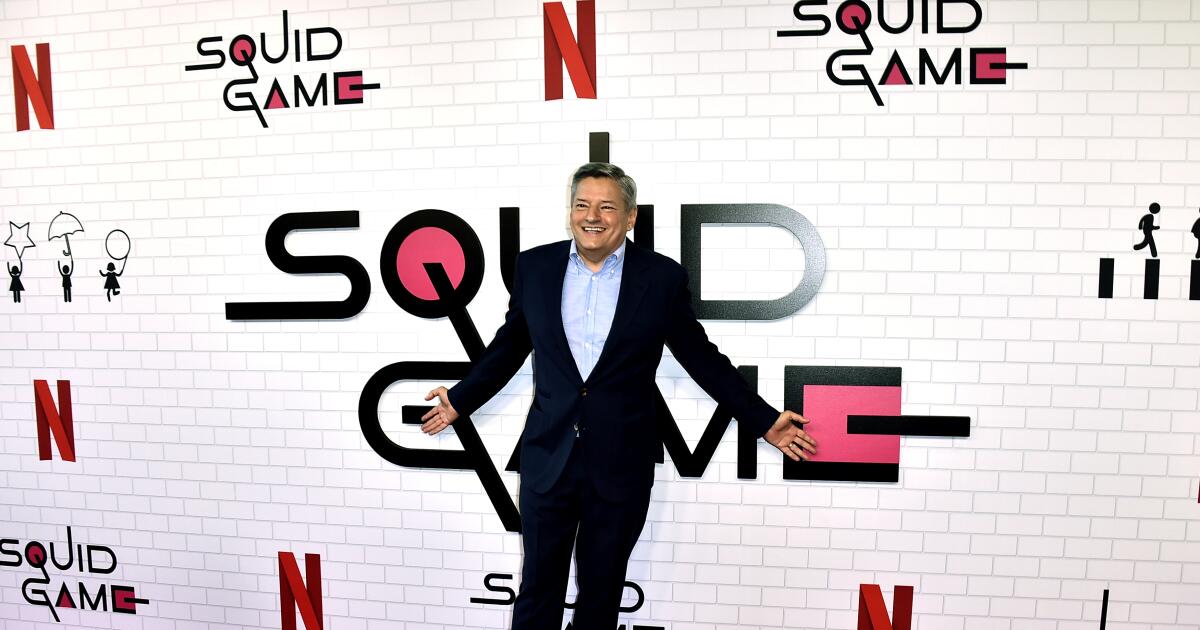
Netflix co-Chief Executive Ted Sarandos has executed a significant acquisition of Warner Bros. and HBO, valued at a staggering $82 billion. This bold move comes as the streaming giant aims to strengthen its position in the entertainment landscape, transforming Sarandos from an industry outsider into a key player in Hollywood.
In an investor call, Sarandos described the deal as a “rare opportunity” that will significantly enhance Netflix’s mission “to entertain the world and to bring people together through great stories.” If approved, this acquisition would allow Netflix to acquire a treasure trove of classic films and beloved characters, including Batman, Scooby-Doo, and Harry Potter. However, the deal will need to navigate various legal and regulatory hurdles before it can be finalized.
Netflix’s successful bid surprised many industry insiders, particularly as Paramount, backed by billionaire Larry Ellison, was initially seen as the frontrunner for Warner Bros.’ assets. Just two months prior, Netflix executives had downplayed their merger ambitions. Co-Chief Executive Greg Peters even remarked at a Bloomberg conference that, “We come from a deep heritage of builders rather than buyers.”
Regardless, Netflix’s strong market position and robust financial standing allowed it to present a cash bid that impressed the Warner Bros. Discovery board. The deal also includes the assumption of over $10 billion in Warner Bros. debt, bringing the total value to $82.7 billion.
As the deal unfolds, Sarandos faces mounting opposition from cinema chains, lawmakers, and labor unions. The Writers Guild of America (WGA) has voiced its concerns, stating that the merger could violate antitrust laws. “The world’s largest streaming company swallowing one of its biggest competitors is what antitrust laws were designed to prevent,” the WGA emphasized.
Sarandos’s journey to this pivotal moment is marked by defiance against industry conventions. He has led Netflix’s content operations since 2000, starting his career with the company when it was a fledgling DVD rental service. His innovative approach, including the introduction of binge-watching and a focus on original content, has transformed Netflix into a powerhouse with over 301 million subscribers. Analysts predict that the Warner Bros. acquisition could potentially add an additional 100 million customers to the platform.
The move to expand Netflix’s offerings is not without precedent. In 2011, Sarandos made a groundbreaking deal for David Fincher’s “House of Cards,” committing $100 million for two seasons without seeing a pilot episode. This gamble proved successful, positioning Netflix as a leader in original programming.
Under Sarandos’s leadership, Netflix has challenged traditional release strategies, often releasing films on its platform shortly after their theatrical debut. This approach, while effective in attracting viewers, has drawn criticism from theater owners and competitors.
Promoted to co-CEO in 2020, Sarandos faced significant challenges, including a notable subscriber decline in early 2022. However, Netflix rebounded by exploring new revenue streams such as cracking down on password sharing and venturing into advertising and live events. The company’s profitability has been reaffirmed, with a reported $2.5 billion in net income in the third quarter of 2023.
As negotiations for the Warner Bros. acquisition continue, Sarandos remains optimistic about the outcome. He asserts that the deal is “pro-consumer, pro-innovation, pro-worker, pro-creator, pro-growth,” and expressed confidence in securing the necessary regulatory approvals.
Despite his success, Sarandos has faced scrutiny over compensation issues and controversies surrounding talent relations during the dual strikes in 2023. Nonetheless, he has cultivated a reputation as an advocate for creators and has been instrumental in bridging gaps between industry stakeholders.
As Netflix sets its sights on further global expansion, Sarandos acknowledges the growing competition from platforms like YouTube, TikTok, and gaming communities. “In a world where people have more choices than ever how to spend their time, we can’t stand still,” he stated. “We need to keep innovating and investing in stories that matter most to audiences, and that’s what this deal is all about.”
The outcome of this monumental acquisition could redefine the future of streaming and solidify Sarandos’s legacy as a transformative force in the entertainment industry.