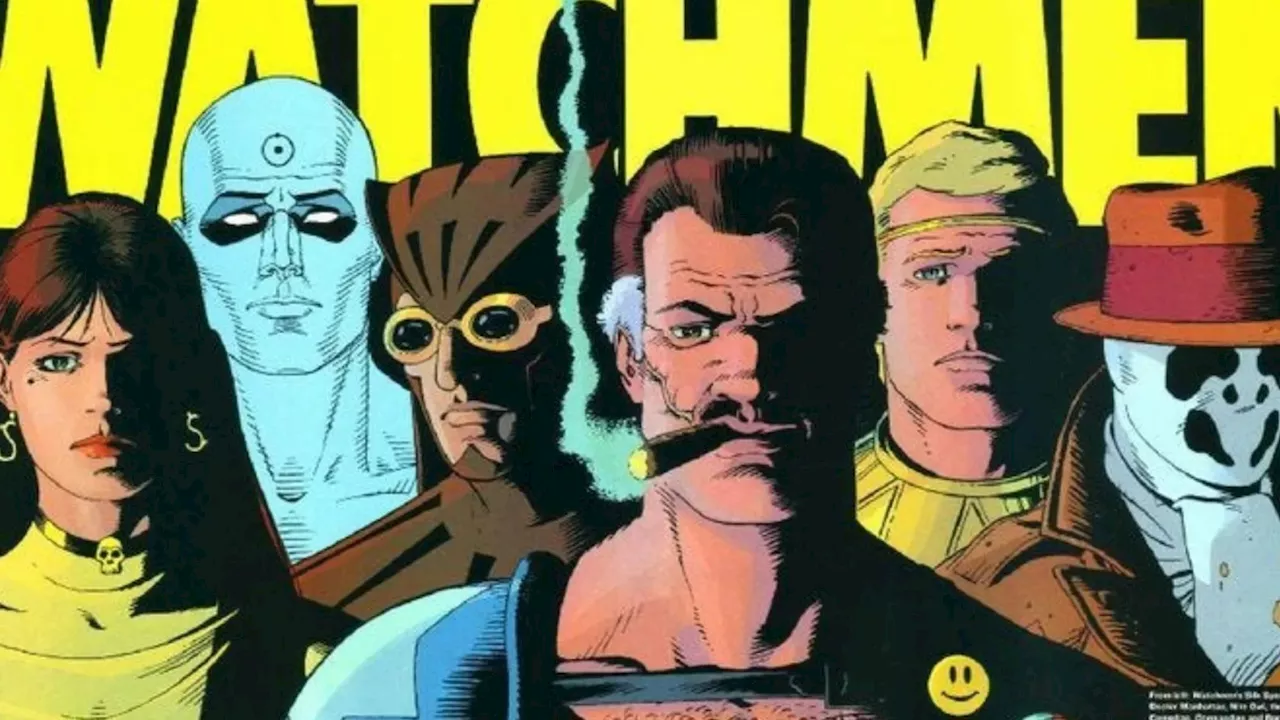
As Watchmen marks its 40th anniversary, a critical re-evaluation of the graphic novel reveals its profound influence on the superhero genre, its historical context, and the ways in which its legacy may be misinterpreted in today’s culture. Created by writer Alan Moore, artist Dave Gibbons, and colorist John Higgins, the series was serialized over twelve issues from 1986 to 1987 before being published as a single volume. Its complex narrative serves as a satirical deconstruction of the superhero archetype, establishing Watchmen as a cornerstone of both comics and literature.
Despite its acclaim, the significance of Watchmen warrants scrutiny as the cultural landscape shifts. The novel’s intricate storytelling, characterized by a nine-panel grid and meticulous visual motifs, positions it as not only a masterful comic but also a cultural artifact of its time. Yet, some critics argue that the book’s dense narrative and pacing may render it more a product of its era than a timeless commentary.
Historical Context and Cultural Reflection
Rooted in the socio-political climate of the 1980s, Watchmen reflects the anxieties of the Cold War, marked by fears of nuclear conflict and a deep-seated distrust of government. Events such as the Watergate scandal and the Vietnam War influenced the narrative, creating a backdrop of cynicism and moral ambiguity. The heroes in Watchmen are sidelined amid a looming threat of global catastrophe, mirroring the societal concerns of the time.
As society has evolved since the late 1980s, the narrative’s relevance raises questions. While the world may seem rife with darkness, significant social changes have occurred, particularly throughout the 1990s and into the present day. The exploration of cultural anxieties and heroism in contemporary narratives diverges markedly from the themes established in Watchmen. This divergence calls for a fresh lens through which to analyze modern issues, rather than relying on the standards set by Moore and Gibbons.
The Legacy of Watchmen: Misinterpretations and Influence
The central issue lies not with Watchmen itself but with its lasting impact on the comic industry. Many creators drew the wrong lessons from its success, leading to a proliferation of dark, gritty narratives that often prioritize shock value over depth. The proliferation of morally ambiguous heroes has become commonplace, reflecting a trend that has overshadowed the nuanced storytelling that Watchmen originally championed.
While there is validity in exploring the complexities of heroism, many narratives emerging post-Watchmen have failed to capture the same depth, instead attempting to replicate its commercial success without acknowledging its thematic richness. This fixation on the original has created a narrative where it is believed that nothing can match the standard set by Watchmen, despite the existence of numerous works that continue to push the boundaries of the medium.
In conclusion, as Watchmen enters its next decade, a balanced perspective is necessary. Recognizing its historical significance while engaging with the evolving nature of superhero storytelling is crucial. Celebrating its impact does not necessitate viewing it as the definitive statement on the genre. Rather, it should serve as an invitation for creators and audiences alike to explore new narratives that resonate with the complexities of today’s society.