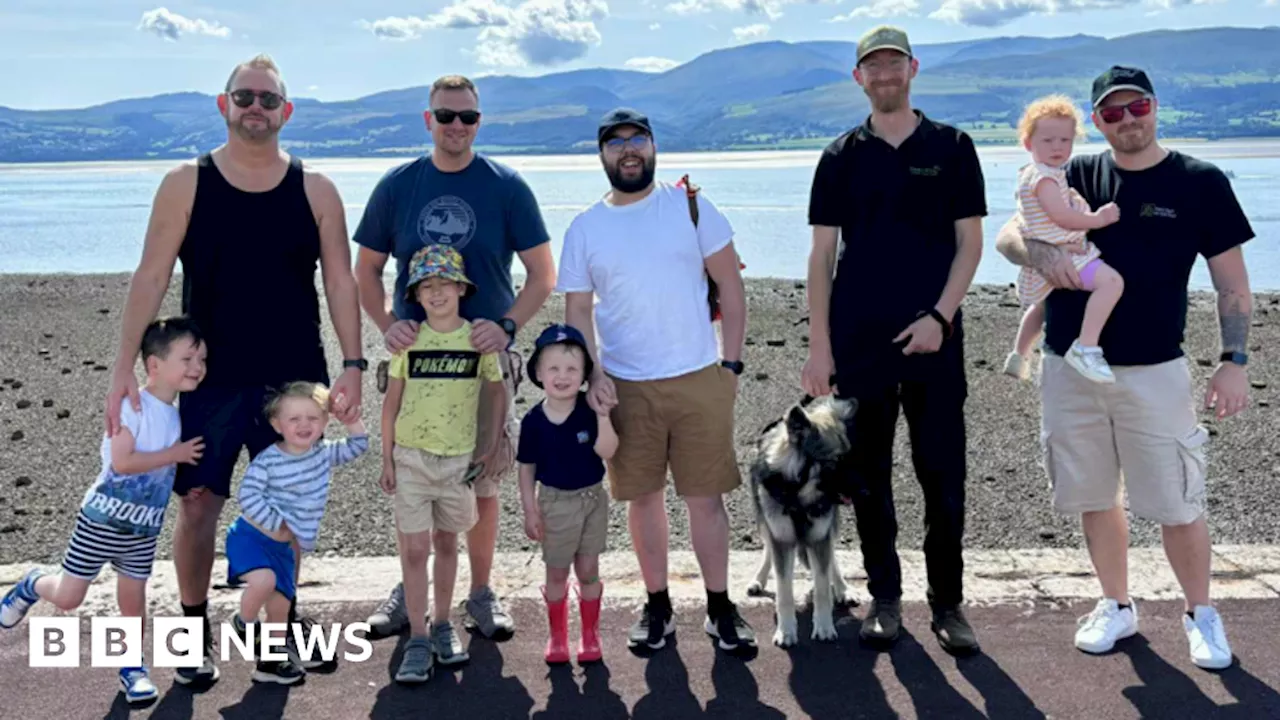
Aled Edwards, a father from Wales, has opened up about his experiences with post-natal depression, a condition often overlooked in men. His journey began with distressing nightmares during his wife Sophie’s pregnancy and escalated after the birth of their daughter, Bea, in September 2021. This mental health challenge, which affects not only mothers but also fathers, highlights the need for awareness and support for new dads.
Initially, Edwards dismissed his feelings as typical first-time dad nerves. However, upon the arrival of Bea, he encountered nightmares that left him emotionally drained. “I felt like I had no motivation to do anything,” the 40-year-old recalled. He struggled to bond with his children, projecting the image of a perfect family while internally battling depression.
In October 2021, just six weeks after Bea was born, Edwards reached a breaking point. He left his home with thoughts of ending his life, believing he was the source of the family’s unhappiness. A moment of clarity, remembering his son Sullivan snuggling beside him, prompted him to seek help instead.
Edwards had previously visited a general practitioner (GP), who diagnosed him with adverse childhood trauma and prescribed diazepam, an anti-anxiety medication. “It hadn’t been discussed with me,” he said, referring to the possibility of post-natal depression. He later learned that this condition can affect fathers and partners, contrary to the common belief that it only impacts women.
Post-natal depression affects more than 1 in 10 women, and according to research led by Prof Ann John, it also poses a significant risk to fathers. Over the past 22 years in Wales, the suicide rate among fathers during the critical period of a child’s first 1,001 days has been alarmingly high, with seven times more dads taking their lives than mothers.
After struggling to find a support group, Edwards turned to social media, posting on Facebook in February 2024 to connect with other fathers. This initiative blossomed into a community focused on mutual support, enabling fathers to share their experiences and challenges openly.
Mark Williams, another father who faced similar struggles, shared his own story of post-natal depression after the birth of his son, Ethan. Williams recalled experiencing a panic attack during the transition to fatherhood, feeling overwhelmed and isolated as he attempted to support his partner, Michelle, who also dealt with mental health issues. He described the numbness he felt during this time, which eventually led to suicidal thoughts.
Both Edwards and Williams stress the importance of recognizing that men can also experience mental health challenges during and after pregnancy. Williams, now advocating for better mental health support through his campaign, Fathers Reaching Out, emphasizes the need for a holistic approach to parental mental health. “There’s a big myth that men don’t talk,” he noted. “They will talk if you put them in a safe place where people understand.”
The charity Mind Cymru reported that 9% of men experience birth-related mental health conditions, including post-traumatic stress disorder (PTSD). Simon Jones, head of policy and campaigns at Mind Cymru, highlighted the necessity of providing support during pregnancy and after birth to help men navigate the emotional complexities of fatherhood.
In response to these alarming trends, the Welsh government has acknowledged the unique challenges faced by new fathers. Their strategies, published in April 2024, aim to enhance understanding of these issues and ensure compassionate support is available when needed.
Both Edwards and Williams advocate for a cultural shift in how masculinity is perceived, encouraging men to embrace vulnerability and seek help. “Modern-day masculinity should be about talking about feelings and emotions,” Williams stated. Edwards added, “It’s so important that we reach out and ask for help. If you’re not feeling right, there’s no shame in that.”
These personal accounts underline the critical need for society to address mental health challenges faced by fathers. As this dialogue continues, the hope is that more men will feel empowered to share their experiences and seek the support they need.