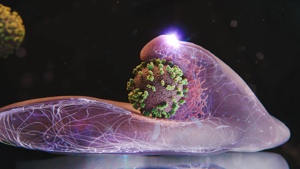
Researchers from the Swiss Federal Institute of Technology (ETH Zurich) and the University of Tokyo have successfully captured the exact moment a person becomes infected with the influenza virus. This groundbreaking achievement, announced in March 2024, could significantly advance the development of targeted antiviral therapies.
The study, which utilized advanced imaging techniques, provides unprecedented insight into the infection process at a molecular level. By observing how the influenza virus enters human cells, scientists aim to identify specific targets for new antiviral drugs. Understanding this initial interaction is crucial, as it sets the stage for how the virus spreads and evolves within the host.
The research team used high-resolution imaging to visualize the moment viral particles attach to cell receptors. This process is a critical first step in viral infection. Professor Hiroshi Kida from the University of Tokyo remarked, “This study opens new avenues for antiviral drug development that are more precise, potentially leading to better treatment outcomes for patients.”
The implications of this research extend beyond the laboratory. Influenza viruses are responsible for millions of infections worldwide each year, leading to significant morbidity and mortality. The World Health Organization estimates that seasonal influenza epidemics result in approximately 290,000 to 650,000 respiratory deaths annually. A more targeted antiviral approach could reduce these numbers significantly.
The collaboration between Swiss and Japanese researchers highlights the importance of international partnerships in addressing global health challenges. By combining expertise and resources, the teams were able to achieve a level of detail previously thought impossible. The findings not only contribute to scientific knowledge but also hold promise for public health initiatives aimed at controlling influenza outbreaks.
In addition to potential antiviral therapies, the research may influence vaccine development. Understanding how the virus interacts with human cells can inform the design of vaccines that elicit a stronger immune response. Dr. Markus C. Dittmer, a co-author of the study, emphasized that “the ability to visualize these interactions can lead to innovative strategies in both treatment and prevention.”
As the study moves forward, the researchers plan to investigate how different strains of the influenza virus interact with human cells. This knowledge could provide further insights into the virus’s evolution and its ability to evade the immune system, a key factor in the ongoing challenge of influenza management.
The findings from this research are set to be published in a prominent scientific journal, furthering the discourse on influenza and its impact on global health. The collaborative effort serves as a reminder of the critical role that scientific research plays in addressing pressing health concerns and improving patient outcomes worldwide.