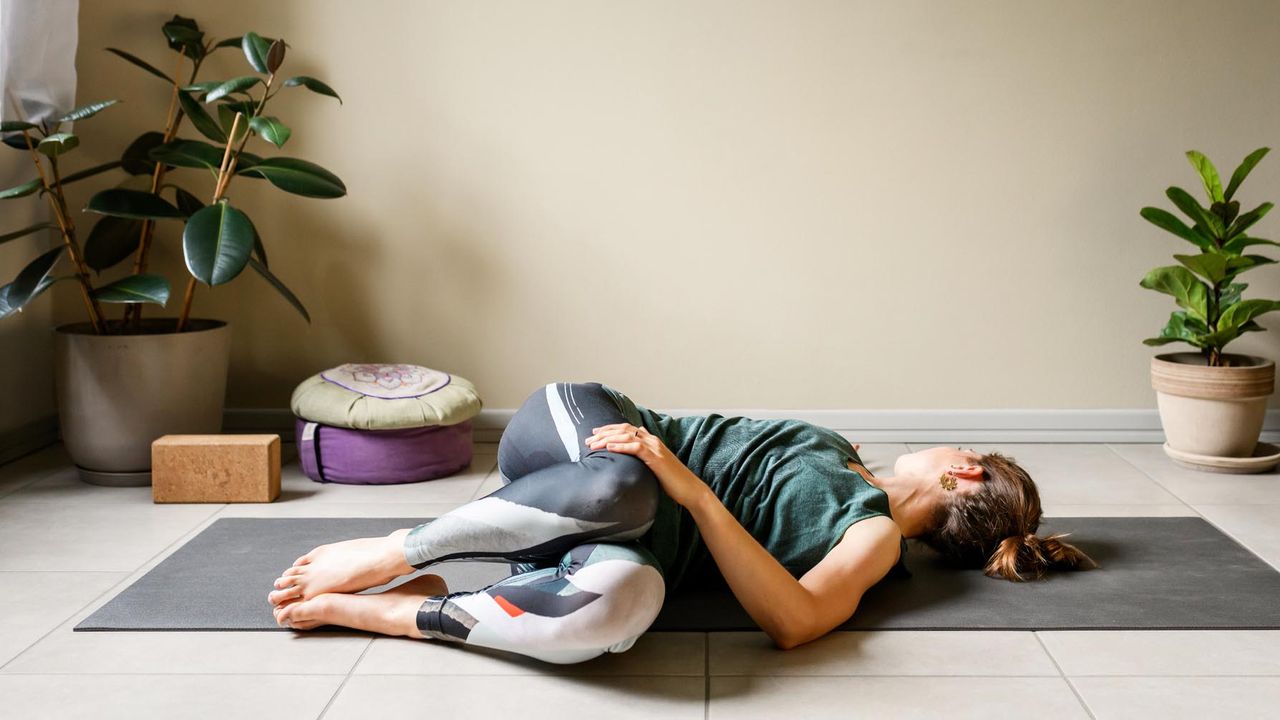
In a world where many people spend hours sitting at desks, incorporating movement into daily routines has become essential. The reclined twist, a simple yet effective exercise, helps mobilize the spine and alleviate tension. Certified yoga and Pilates instructor Anouska Shenn demonstrates this exercise and emphasizes its importance for maintaining spinal health.
The reclined twist is an exercise that requires minimal space and equipment. All one needs is a yoga mat or a thick blanket, and about five to ten minutes to spare. Shenn explains that this stretch is particularly beneficial for the mid-back, an area where many individuals experience stiffness.
How to Perform the Reclined Twist
To execute the reclined twist, follow these steps:
1. Lie down on your back with your arms extended out to the sides.
2. Bring your knees halfway to your chest.
3. Lower your knees to one side while rotating from your spine.
4. Turn your head to look over the opposite shoulder.
5. Relax your shoulders away from your ears.
6. Aim to broaden across your upper back.
7. Without straining, try to align your hip bones.
8. Hold the position for five to ten breaths, then repeat on the other side.
For those who find the exercise challenging, Shenn suggests modifications. Placing a yoga block or cushion between the knees or under the buttocks can make the stretch more comfortable.
If performing the exercise on the floor is impractical, especially in a workplace setting, Shenn offers an alternative. Sitting in a chair, keep your knees together and twist from the waist. Bring your opposite hand outside your knee, while extending the other arm behind you in line with your shoulder. This adaptation allows individuals to experience relief without leaving their desks.
Understanding Back Tension
The reasons behind back tension are multifaceted, often linked to prolonged sitting, daily stress, and insufficient movement. Shenn identifies posture as a significant contributor to this issue.
“The short answer is posture,” she notes. When joints are properly aligned, the body remains stable and uses minimal muscular effort. In this position, the spine adheres to its natural S-shape, efficiently absorbing forces. However, most individuals spend much of their day out of this optimal alignment.
As a result, the muscles of the back must work harder to maintain an upright position, leading to overactivity, discomfort, and tension over time. Shenn emphasizes the importance of returning to good posture throughout the day and incorporating regular movement. Simple activities, like spending a few minutes doing reclined twists, can significantly improve spinal health and overall well-being.
Incorporating such exercises into daily routines can provide significant relief and promote better posture. By making small adjustments and prioritizing movement, individuals can combat the negative effects of a sedentary lifestyle.