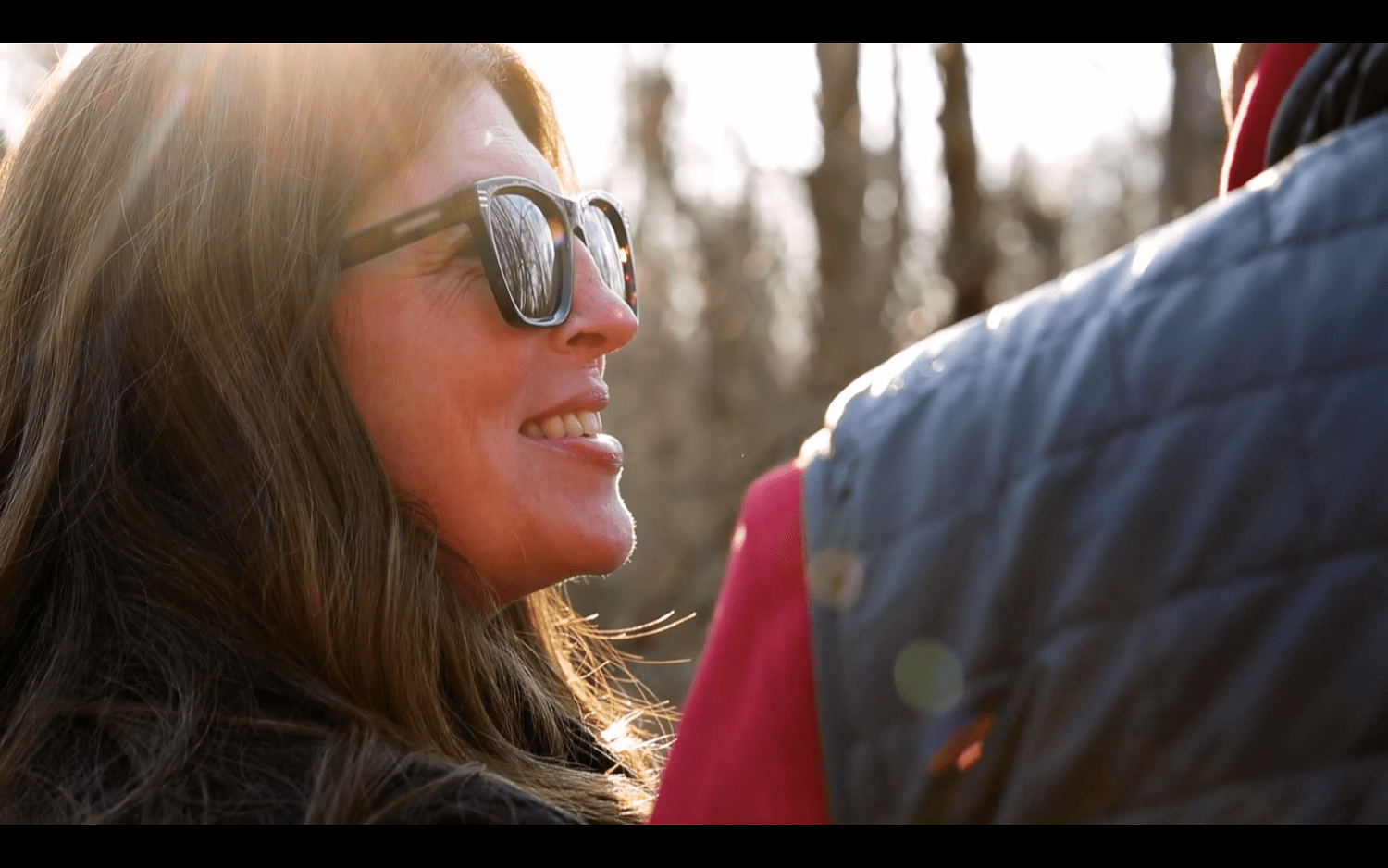
Angela Read, a 54-year-old resident of Phoenix, Arizona, has faced a life-altering diagnosis of olfactory neuroblastoma, a rare form of cancer that affected her sense of smell. This diagnosis came after a series of symptoms that she initially mistook for a sinus infection, leading to a profound transformation in her life.
Initial Symptoms and Diagnosis
In 2020, Read began experiencing congestion on one side of her nose, a condition she thought she could manage through self-treatment. “I had dealt with sinus infections here and there, and I knew how to self-treat,” Read explained. However, her symptoms persisted, and she soon lost her ability to taste mouthwash, which raised her alarm.
Initially attributing her symptoms to common COVID-19 indicators, she sought medical advice only after her mother suggested the possibility of a nasal polyp. During a face-to-face consultation in Scottsdale, Arizona, her doctor performed a nasal examination. “He looked at my nose with the scope immediately, and his first comment to me was, ‘What’s that doing there?'” Read recalled.
A CT scan revealed a mass in her nasal cavity, prompting an immediate biopsy. Read’s doctor informed her that the results would take about a week to ten days, but she was left waiting until just after Christmas 2020 to receive the unsettling news that she had a malignant tumor. “I had been otherwise healthy my entire life. You just don’t really ever expect that you are going to be the person that’s going to get that news,” she said.
Choosing a Treatment Path
Following her diagnosis, Read felt an overwhelming sense of panic, unsure of where to turn next. With olfactory neuroblastoma constituting only 3% of nasal cavity tumor cases, according to the National Cancer Institute, she recognized the rarity of her situation. “I’m unique in that my story is very surprising,” she noted, as many patients typically wait two years from symptom onset to diagnosis. Fortunately, her cancer had not spread beyond the primary tumor, which she considered a stroke of luck.
Determined to find the right medical team, Read sought opinions from multiple institutions. One renowned facility could not accommodate her for months, while another suggested a less invasive approach. Ultimately, she opted for treatment at Johns Hopkins in Maryland, where experts were actively researching her specific type of cancer. “I knew the Hopkins team were my people,” Read reflected, recalling their eagerness to see her for a consultation at the beginning of the new year.
Her treatment began with two surgeries scheduled for February 1 and February 8, 2021. The first surgery focused on removing the lower portion of the tumor, while the second addressed the dura mater, the outermost protective membrane of the brain and spinal cord. Both procedures were extensive, lasting up to 18 hours. “I’m incredibly grateful for the skill and expertise that the two surgeons have in that room for so many hours,” Read expressed.
Following her surgeries, Read underwent proton radiation therapy twice daily for five weeks. She and her husband temporarily relocated to Maryland during this treatment, which was critical for her recovery.
Life After Cancer
Now cancer-free, Read continues to receive regular medical surveillance and check-ups at Johns Hopkins. Although she could have sought ongoing care in Arizona, she chose to maintain continuity with her original medical team. “It’s a bit of a homecoming every time we come back,” she stated, noting the gratitude she feels towards the team that saved her life.
While Read’s life has changed significantly, she has adapted to her new reality. Radiation therapy resulted in closed tear ducts and a collapsed septum, necessitating further surgical interventions. She has also accepted the loss of her sense of smell, which affects everyday experiences such as cooking and enjoying scents. “I’ve learned I can’t rely on my nose to alert me about burning food on the stove or a fire,” Read admitted.
Reflecting on her journey, Read cherishes moments spent with her family during treatment. A particularly poignant memory occurred during her first two weeks of radiation, when her daughter accompanied her to see the cherry blossoms in Maryland. “It felt like a bit of a wink that he was right there with me,” she recalled, referring to her late father.
As she navigates her ongoing health challenges, Angela Read remains optimistic and determined to live life on her own terms.