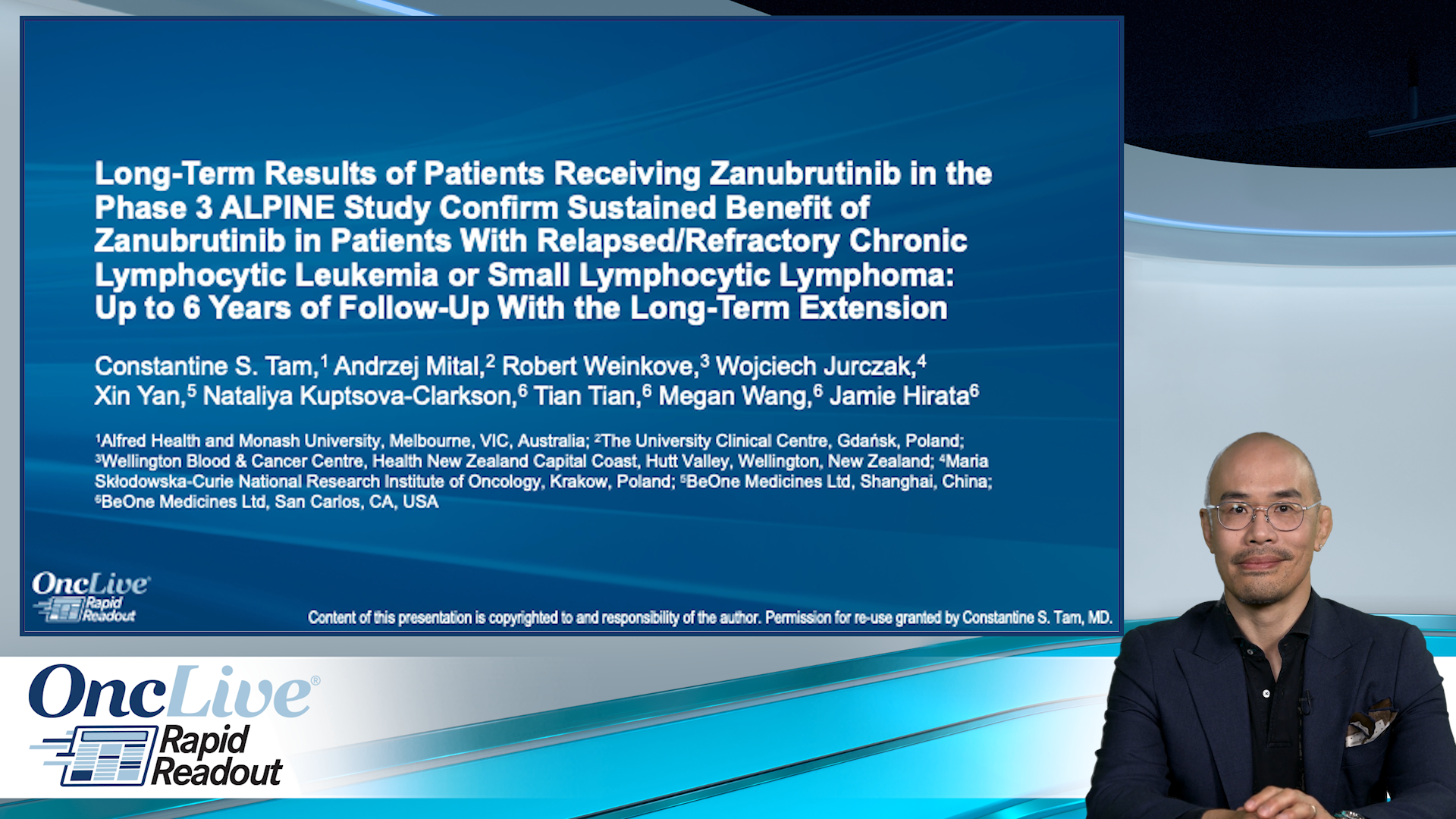
Data from the phase 3 ALPINE study reveals that zanubrutinib continues to provide substantial benefits for patients with relapsed or refractory chronic lymphocytic leukemia (CLL) and small lymphocytic lymphoma (SLL). Presented by Constantine S. Tam, MD, the long-term efficacy and safety results showcase the treatment’s potential over a follow-up period extending up to six years, with a median follow-up of approximately 54 to 63 months.
The findings indicate that the median progression-free survival (PFS) has not yet been reached for the overall patient population. When adjusted for the impacts of COVID-19, the median PFS stands at 60.3 months overall and 50.2 months specifically for patients with the del(17p) genetic abnormality. These results highlight the sustained efficacy of zanubrutinib, particularly in high-risk patient groups.
High Response Rates and Safety Profile
The overall response rates for zanubrutinib remained elevated, with many patients experiencing deepening responses over time. Notably, some patients transitioned to a complete response, underscoring the drug’s effectiveness as a long-term treatment option.
The long-term safety findings correlate with previous reports, indicating no new safety signals have emerged. While infections, hypertension, and neutropenia were prevalent among patients, the rates of key adverse events of special interest either stabilized or showed a decline over the extended follow-up period.
These results affirm that zanubrutinib is not only durable but also well-tolerated by patients suffering from relapsed or refractory CLL/SLL. The data supports its continued use as a viable long-term treatment option, enhancing the quality of life for those affected by these challenging conditions.