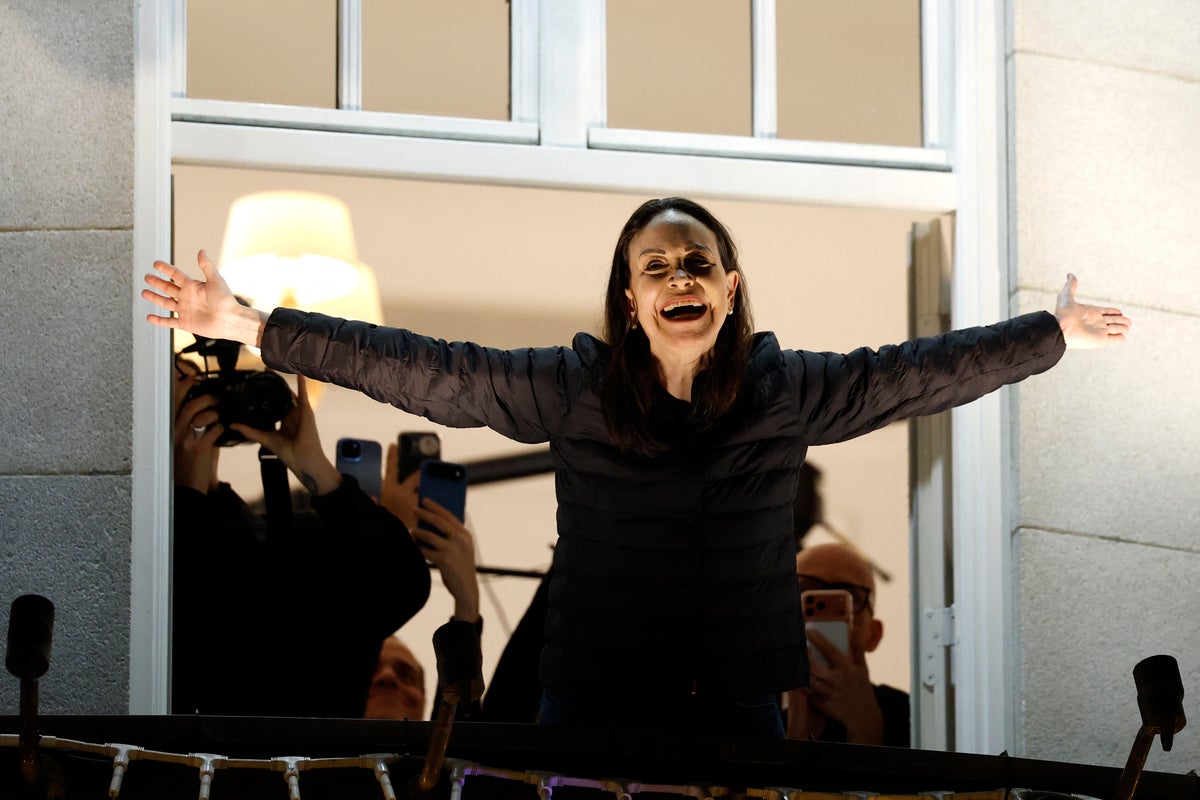
Venezuelan opposition leader and Nobel Peace Prize laureate Maria Corina Machado made a triumphant appearance in Oslo on Thursday, marking her first public engagement in nearly a year. This event follows her perilous escape from Venezuela, where she had been living in hiding after being barred from the presidential election. Supporters gathered outside the Grand Hotel, where Nobel laureates traditionally stay, to welcome her with cheers and applause as she stepped onto the balcony dressed in a black puffer jacket and jeans.
Machado’s appearance came just hours after her daughter received the Nobel Prize on her behalf, as she was unable to attend the ceremony due to the ongoing threats from the Venezuelan government. She reportedly fled the country by boat on Tuesday, reaching the Caribbean island of Curacao before traveling to Norway on a private plane. Her presence in Oslo is significant as it defies a decade-long travel ban imposed by the administration of Venezuelan President Nicolás Maduro.
Machado’s Message of Freedom and Resilience
With a hand on her heart, the 58-year-old pro-democracy activist joined her supporters in singing the Venezuelan national anthem, “Gloria al Bravo Pueblo.” As she interacted with the crowd, many chanted “courageous!” and “freedom!” Machado expressed her gratitude to her supporters, stating, “I want you all back in Venezuela.” Videos captured her climbing over metal barricades to embrace those who had gathered to see her.
In an audio message shared on the Nobel website, Machado acknowledged the risks taken by many to help her reach Oslo. She emphasized the importance of freedom, declaring, “Freedom is a choice that must be renewed each day, measured by our willingness and our courage to defend it.” She highlighted that the fight for Venezuela’s freedom extends beyond its borders, underscoring the broader implications for humanity.
Machado has been living in hiding since January 9, 2024, when she briefly addressed supporters during a rally against Maduro’s swearing-in for a third term. The Venezuelan leader, who is widely regarded as a dictator, has faced international condemnation for his administration’s actions, particularly in the context of the last presidential election, which many viewed as fraudulent.
International Recognition and Challenge Ahead
The Nobel Peace Prize awarded to Machado is a recognition of her unwavering commitment to democracy and human rights in Venezuela. During the award ceremony, Jørgen Watne Frydnes, chair of the Norwegian Nobel committee, acknowledged the extreme dangers Machado faced in her journey to Oslo. He described her as “one of the most extraordinary examples of civilian courage in recent Latin American history.”
The backdrop to Machado’s Nobel recognition includes a political landscape marked by repression and human rights violations. With the Venezuelan National Electoral Council, dominated by Maduro’s loyalists, declaring the president the legitimate winner of last year’s elections, opposition leaders faced disqualification and arrest. Machado had emerged as a prominent challenger but was prevented from participating when the government barred her candidacy.
The struggles faced by Machado resonate with a history of past laureates who have been unable to collect their awards due to oppressive regimes. Recent examples include Iranian activist Narges Mohammadi and Belarusian advocate Ales Bialiatski, both of whom were denied the opportunity to attend the ceremony. Machado’s story adds to this legacy, highlighting the ongoing fight for democracy in Venezuela and the resilience of those who stand against authoritarianism.
As Machado embarks on this new chapter, her message of courage and commitment to freedom continues to inspire many both within and outside Venezuela. The world watches closely as she navigates the challenges ahead, embodying the hope of a nation yearning for change.