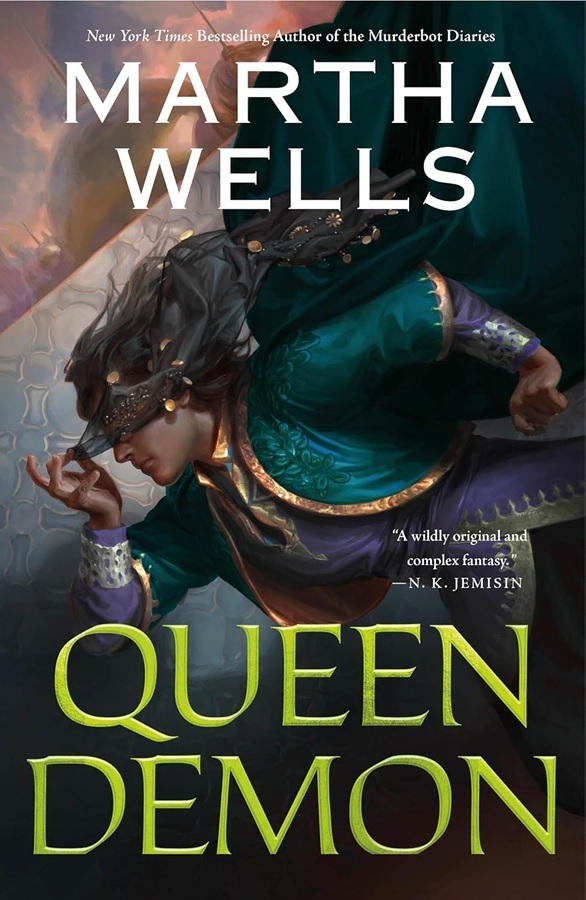
Martha Wells, an acclaimed author known for her intricate storytelling, continues to delve into profound societal themes in her latest novel, Queen Demon. This sequel to Witch King not only advances the plot but also deepens the exploration of colonization and trauma, presenting a narrative that challenges readers to reflect on the human condition through the lens of non-human characters.
Wells’ writing is characterized by a unique anthropological approach. Her protagonists are often far from the conventional “every-person” archetype. In previous works, such as City of Bones, she introduced Khat, a genetically engineered being navigating a post-apocalyptic world. Similarly, the Raksura series features winged reptilian shapeshifters facing their own struggles. In the Murderbot Diaries, the titular character, a constructed bot, grapples with its desire for humanity, while the characters in her latest series, The Rising World, include a Demon, a Witch, and an Immortal Blessed, with the protagonist, Kaiisteron, starting the series in a state of death—though he later returns.
Wells’ narratives often subtly unveil themes that critique human cruelty and the complexities of survival. In Queen Demon, the plot follows the aftermath of the events in Witch King, where Kai and his companions disrupt a rebellion and rescue Tahren Stargard, a key character previously captured. As the story unfolds, the narrative juxtaposes past events with present challenges, revealing a society grappling with the consequences of colonization.
The thematic depth of Queen Demon lies not just in its plot but in its exploration of trauma. Wells adeptly addresses the broader cultural implications of suffering, particularly in the context of her characters’ experiences. Kaiisteron, having witnessed the destruction of his world at the hands of the Hierarchs, embodies a collective trauma that resonates throughout the narrative. This portrayal is particularly significant as it highlights the lasting impact of colonization on both individual and communal levels.
In a pivotal scene, Bashasa, a character leading the rebellion, confronts Karanis, the ruler of Benais-arik, displaying the banner of a destroyed city. He proclaims, “I took this from their wall of trophies, where they hung the stolen treasures of a hundred lands and the bones of the brave who fought them.” This moment encapsulates the harsh realities of colonization, where the conquerors reduce the histories and cultures of the oppressed to mere trophies.
Wells invites readers to consider how societies can “unburn” the remnants of colonialism and rebuild. The narrative challenges the notion of empire, emphasizing a desire to restore a way of life that existed before the Hierarchs’ dominance. In a poignant exchange, Kai reveals to Ramad, a loyal scout, that Bashasa never desired an empire, but rather a return to their previous existence. This declaration underscores the book’s anticolonial message, advocating for a reevaluation of history from the perspective of the colonized.
As Queen Demon unfolds, it maintains momentum typical of a middle series installment, with numerous narrative threads still in play. While the characters navigate personal and political upheaval, the story remains engaging, avoiding the pitfalls often associated with transitional books. The resolution of certain plot points, such as Tahren’s rescue, injects fresh energy into the narrative, allowing for further exploration of the themes Wells intricately weaves throughout her work.
In conclusion, Martha Wells’ Queen Demon is a thought-provoking exploration of colonization, trauma, and resilience. Through her distinctive characters and layered storytelling, she challenges readers to confront uncomfortable truths about history and humanity. As the series progresses, the anticipation for how these themes will evolve remains high, making it a compelling read for those interested in nuanced narratives that transcend conventional tropes. Readers are encouraged to immerse themselves in this richly crafted world, as the discussions surrounding its themes will undoubtedly resonate long after the last page is turned.