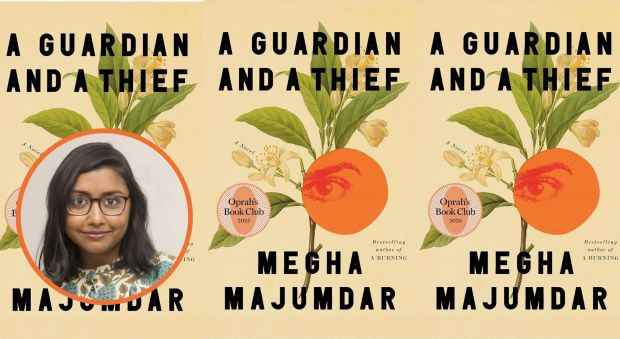
Megha Majumdar’s latest novel, A Guardian and a Thief, delves into the complexities of human behavior during crises. Set in a near-future Kolkata, where climate change has drastically altered daily life, the story follows two central characters: a mother named Ma and a man named Boomba. As they navigate survival in an oppressive environment, Majumdar highlights the moral dilemmas faced by individuals in a world where resources are scarce.
The narrative unfolds as Ma prepares to flee Kolkata with her toddler, aiming to reunite with her husband in America. Meanwhile, Boomba, who has escaped rural India, attempts to establish a new life in the city. Both characters embody the duality of being guardians and thieves, driven by the need to protect their loved ones while grappling with the ethical implications of their actions.
Majumdar’s novel, nominated for the National Book Award, is a reflection of real-world struggles. The author draws parallels to the ongoing climate crisis, referencing documented instances of heat-related deaths in India and the particular challenges faced by women in safeguarding their families. She emphasizes how each decision can have life-altering consequences, forcing individuals to reconcile their sense of morality with the instinct for survival.
Capturing the Human Experience
The story is set over the course of a week, during which Ma’s plans are disrupted, while Boomba sees a chance to rectify past mistakes. Their paths are destined to collide, creating an atmosphere of impending tragedy. Majumdar, who grew up in Kolkata before studying at Harvard and Johns Hopkins, discusses the themes of her novel and her writing process in a recent interview.
One critical question the book raises is the toll of survival on the human spirit. Majumdar reflects, “What does that do to your humanity and to your soul to have to make those calculations? Is it an erosion of who you are?” She is interested in exploring how individuals manage their freedom and moral choices when faced with overwhelming global forces such as climate change and inequality.
The author asserts that the narrative is not solely about individual tragedies but rather about how these personal stories are shaped by larger systemic issues. She poses questions about free will and the implications of broken food supply chains, urging readers to consider what happens when people are caught within systems beyond their control.
A Reflection on Human Nature
Majumdar’s exploration of ethical dilemmas does not stem from cynicism but rather from a genuine curiosity about human behavior under pressure. She believes that while individuals may act selfishly at times, they are also capable of extraordinary generosity and kindness in crisis situations. The balance between these extremes is a central theme in her work.
When discussing her characters, Majumdar emphasizes the organic development of their actions. She allows them to guide their stories, reflecting her interest in moral complexities and the sacrifices that arise during times of scarcity. “I was on a panel recently… and he spoke about allowing his characters to teach him who they are,” she explains, underscoring her commitment to authentic character development.
Majumdar’s concise writing style contributes to the novel’s impact. She aims for tight plotting, ensuring that every page serves a purpose. “I want to give the reader clarity in terms of understanding why I am asking them to read a scene,” she says. This precision enhances the emotional depth of her narrative, making it resonate with readers.
The author also takes moments to broaden the narrative scope, painting a vivid picture of Kolkata beyond its struggles. She includes scenes of joy and resilience, capturing the city’s vibrancy amidst the challenges posed by climate change. “I wanted to show that it is a city where so much life is going on,” she notes.
As a new parent, Majumdar faces the challenge of writing about children experiencing loss and hardship. She approaches this task with sensitivity, drawing from her own experiences while also imagining the pressures her characters endure. “Even if the question is difficult or the subject matter is grim, there is a kind of fundamental pleasure in thinking about those things,” she shares.
Overall, A Guardian and a Thief serves as a poignant exploration of humanity in the face of crisis. Through the lens of its characters, the novel invites readers to reflect on their own moral choices and the impact of larger global forces on individual lives.