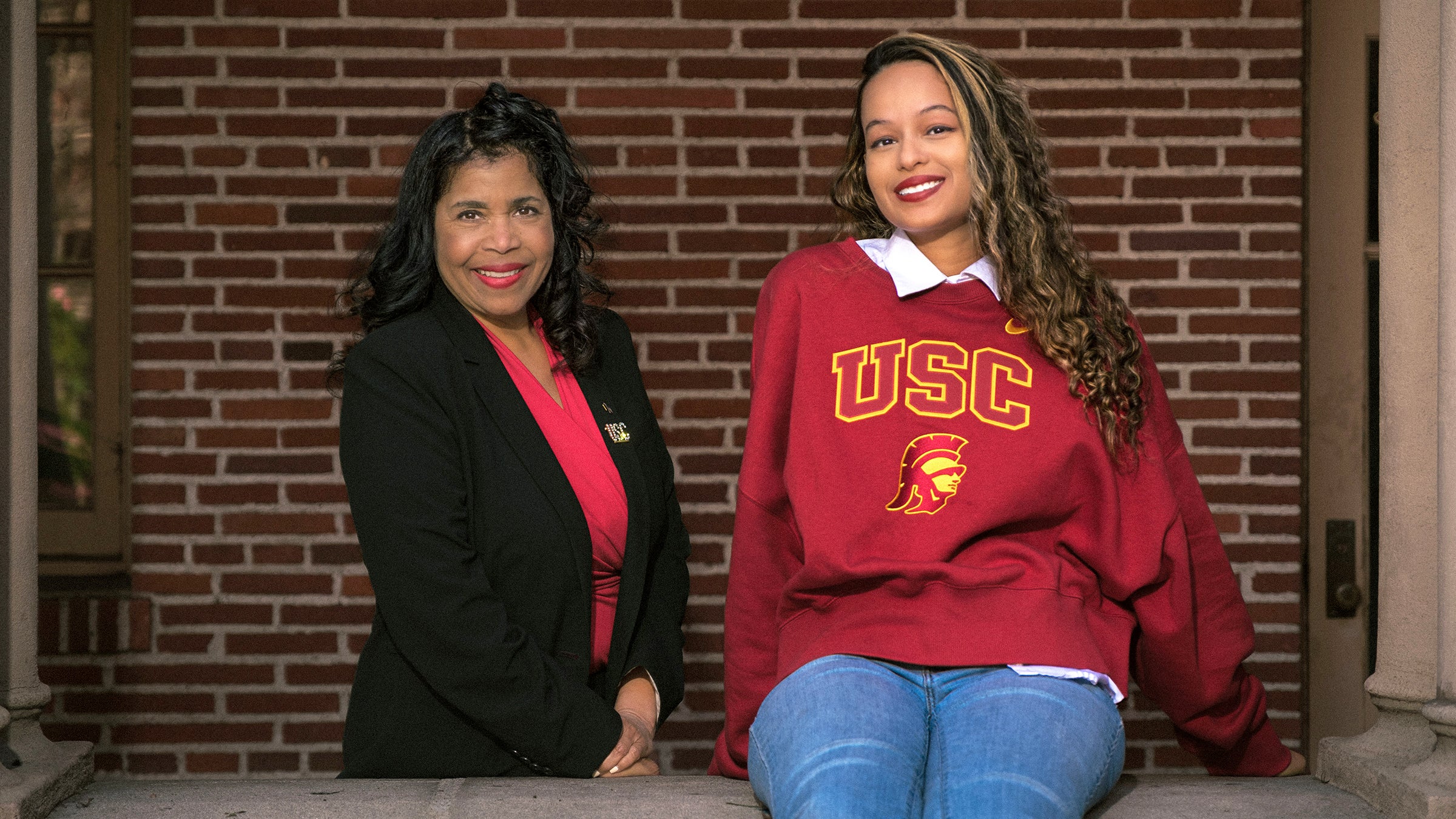
A unique discovery has emerged from the University of Southern California (USC), where two students have uncovered a compelling ancestral connection to a notable figure in the abolitionist movement. Cyan Shreve, a graduate student at USC’s School of Cinematic Arts, and Lori Shreve Blake, the senior director for career engagement at USC, are both descendants of Mary Ann Shadd Cary, a pioneering abolitionist and activist.
Their paths crossed during a USC Black Alumni Association Welcome Pinning Ceremony, where Shreve was inspired by Blake’s address and sought to connect with her. Upon meeting for career advice, the duo discovered their shared lineage, revealing that they are cousins linked through their remarkable ancestor, Shadd Cary, who made significant contributions to the fight against slavery.
Uncovering a Shared Heritage
Shadd Cary was a trailblazer in many respects, being the first Black woman in North America to publish a newspaper and one of the first women in the nation to earn a law degree. “She is the rock star of the Shreve family,” remarked Shreve Blake, reflecting on their ancestor’s legacy. The connection to Shadd Cary has been a source of pride for both women, as Shreve Blake noted that her family has celebrated Shadd Cary’s achievements for generations.
Cyan Shreve is currently developing a film centered on her ancestor’s life. Having studied Shadd Cary’s impact during her undergraduate years at Howard University, she expressed her excitement about telling the story of someone who inspires her deeply. “I’m proud that she is my great-great-great-great-aunt,” Shreve said.
As they delved into their family history, the women identified roots in Buxton, Ontario, a community that offered refuge to many runaway enslaved individuals and free Black people prior to the Reconstruction era. Shadd Cary was born in Delaware in 1823 to abolitionist parents who played a role in the Underground Railroad, a network that helped enslaved African Americans escape to free states or Canada.
Shadd Cary’s Legacy in Education
When Shadd Cary was ten, her family relocated to Pennsylvania due to the lack of educational opportunities for Black children in Delaware. She later established a school for Black children and taught in various locations, furthering her commitment to education. In 1851, following the passage of the Fugitive Slave Act, Shadd Cary moved to Canada, where she opened a school for the increasing number of refugees. Her classes were notably racially integrated, occurring long before the U.S. Supreme Court’s landmark decision in Brown v. Board of Education.
Cyan Shreve emphasized the importance of sharing stories like Shadd Cary’s, stating, “She is one of those people who can inspire so many in terms of what you can do to help a community despite the odds surrounding you.”
According to Allissa V. Richardson, an associate professor at the USC Annenberg School for Communication and Journalism, Shadd Cary’s contributions extend beyond her many “firsts.” Richardson described her as a “foundational” figure who recognized the press as a tool for liberation. Shadd Cary’s publication, the Provincial Freeman, initially concealed her gender by using her initials, demonstrating her commitment to creating a space for Black voices.
From Trojans to Family
Since their initial meeting, Shreve and Shreve Blake have developed a close relationship, spending time together during holidays and forming a bond that extends beyond their shared ancestry. Shreve Blake, who has no siblings, expressed her gratitude for discovering this new branch of the Shreve family. “There is this whole other arm of the Shreve family that I now know,” she shared.
The connection between the two might not have been made had Shreve Blake opted to change her last name. “I’m a Shreve, and I’m a proud Shreve,” she stated. “Had I been Blake, we would have never met.”
Cyan Shreve reflected on the significance of finding a familial connection in a new environment. “To come to a new school and meet someone that you’re actually related to is something for which I will forever be grateful,” she said.
Richardson highlighted the profound nature of their discovery, explaining that Shadd Cary’s belief in education and knowledge as a bridge continues to resonate across generations. “Her legacy continues to bind generations in the work of possibility,” she remarked, underscoring the enduring impact of Shadd Cary’s life and work.