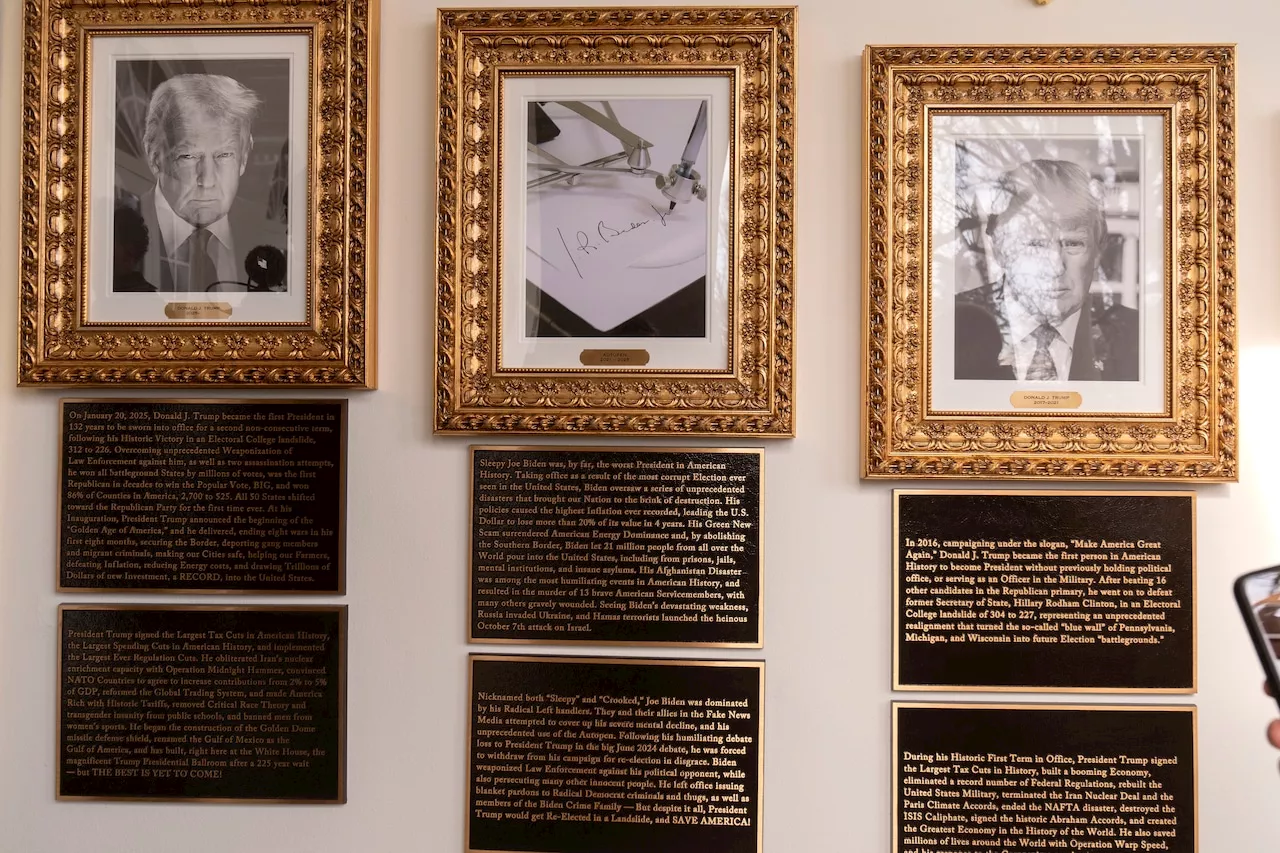
The recent installation of controversial plaques under presidential portraits at the White House has sparked discussion among political commentators. On December 17, 2025, the plaques were unveiled as part of Donald Trump’s “Walk of Fame” on the Colonnade, featuring sharply critical text regarding both former President Barack Obama and current President Joe Biden.
The plaques have drawn significant attention for their provocative language. Under Obama’s portrait, the plaque describes him as “one of the most divisive political figures in American history.” It criticizes his administration’s signature policy, the Affordable Care Act, claiming he “crippled small businesses with crushing regulation and environmental red tape.” The text goes on to accuse Obama of “weaponizing the IRS and Federal bureaucracies against his political opponents.”
In a similar vein, Biden’s plaque contains allegations regarding the legitimacy of his 2020 election victory. It states, “Taking office as a result of the most corrupt Election ever seen in the United States, Biden oversaw a series of unprecedented disasters that brought our Nation to the brink of destruction.” This statement reflects Trump’s ongoing narrative surrounding the 2020 election results, which he has repeatedly claimed were fraudulent.
Discussion surrounding these plaques has been divided among commentators. Brian Kilmeade, a host on Fox News, expressed his concerns during a recent broadcast, disagreeing with fellow Fox commentator Jesse Watters, who downplayed the significance of the plaques, suggesting Trump was merely “having a little fun.” Kilmeade argued for a more respectful portrayal of past presidents, stating, “Just put the profiles up there. I am not for dispelling or saying anything bad.” He acknowledged that while some presidents initially viewed as poor, like Ulysses S. Grant, have later been re-evaluated positively, he does not believe this will occur for Biden.
The installation of these plaques reflects Trump’s approach to his presidency, emphasizing a confrontational stance towards his political opponents. The implications of such actions extend beyond mere aesthetics; they signal a continued partisan divide in American politics.
As political discourse remains heated, these plaques serve as a tangible representation of the ongoing conflict between Trump and his predecessors. The installation has not only drawn criticism from fellow commentators but also raises questions about the role of presidential legacies and how they are presented at a national landmark like the White House.
The reaction to the plaques is indicative of the broader political landscape in the United States, where narratives surrounding leadership and governance continue to provoke intense debate. As the nation approaches future elections, these discussions reflect the polarized environment that characterizes contemporary American politics.