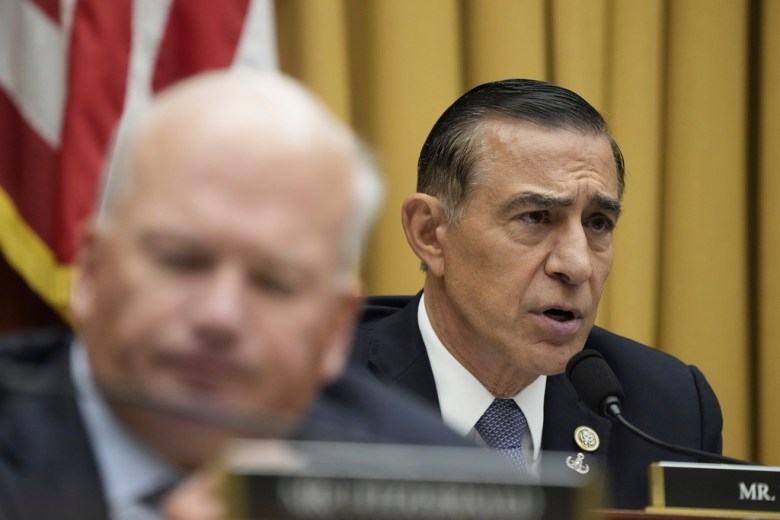
Republican Representative Darrell Issa announced on Thursday that he will not pursue a congressional seat in Texas, opting instead to remain in California. This decision follows a brief consideration spurred by significant changes to the U.S. House map in California, which was approved in November under the direction of Governor Gavin Newsom.
Issa, who has represented a district anchored in San Diego County, stated, “I can hold this seat. I’m not quitting on California and neither should anyone else.” His initial thoughts of relocating were influenced by the new map’s potential to shift several Republican districts toward Democratic control ahead of the upcoming midterm elections.
Under the newly drawn lines, Issa’s district now includes the Democratic stronghold of Palm Springs, complicating his path to reelection. The alterations aim to counterbalance perceived Republican advantages in states like Texas, where there is an ongoing battle for House seats. The reshaping of California’s districts is part of a larger strategy to protect and potentially expand the Democratic majority in Congress.
In his statement, Issa acknowledged outreach from Texas residents and officials encouraging him to consider a run in their state. He remarked, “I appreciate the opportunity, but California is my home. I told them I’m going to stay in Congress, and I don’t need to go to Texas for that.” The representative expressed confidence in his ability to win reelection based on his record and the support of voters in both San Diego and Riverside counties, regardless of party affiliation.
Despite his decision, the political landscape remains uncertain. A court has blocked the newly approved Texas districts, and the Supreme Court is deliberating on whether to intervene. This situation reflects the broader national struggle over control of the House, with both parties vying for advantage through district redrawing.
Issa is not new to political maneuvering. He has previously shifted his constituency, moving from a progressively leaning coastal district to a more Republican-friendly area east of San Diego. Nevertheless, his current district’s changes present new challenges that may affect his political future.
Influential Republicans, including Richard Hudson, who leads the campaign arm of the House GOP, have weighed in on Issa’s situation. Hudson stated, “I’ve encouraged Darrell to run in his current district,” highlighting the support he has within his party to stay and fight for his seat.
As the political climate evolves, Issa’s commitment to California marks a significant decision in the shifting dynamics of U.S. congressional races, particularly as states navigate their redistricting processes in the lead-up to the elections. The implications of these changes could reverberate well beyond California, impacting the national political landscape.