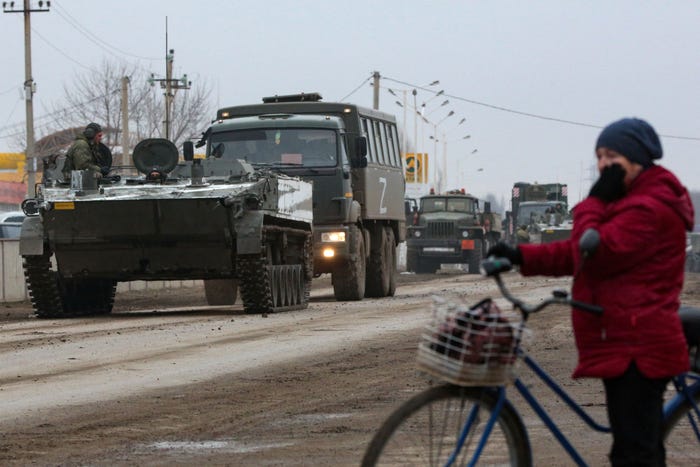
A former top commander of the Russian military has publicly criticized the country’s intelligence services for their role in the ill-prepared invasion of Ukraine. Col. Gen. Vladimir Chirkin, who led Russia’s ground forces from 2012 to 2013, stated that the Russian intelligence community deserves a “failing grade” for its performance prior to the conflict that escalated dramatically in March 2022.
In an interview on November 27, 2023, with Russian radio outlet RBC, Chirkin emphasized that Moscow had been misled about the political landscape in Ukraine, believing that a significant majority of Ukrainians would support a pro-Russian government. “It turned out to be exactly the opposite,” he remarked, noting that only about 30% of Ukrainians supported Russia’s actions, while 70% opposed them. This stark miscalculation contributed to the initial chaos faced by Russian forces, which he described as a “seriously cruel lesson.”
Chirkin’s comments echo sentiments expressed by various analysts in the West and Ukraine, who have pointed out that Russia underestimated both the resolve of Ukrainian forces and the complexities of the conflict. He remarked that the Kremlin had “traditionally” misjudged its military capabilities, leading to an invasion that many anticipated would be swiftly concluded. “Everyone started saying in February 2022 that the war would be over in three days,” he recalled. “But unfortunately, it didn’t work out that way.”
The general also suggested that Russian troops were hindered by what he termed the “Tbilisi syndrome,” a phenomenon where soldiers hesitate to make tactical decisions without direct orders from superiors. This lack of initiative, he argued, compounded the challenges faced by Russian forces in the early stages of the invasion.
Chirkin’s frank assessment surprised even his interviewer, Yuri Tamantsev, who noted the unexpected openness at the start of their conversation. This level of criticism is particularly notable given the stringent laws in Russia against disseminating what authorities deem “false information” about the war. Violations of these laws can result in prison sentences of up to 15 years, as reported by human rights organizations.
Despite his criticisms, Chirkin refrained from condemning the official justifications provided by the Kremlin for the invasion. Instead, he pivoted the discussion towards how Russian military strategies have evolved over recent years and how they might align with Moscow’s objectives for victory.
Chirkin’s military career has been marked by significant events, including organizing the Victory Day parade in 2013. However, his career took a downturn when he was ousted in 2013 over bribery allegations, ultimately leading to a conviction in August 2015 for accepting a bribe of 450,000 rubles. His prison sentence was later commuted, and he regained his rank.
The insights shared by Chirkin provide a rare glimpse into the internal assessments of Russia’s military leadership regarding the ongoing conflict in Ukraine. As the war continues, the implications of such critiques could influence public perception and policy within Russia.