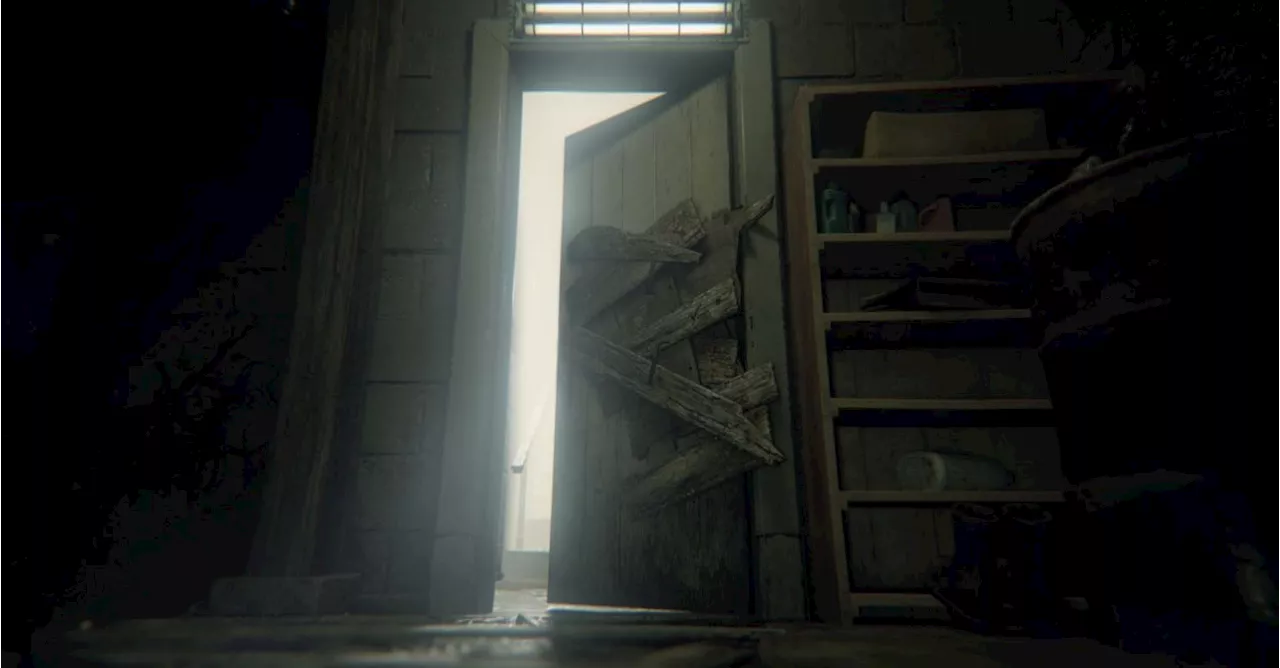
The complexities of designing doors in video games have sparked a wave of frustration among developers, as shared on social media platforms over the past week. Numerous industry professionals, including Stephan Hövelbrinks, the creator of *Death Trash*, have voiced concerns about the myriad of bugs that can arise from seemingly simple door mechanics. The co-game director of *The Last of Us Part II*, Kurt Margenau, noted that perfecting door functionality was one of the most time-consuming challenges in game development.
Developers recognize that the ideal door in a video game should blend seamlessly into the environment. As Pete Galbraith from Owlchemy Labs remarked, “The best kind of door in a video game is the one no one remembers.” When doors are so well integrated that they do not disrupt the player’s experience, developers can consider their job well done. Galbraith elaborated, “If it fits into the environment, makes sense for its context, and works exactly how the player expects, then in that instant it was simply a door as real as any other in the player’s real life.”
Understanding player interaction during various gameplay scenarios adds another layer of complexity. In combat situations, for example, doors may need to function differently than when players are exploring. Margenau explained that during combat, doors should close slowly to create tension, while they may remain open during exploration. He emphasized that a door cannot simply fly open; characters must engage with it physically, pushing or pulling it as they would in real life.
The struggle with door design is not unique; developers also face challenges with other everyday objects like ropes and mirrors. After the release of Half-Life: Alyx, a developer discussed the intricate work involved in rendering realistic bottles, while Liz England cited ladders and elevators as additional challenges. England pointed out that doors often receive disproportionate scrutiny due to their prevalence in both games and real life.
The concept of a door is straightforward: an opening mechanism that allows entry or exit. Yet, in video game development, it becomes a multifaceted problem that requires input from multiple team members. Will Kerslake, game director at Crystal Dynamics, highlighted the numerous issues related to door mechanics, including their orientation and the placement of handles. He explained that accommodating multiple player states, such as crouching or sprinting, complicates the animation process further.
Developers must also consider interactions between players and non-player characters (NPCs) with doors. For instance, Kerslake posed a question regarding what happens when a door collides with an NPC: does the door stop, or does the NPC move? These decisions can lead to a range of bugs based on the game’s mechanics.
While creating interactive doors is not an insurmountable task, some developers choose to avoid them altogether. Kerslake noted, “Many games avoid doors in gameplay,” adding that many titles feature open doorways or use doors purely as progress gates that cannot be closed. This approach can simplify design while still providing a sense of structure within the game.
The expectation of how doors should function adds another layer of complexity. Players possess an innate understanding of how real-world doors operate, which raises the bar for digital representations. Galbraith highlighted that players notice discrepancies, such as doors that close too quickly or do not mimic the sounds and movements of real doors. “Our ideas of how we interact with them are incredibly clear due to the cognitive reinforcement we have received from interacting with them so often,” he stated.
To maintain player immersion, developers often bend the rules of realism. While most real-world doors open in one direction, game doors might swing both ways. Galbraith explained that when virtual doors mimic the look, sound, and behavior of real doors, players can accept them without questioning their functionality.
Beyond their aesthetic appeal, doors play a crucial role in level design. They can serve as obstacles that prevent players from progressing until certain objectives are completed, adding layers of tension and engagement. “Doors are just one of a variety of tools that a developer can use when designing levels,” Galbraith noted, emphasizing that many games integrate other elements alongside doors to mitigate potential issues.
In conclusion, while doors may appear to be a simple concept, their design involves intricate considerations that can challenge even the most experienced developers. As the gaming industry continues to evolve, understanding the nuances of such commonplace elements remains essential for creating immersive and engaging player experiences.