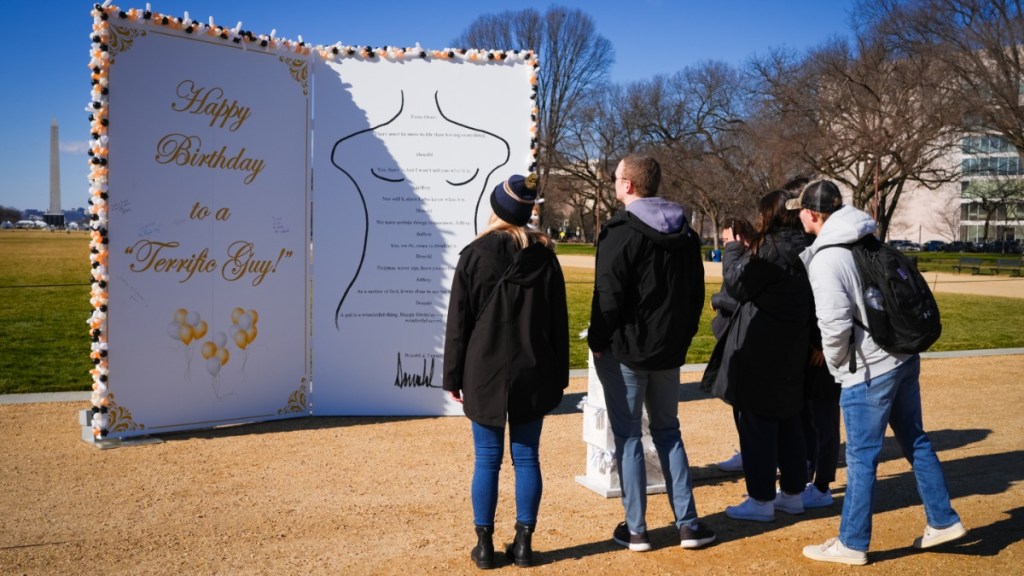
A large-scale replica of an alleged birthday card from Donald Trump to Jeffrey Epstein has been installed near the U.S. Capitol in Washington, D.C. This display, which references a message reportedly included in a 2003 birthday album for Epstein, has reignited scrutiny surrounding Trump’s associations with Epstein, who died in federal custody in 2019 while awaiting trial on sex trafficking charges.
The art installation, erected early on March 11, 2024, stands approximately 10 feet tall and 12 feet wide. It features a birthday card that became publicly known last year following the release of documents by the House Oversight Committee. Investigators noted that the card was part of a compilation created for Epstein’s 50th birthday and allegedly included a message from Trump. The card displays a congratulatory note reading, “Happy birthday to a ‘Terrific guy!’” along with a drawing of a nude woman, reminiscent of the original document. It includes both a typed “Donald J. Trump” and a handwritten signature of “Donald.”
The installation was created by an anonymous group that identifies itself as The Secret Handshake. In front of the replica card, they have placed a display resembling an open filing cabinet labeled “The Files,” filled with strips of paper. Visitors are encouraged to sign the card and leave written messages using markers provided at the site. A notice at the location warns that any content deemed violent, hateful, or offensive will be removed.
Trump has consistently denied writing the birthday message and has claimed that the signature on the card does not belong to him. He previously filed a defamation lawsuit against The Wall Street Journal over its reporting on the alleged letter. The White House criticized the installation in a statement released on the same day the display was unveiled.
The ongoing public interest in the artwork highlights the complexities surrounding Trump’s historical ties to Epstein. As the installation remains on the National Mall through March 15, 2024, it serves as a focal point for discussion about these controversial associations and their implications in current political discourse.