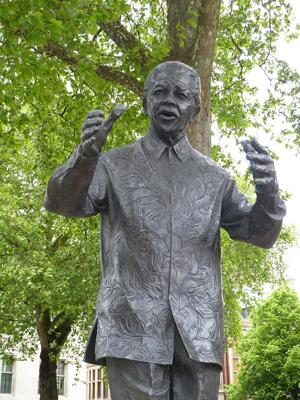
On December 1, 2013, the world mourned the loss of Nelson Mandela, a pivotal figure in the fight against apartheid in South Africa. His funeral was attended by numerous global leaders, including then-President Barack Obama, and former presidents George W. Bush, Bill Clinton, and Jimmy Carter. Mandela’s journey from a young Black lawyer to the first Black president of South Africa is a story defined by resilience, forgiveness, and an unwavering commitment to justice.
Mandela’s rise to prominence began in a turbulent political climate, where he became a leader in the movement to dismantle apartheid—an oppressive system of racial segregation that marginalized Black and Asian populations in South Africa. His activism led to his imprisonment at Robben Island for 27 years, a period that solidified his resolve to fight for freedom. Upon his release in 1990, he famously declared his commitment to live for freedom or die for it. Just four years later, in 1994, he was elected president in a historic vote that marked the end of decades of institutionalized racial discrimination.
Mandela’s election was remarkable not only for his background but also for his approach to leadership. After years of suffering under a brutal regime, he chose not to seek revenge but instead advocated for forgiveness and national reconciliation. This decision is often cited as a pivotal moment in South African history, demonstrating how one individual’s values can shape a nation’s future.
In his autobiography, Long Walk to Freedom, Mandela reflects on his early influences, including his roots in the Methodist Church. He credits his upbringing and education in a Methodist school for instilling values that would guide him throughout his life. Mandela wrote about his involvement with the Students Christian Association, where he taught Bible classes, suggesting that these formative experiences laid the groundwork for his ability to forgive.
Yet, the relationship between Christianity and apartheid reveals a complex history. Mandela noted that the Dutch Reformed Church provided a religious justification for the apartheid system, intertwining faith with oppression. He recognized how easily faith can be misused, stating, “The policy was supported by the Dutch Reformed Church, which furnished apartheid with its religious underpinnings.” This acknowledgment highlights the duality within religious institutions and their effects on social justice.
Despite this history, Mandela emphasized the importance of living by the teachings of Jesus, advocating for a world where forgiveness and love prevail. He once addressed an Easter conference, sharing a powerful message about the inclusivity of Christ’s teachings: “…the Good News borne by our risen Messiah who chose not one race, who chose not one country, who chose not one language, who chose not one tribe, who chose all of humankind!”
The legacy of Nelson Mandela serves as a reminder of the transformative power of forgiveness and reconciliation. His life illustrates that embracing the principles of acceptance and respect can have a profound impact on communities, families, and workplaces.
As individuals, we can all strive to embody these values in our daily lives. Mandela’s journey shows that practicing forgiveness and fostering understanding can create ripples of positive change in the world. Ultimately, his story encourages us to reflect on how we can implement these teachings in our own lives, reinforcing that even in the face of adversity, compassion can reign supreme.