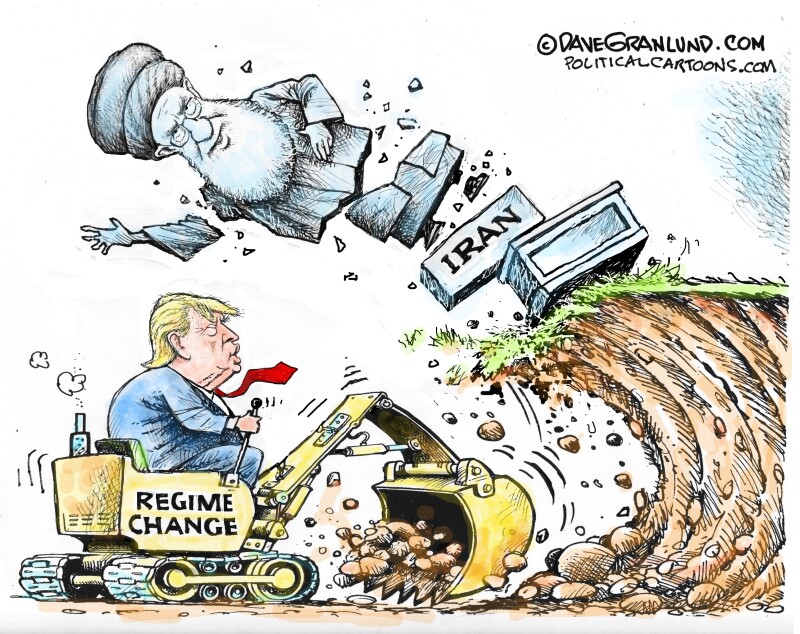
President Donald Trump has initiated Operation Epic Fury, a military campaign aimed at dismantling Iran’s capabilities that threaten regional stability and U.S. interests. This operation marks a significant moment in Trump’s second term, as he seeks to redefine America’s role in the Middle East, emphasizing the end of conflicts rather than merely winning battles.
Since the 1979 Islamic Revolution, Iran has maintained an adversarial position against the United States, characterized by the chant “death to America.” The regime in Tehran has not only propagated this sentiment but has also engaged in actions that have resulted in the deaths of American personnel and allies. The U.S. has accused Iran of exporting terrorism, including supporting groups that have carried out attacks in the region and beyond.
In a calculated response, Trump has framed Operation Epic Fury as a necessary measure to protect both American lives and international peace. Critics may label it a “war of choice,” but Trump argues that it is essential to confront a regime that has consistently threatened U.S. security. As Defense Secretary Pete Hegseth remarked, “Turns out the regime that chanted ‘death to America’ was gifted death from America,” highlighting the operation’s defensive nature.
Strategic Goals of Operation Epic Fury
The operational objectives of this military campaign are clear and focused. First, the initiative aims to dismantle Iran’s ballistic missile capabilities, which pose a direct threat to regional allies such as Israel and potentially to Western Europe and the U.S. itself. The joint air campaign is designed to neutralize missile infrastructure that could be used for aggression.
Second, the operation targets Iran’s nuclear capabilities. The U.S. has drawn a clear line: Iran must not develop nuclear weapons. Reports indicate that the Iranian regime has enriched enough uranium to create up to 11 nuclear warheads, a situation that the U.S. and its allies view as intolerable.
Finally, the campaign seeks to dismantle the leadership structure of the Iranian regime by targeting key figures, including Ayatollah Ali Khamenei. The intention is to create an environment where the Iranian populace can reclaim their future. Trump has urged the Iranian people to take back their country, asserting, “This will be, probably, your only chance for generations. America is with you.”
Regional Implications and Future Prospects
The ramifications of Operation Epic Fury extend beyond Iran. The response from regional players has already shifted, with nations such as Saudi Arabia and other Gulf capitals aligning themselves with U.S. interests against Iranian aggression. This newfound unity is seen as a significant development in the context of Middle Eastern geopolitics, potentially paving the way for the expansion of Trump’s Abraham Accords—a framework for regional peace based on mutual interests and security cooperation.
As the operation unfolds, the commitment and skill of U.S. servicemen and servicewomen are crucial. Their efforts may ultimately lead to a more stable and peaceful Middle East, a goal that previous diplomatic efforts have struggled to achieve. The outcomes of this campaign will likely influence Trump’s legacy, potentially framing him as the “peace President” who sought to end years of conflict through decisive action.
In conclusion, Operation Epic Fury represents a critical juncture in U.S. foreign policy, merging military action with a vision for long-term stability in the Middle East. The world watches closely, as the implications of this operation could shape the region’s future for years to come.