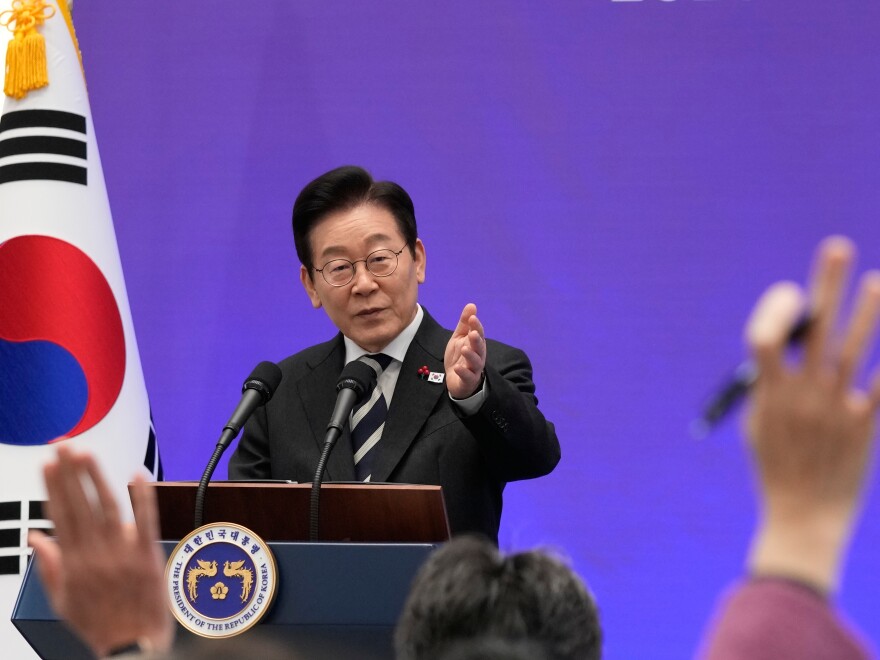
One year after a failed attempt to impose martial law, South Korea’s President Lee Jae Myung commended citizens for their pivotal role in defending democracy. On Wednesday, Lee acknowledged the resilience of the nation in thwarting the power grab initiated by former President Yoon Suk Yeol. This event marked a significant moment in South Korea’s democratic history, as citizens rallied around the National Assembly to oppose Yoon’s declaration.
In the wake of Yoon’s martial law announcement, thousands gathered outside the National Assembly, responding to his claims of “legislative dictatorship.” Yoon had sent troops to the parliament and issued decrees limiting political activities. However, the assembly successfully voted against the martial law, forcing Yoon to withdraw it after just six hours. Lee remarked that the South Korean public had “astonished the world” by restoring democratic governance in the face of a self-coup attempt.
Legal Repercussions for Yoon and His Administration
In the following days, law enforcement launched an investigation into Yoon for charges of insurrection. In a historic move, Yoon became the first sitting president in South Korea to be arrested. On December 14, 2024, the National Assembly impeached him, with support from members of his own party joining the opposition. This decision was upheld by the Constitutional Court in April 2025, marking a significant moment in the nation’s political landscape.
Yoon now faces multiple indictments, including accusations of masterminding an insurrection and abusing power. Allegations have also surfaced that he attempted to provoke North Korea by sending drones into Pyongyang in October 2024, a move seen as an effort to justify his martial law declaration. Additionally, several military commanders and high-ranking officials, including Defense Minister Ahn Gyu-back, have been indicted for their roles in the events leading up to the crisis.
Legislative Changes and Political Landscape
In response to the crisis, the National Assembly revised legislation to implement stricter requirements for declaring martial law and to enhance protections for parliamentary authority. Under the new laws, military and police forces are prohibited from entering the parliamentary compound without the Speaker’s consent, even during martial law. Further measures have been proposed to allow public servants, including military personnel, to disobey unlawful orders from superiors.
Public opinion appears to be shifting, with recent polls indicating a recovery of confidence in national institutions. However, the fallout from the martial law episode has exacerbated political polarization within South Korea. A poll last week revealed that 77% of respondents believe political divisions have deepened since the crisis. The People Power Party (PPP), now in opposition, is grappling with whether to issue an apology for Yoon’s actions as they prepare for local elections next year.
President Lee faces the challenge of ensuring accountability while fostering reconciliation. “The intention is not to mercilessly punish the perpetrators,” he stated during the press conference. “But we can’t sweep them under the rug and let things slide. We need to unite, but unity doesn’t mean stitching things up.”
The international implications of the crisis have also been significant. The situation has tarnished South Korea’s reputation as a stable democracy, especially considering the Biden administration’s investment in Yoon as a model leader. Allegations of provocations against North Korea have raised concerns about the safety of U.S. troops stationed in South Korea, potentially straining the long-standing alliance.
Reflecting on the past year, President Lee expressed hope that South Korea’s experience could serve as a “historic example for the restoration of democracy” worldwide. The extent to which the nation can prevent future political turmoil and uphold democratic values may ultimately define its trajectory in the years to come.