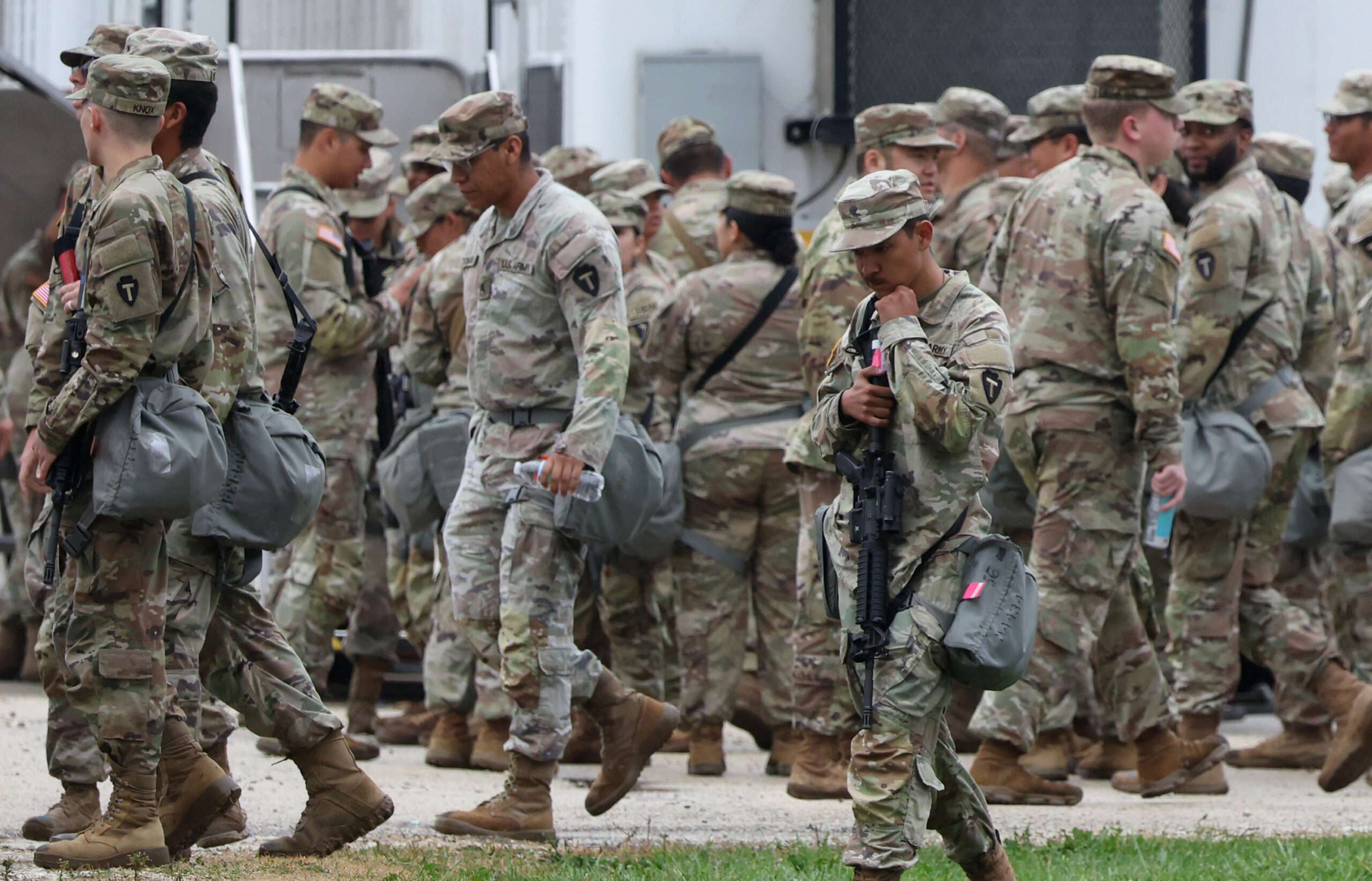
On March 25, 2024, the Supreme Court delivered a significant ruling in the case of Trump v. Illinois, effectively blocking former President Donald Trump‘s attempt to use the National Guard for domestic law enforcement purposes. The decision represents a major legal setback for Trump, as it rejects his motion to stay a lower court ruling that had already deemed his actions unlawful.
The Supreme Court’s ruling does not serve as a final determination on the case’s merits but indicates that the majority of justices appear to question the legality of Trump’s deployment of the National Guard. Currently, the use of the Guard in Illinois remains prohibited, raising questions about the implications for similar cases across the United States.
In this instance, Trump argued that he needed to deploy the National Guard to counter anti-ICE protests in the Chicago area, which he claimed had turned violent. To support his actions, he invoked 10 U.S.C. Section 12406, which allows for the federalization of state National Guard forces under specific conditions, including national invasion or rebellion. However, the Seventh Circuit Court emphasized that Illinois has not faced invasion or rebellion, leaving the argument largely reliant on Trump’s assertion of being “unable” to execute laws with regular forces.
In an unsigned per curiam opinion, the Supreme Court majority rejected Trump’s claim of inability. The Court noted that the term “regular forces” in Section 12406 likely refers to the regular military, not civilian law enforcement officers. This interpretation necessitates that the President demonstrate an inability to enforce laws with these military forces before federalizing the National Guard.
The ruling further emphasized that the circumstances required for invoking such powers under the Posse Comitatus Act are exceptional. The Act restricts the military from executing laws unless explicitly authorized by the Constitution or federal legislation. The Court pointed out that Trump’s administration failed to identify any legal authority that would allow military intervention in Illinois, as no statutory exceptions to the Posse Comitatus Act were invoked.
While the majority opinion affirmed the Court’s interpretation, Justice Kavanaugh concurred with the decision but expressed concern that the majority’s reasoning extended too far. He acknowledged that Section 3 should only apply in situations where the President is legitimately authorized to use military forces.
In contrast, dissenting opinions from Justices Alito and Thomas argued that the Court neglected to adhere strictly to the “party presentation” rule, which stipulates that courts should consider only the issues raised by the parties involved. Alito contended that the disturbances caused by anti-ICE protests had been underestimated by the lower court.
The ruling has implications beyond the Illinois case, potentially affecting ongoing legal battles concerning Trump’s use of military forces for law enforcement in states like California and Oregon. Legal experts, including Jack Goldsmith, suggest that Trump’s efforts to leverage military power may continue through other avenues, including the Insurrection Act.
As the legal landscape surrounding Trump’s domestic military use evolves, the Supreme Court’s ruling marks a pivotal moment in the ongoing debate about the limits of executive power in law enforcement contexts.