In a significant legal development, the U.S. Supreme Court ruled that Texas can implement new congressional maps starting in 2026. This decision overturns a prior ruling from a lower court that deemed the redrawn boundaries unconstitutional. The maps, considered to favor the Republican Party, could lead to potential primary challenges, retirements, or bids for higher office among Texas Democrats.
Implications for Texas Democrats
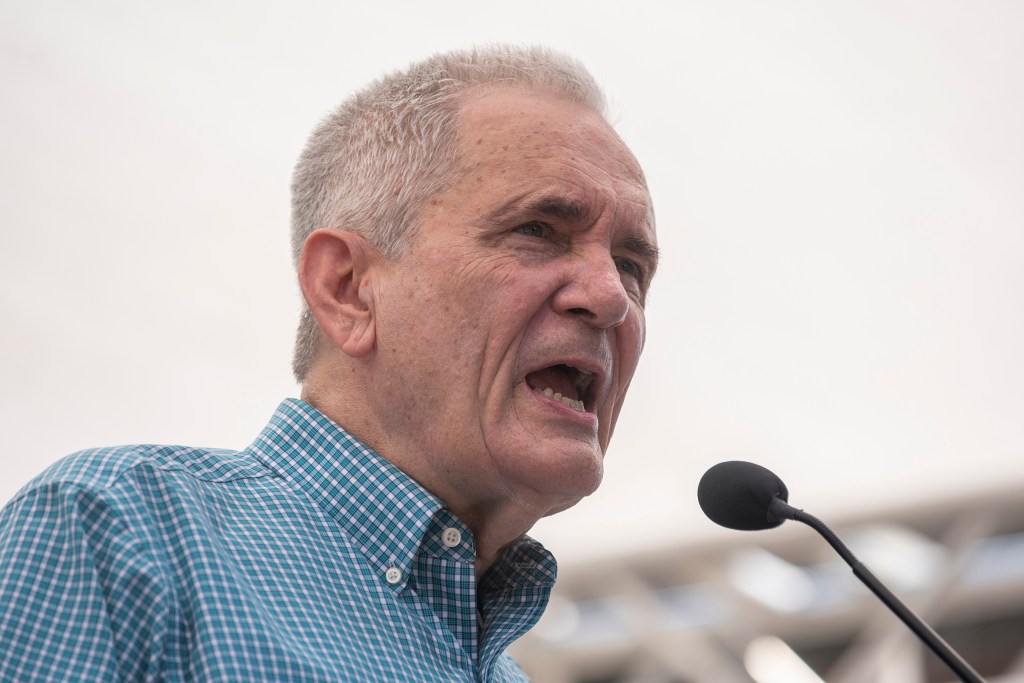
The ruling has profound implications for several Democratic incumbents. U.S. Representative Lloyd Doggett, a prominent figure from Austin, announced his intention to retire following the court’s decision. Doggett expressed his determination to continue serving his constituents with urgency until his departure, stating, “I will seek new ways to join my neighbors in making a difference in the only town I have ever called home.”
The new congressional maps, drawn with the intention of securing more seats for the GOP, would have forced Doggett to compete against fellow Democrat Greg Casar. With the filing deadline approaching, many Democratic officials and candidates have condemned the court’s ruling, viewing it as an unfair advantage for Republican candidates.
State Representative Briscoe Cain, a Republican from Deer Park, welcomed the ruling, asserting that it confirms the legitimacy of the newly drawn maps. This decision places Republican candidates in favorable positions in Congressional Districts 9, 32, and 35, compelling Democratic incumbents to consider alternative districts or retirement.
Challenges for Incumbent Democrats
In South Texas, U.S. Representatives Henry Cuellar and Vicente Gonzalez face challenging reelection battles. The newly configured districts are anticipated to lean more Republican, with Trump supporters gaining ground. Cuellar and Gonzalez will need to navigate these changes carefully, as the districts may now favor Republican candidates by as much as 10 percentage points compared to previous configurations.
In the Houston area, veteran Democrat Al Green finds his district altered significantly. His constituency has largely been merged into the 18th Congressional District, which will soon be contested in a special runoff election. Green confirmed his intention to run in the revised 18th District, stating that the redistricting efforts only strengthen his resolve to serve.
Meanwhile, the political landscape in North Texas is also shifting. Democratic representatives Jasmine Crockett, Julie Johnson, and Marc Veasey are now grappling with a diminished presence. Johnson’s 32nd District has been extended into East Texas, changing the political calculus significantly. The 30th District, currently held by Crockett, will likely see Veasey and Johnson vying for different positions, depending on Crockett’s decision regarding a Senate run.
As the Texas Democrats navigate these changes, they are also observing developments in other states. In response to the Supreme Court’s ruling, Democratic officials in California have pushed for new maps designed to create additional Democratic seats. Virginia’s legislative Democrats are similarly pursuing redistricting efforts to enhance their electoral prospects, indicating a broader trend influenced by the Texas ruling.
The Supreme Court’s decision will resonate beyond Texas, prompting discussions about redistricting strategies nationwide. As the political landscape continues to evolve, the ramifications of this ruling are expected to shape upcoming electoral contests significantly.