President Donald Trump has intensified his rhetoric regarding Greenland, the Arctic territory that is officially part of Denmark. This has prompted renewed concerns among Danish officials and experts about the potential implications of such statements. Despite the unlikely prospect of immediate military action, the tone of Trump’s comments has alarmed former U.S. officials and NATO allies alike.
The latest wave of unease follows a U.S. military operation targeting Venezuelan President Nicolás Maduro and his wife, Cilia Flores. General Dan Caine, the U.S. military’s highest-ranking officer, described the operation as “unprecedented,” suggesting a willingness to engage in high-stakes actions abroad. Following this, Trump indicated that discussions about Greenland would take precedence after addressing other international matters.
When questioned about his intentions regarding Greenland, Trump stated, “Let’s talk about Venezuela, Russia, Ukraine. We’ll worry about Greenland in about two months.” He emphasized Greenland’s strategic importance to U.S. national security, suggesting that Denmark could not manage the territory effectively. This follows comments from JD Vance, the U.S. Vice President, who criticized Copenhagen for what he deemed insufficient investment in Greenland.
The Arctic region has gained significant attention due to its rich mineral resources and the presence of the U.S. space base at Pituffik, which is crucial for monitoring long-range missile launches. With climate change altering the landscape, increasing activity from Russia and China in Arctic waters has raised the stakes. Trump remarked, “Right now, Greenland is covered with Russian and Chinese ships all over the place.”
Former U.S. officials warn that any discussion about the sovereignty of another nation should be taken seriously. Robert Kelly, a former deputy assistant secretary of defense, expressed concern about the shift in tone, stating, “Anytime any nation talks about the sovereignty of another nation, you should be worried.” Yet, he added that an invasion of Greenland is not imminent.
Denmark’s status as a NATO member complicates matters. Article 5 of the NATO treaty commits member states to mutual defense, making any attack on a NATO country an attack on all. Joe Sestak, a retired U.S. Navy rear admiral, emphasized the potential damage to the alliance should the U.S. consider military action against a member state.
While concerns are valid, some analysts suggest that Trump’s focus on Greenland may be more about negotiating economic deals than actual annexation. Christopher Sabatini from the Chatham House think tank noted that Greenland is currently undefended, which could lead to rapid military actions if tensions escalate.
Recent comments from Louisiana Governor Jeff Landry, appointed as the U.S. special envoy for Greenland, indicated an intention to “make Greenland a part of the U.S.” However, the specifics of such a proposal remain unclear.
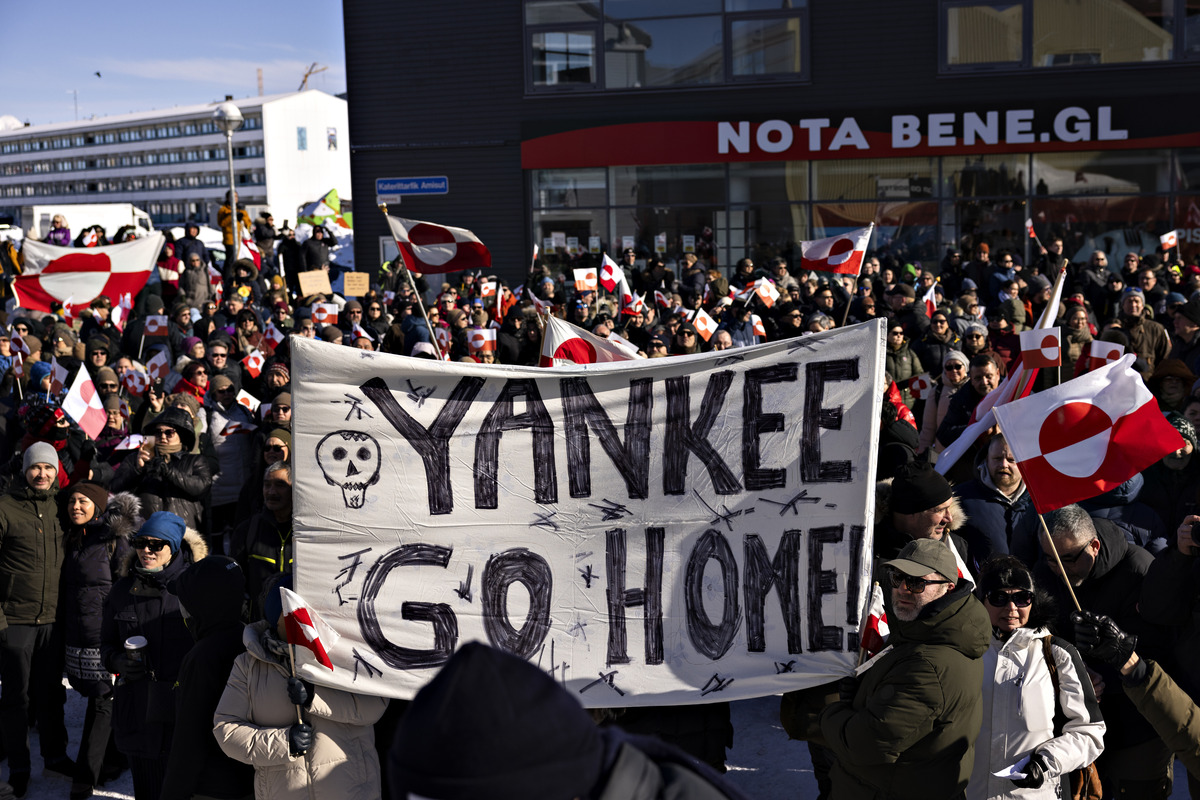
In response, Greenland’s Prime Minister Jens-Frederik Nielsen condemned the U.S. rhetoric as “completely and utterly unacceptable,” calling it disrespectful to suggest military intervention. Danish Prime Minister Mette Frederiksen urged the U.S. to cease its threats, reinforcing Denmark’s commitment to its territorial integrity. She remarked, “If the United States attacks another NATO country, everything stops,” highlighting the seriousness of potential consequences.
The diplomatic exchange has heightened tensions, with the Danish ambassador to the U.S. appealing for respect towards Denmark’s sovereignty. As this situation unfolds, the broader implications for U.S.-Denmark relations and NATO remain to be seen, with both sides emphasizing the need for dialogue and respect in international affairs.