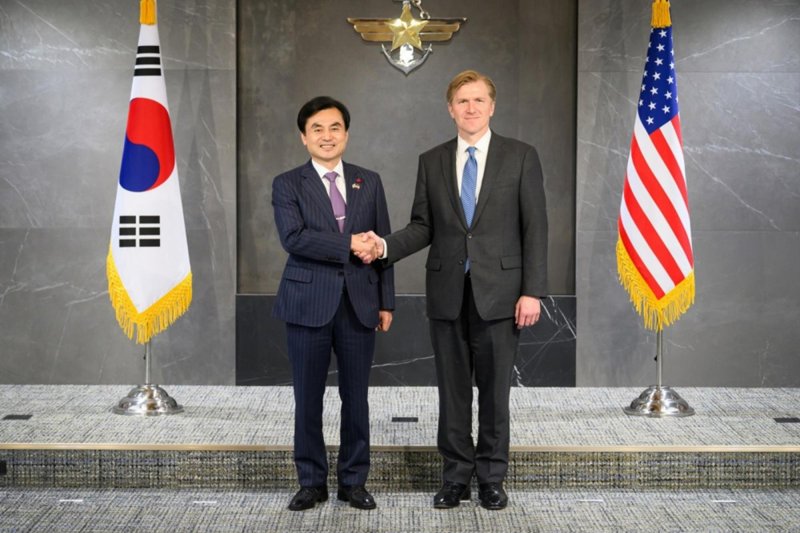
On February 2, 2024, during remarks at the Sejong Institute in Seoul, Elbridge Colby, the Undersecretary of Defense for Policy, addressed significant concerns regarding the U.S. military presence in South Korea. His comments raised alarms about potential reductions of American troops on the peninsula, prompting fears about the stability of the ROK/U.S. alliance. Colby’s remarks highlight the delicate balance of language in international relations, particularly in the context of North Korean provocations.
Understanding the Stakes in U.S. Military Presence
Colby’s statements reflect a broader narrative surrounding the National Defense Strategy and its implications for U.S. forces in Korea. The persistent fear of a drawdown of U.S. troops has been prevalent in Seoul, despite official reassurances. Reports suggest that discussions about relocating thousands of American soldiers have circulated for months, creating anxiety among allies.
This anxiety is compounded by the potential impact of Colby’s language. Even if his intent is not to suggest an imminent withdrawal, words can act as pre-authorization for action. In alliance politics, the way in which statements are perceived can shape beliefs and expectations, influencing both allies and adversaries.
The emergence of the term “CBMLS,” which stands for “critical but more limited support,” in U.S. strategic doctrine has raised eyebrows. Colby used this phrase nine times in his discussion, indicating a shift in how the U.S. views its commitments to allies, particularly in the face of North Korean aggression.
“If the alliance looks uncertain, the enemy becomes adventurous.”
The Role of Language in Diplomatic Relations
North Korean leader Kim Jong Un is acutely aware of the implications of U.S. rhetoric. His regime aims to exploit any narrative that suggests a weakening of the ROK/U.S. alliance. Public discussions normalizing troop reductions can be interpreted in Pyongyang as a victory for their political warfare strategy. These discussions are not merely academic; they have real consequences for regional security and perceptions of U.S. resolve.
In this context, Colby’s choice of words carries significant weight. He emphasized the importance of deterrence through a clear and assertive statement: “U.S. firepower, on-peninsula, offshore and U.S.-based, will defend the Republic of Korea against any threat.” Such language aims to signal continuity and bolster the confidence of allies while complicating enemy calculations.
Kim Jong Un’s fears are multifaceted. While the North Korean regime suppresses its population through fear, it is also acutely aware of the military capabilities of the U.S. and its allies. North Korea’s historical narrative emphasizes the destruction wrought by American airpower during the Korean War, a memory that remains potent and is used to justify the regime’s repressive measures.
Colby’s remarks also touch on cultural sensitivities that can complicate diplomatic relations. The term “model ally” was used to praise South Korea’s defense spending and commitment. However, this phrase can carry unintended connotations in a region sensitive to historical hierarchies and perceptions of respect.
In Asia, particularly among educated policy elites, calling South Korea a “model ally” may echo the term “model minority,” which historically has been used in a way that undermines individuality and political agency. This framing can be interpreted as conditional approval, suggesting that South Korea’s worth is tied to its compliance with U.S. expectations.
Implications for Future Alliances
The potential fallout from Colby’s remarks extends beyond immediate concerns about military presence. Allies may perceive conditional praise as a reflection of a transactional relationship, undermining trust and complicating deterrence strategies. If the U.S. commitment appears contingent upon “good behavior,” it could weaken the very foundations of the alliance.
While some argue for increased South Korean military responsibility in the face of challenges from China, how this is communicated matters greatly. If South Korea is to be treated as a top-tier partner, it must be included in discussions and decision-making processes, fostering a sense of shared agency and mutual respect.
In the wake of Colby’s visit, South Korean media have highlighted the phrase “model ally” in approximately 60% to 75% of articles, indicating that public perception is being shaped by the language used in official statements. The normalization of evaluative language can prompt questions about the criteria for assessment and who holds the authority to define the relationship.
The strength of alliances is predicated not only on military capabilities but also on trust and dignity. As history has shown, mutual respect fosters stronger partnerships, while miscommunication or perceived disrespect can lead to friction. In a rapidly evolving geopolitical landscape, ensuring that allies feel secure and valued is crucial for maintaining stability.
David Maxwell, the executive director of the Korea Regional Review and a retired U.S. Army Special Forces colonel, emphasizes that cultural understanding is not merely a matter of soft diplomacy but a critical component of alliance strength. Trust built on mutual respect is essential for effective deterrence, particularly in times of crisis.
As the situation evolves, it is clear that the words chosen by U.S. officials carry significant implications for both allies and adversaries. In a world where perceptions can shift rapidly, the importance of clear, respectful communication cannot be overstated.