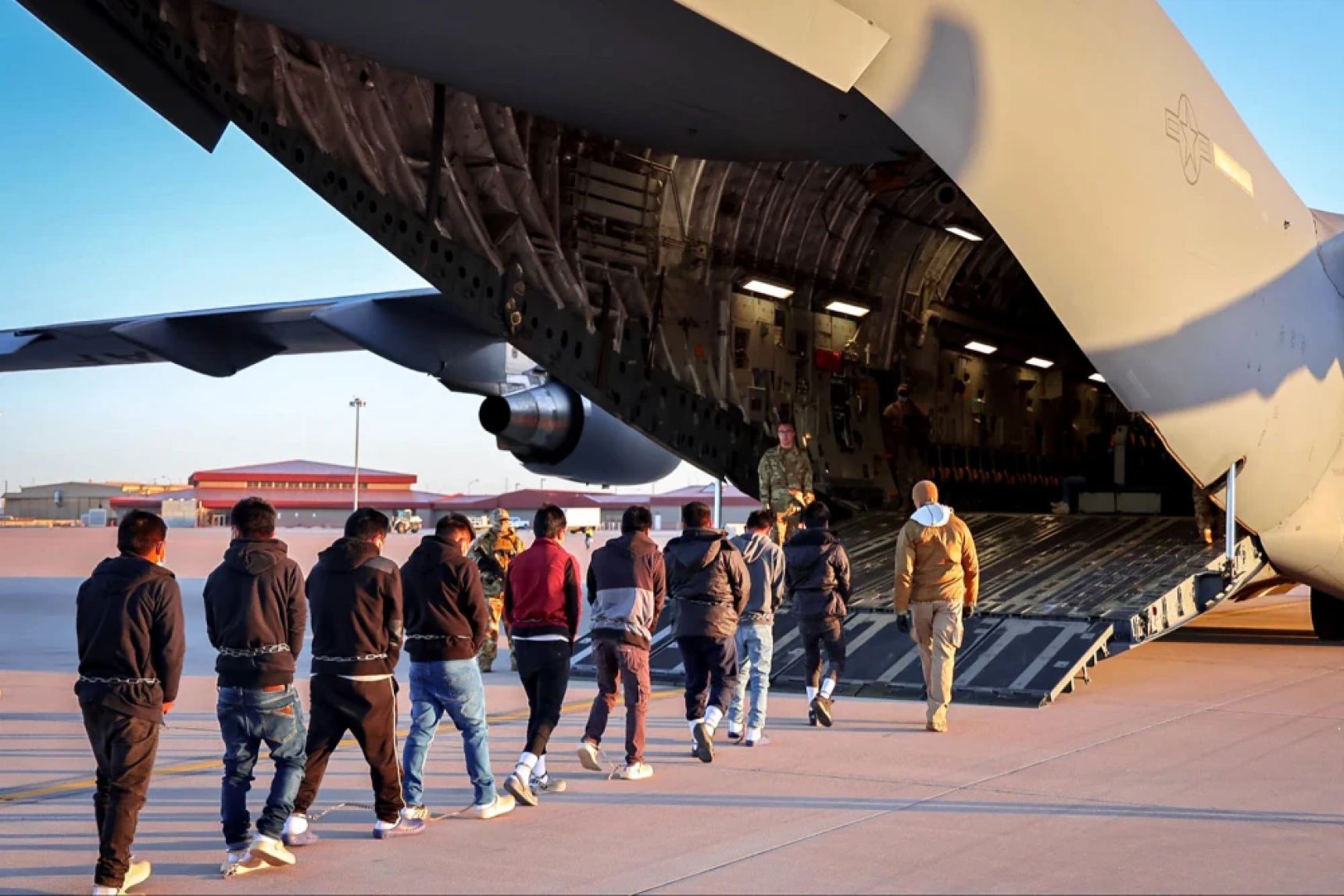
In a troubling development, the U.S. government has been deporting individuals to the Kingdom of Eswatini under a controversial agreement that bypasses established legal protections. On July 15, Orville Etoria, a 62-year-old man who had lived in the United States for nearly 50 years, was among five individuals taken from an Immigration and Customs Enforcement (ICE) detention center in El Paso and placed on a flight to Africa without being informed of their destination.
Etoria’s journey took a dramatic turn when he learned that he was not being repatriated to Jamaica, as he had expected. Instead, after a long flight that included a stop at Djibouti, he found himself headed to an unknown location that would ultimately be revealed as Eswatini, a small landlocked country in southern Africa. His attorney, Mia Unger, described the situation as a “grotesque abuse of government power,” given that Etoria was imprisoned without charges in a maximum-security facility.
Controversial Deportation Agreements
The U.S. government’s actions stem from a deal signed in May 2023 between the U.S. and Eswatini, aimed at facilitating the deportation of individuals whose home countries refuse to accept them. This arrangement has raised serious concerns regarding human rights and due process, as the deportees are held without legal recourse in a foreign country. Under this nonbinding memorandum of understanding, the U.S. can send up to 160 deportees within a “one-year transit framework” and has allocated 5.1 million USD for “capacity-building,” without any legal obligations attached.
Critics argue that this agreement effectively strips individuals of their rights, as it allows the U.S. to send deportees to a third country willing to detain them indefinitely. The first group, including Etoria, was characterized by U.S. officials as dangerous offenders, despite their lack of criminal charges in Eswatini. This narrative obscures the truth about the complexities surrounding their repatriation, including the U.S.’s historical conflicts with countries like Cuba, Laos, and Vietnam.
Upon arrival in Eswatini, the deportees were taken to the Matsapha maximum-security complex and placed in isolated units. They were held without any legal justification, having completed their sentences in the U.S. years prior. The Department of Homeland Security (DHS) is now testing legal provisions that allow for these third-country removals, raising questions about the legality and ethics of such practices.
Legal Challenges and Human Rights Concerns
Legal experts have voiced strong objections to the methods employed by the U.S. government in this context. Jaya Ramji-Nogales, a law professor at Temple University, highlighted that these transfers potentially violate the principle of non-refoulement, which prohibits sending individuals to places where they may face harm. The ongoing case of D.V.D. v. DHS in the 1st U.S. Circuit Court of Appeals seeks to clarify the legal framework surrounding these deportations and the rights of those affected.
Attempts by local lawyers to access the detainees have faced significant obstacles. Sibusiso Nhlabatsi, a Swati lawyer, struggled to meet with the deportees, facing repeated refusals from prison officials. After petitioning the court, he was finally allowed access to the men, who were initially cut off from communication with their families in the U.S. This pattern of secrecy and silence surrounding the deportations has contributed to a sense of desperation among the detainees.
As the situation unfolds, the U.S. government’s strategy appears to involve outsourcing its immigration challenges to countries with weaker legal frameworks. Human rights organizations, including Human Rights Watch, have condemned the practice as a form of human trafficking, arguing that it undermines international obligations to protect vulnerable populations. The broader implications of these agreements raise critical questions about the future of U.S. immigration policy and its impact on individuals caught in the system.
In a recent statement, the government of Eswatini dismissed the legal challenges to the agreement as “frivolous,” while the Southern African Litigation Centre continues to advocate for the rights of the deportees. As the first two groups of men face indefinite detention, the prospect of their release remains uncertain. For Etoria, who was eventually repatriated to Jamaica on September 22, there is a glimmer of hope, but many others remain trapped in this legal limbo.
The situation underscores a growing trend where vulnerable individuals are caught in the crossfire of international agreements and domestic policies that prioritize expediency over justice. As deportations to Eswatini continue, the human cost of these actions becomes increasingly apparent, raising urgent questions about the future of immigration control and human rights protections.