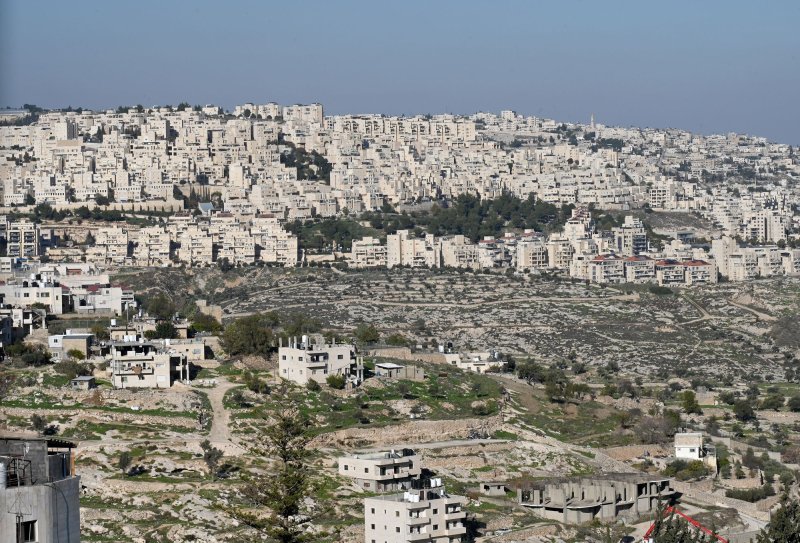
The United States has announced the provision of passport services in Israeli settlements located in the West Bank, a move that has sparked significant controversy. According to a statement from the U.S. Embassy in Jerusalem, consular officers will begin offering routine passport services in Efrat on February 28, 2025. This decision marks the first time the U.S. will extend such services in the context of Israeli settlements, a step likely to attract criticism from various international entities.
The establishment of Efrat occurred on April 10, 1983, yet Jewish settlements in the West Bank and East Jerusalem are widely viewed as illegal under international law. The embassy mentioned that this initiative is part of its Freedom 250 initiative, which commemorates 250 years of U.S. independence. Over the coming months, the embassy plans to conduct outreach events in several other West Bank settlements.
Critics have voiced strong opposition to this development. The Palestinian Authority’s Colonization and Wall Resistance Commission condemned the U.S. decision as a “clear violation of international law.” Mu’ayyad Shaa’ban, the commission’s head, argued that such actions breach the Fourth Geneva Convention, which prevents an occupying power from transferring its civilian population into occupied territories. Shaa’ban emphasized that extending consular services to a settlement built on confiscated Palestinian land challenges the principle of non-recognition of unlawful situations and undermines the viability of a two-state solution.
Hamas also criticized the U.S. initiative, labeling it a “dangerous precedent.” The organization warned of the implications of this move, suggesting it may embolden Israeli occupation forces and require a renewed international effort to oppose actions against Palestinian rights.
Historically, the U.S. has expressed that these settlements contradict international law; however, significant policy shifts occurred under the administration of former President Donald Trump. During his tenure, Trump recognized Jerusalem as Israel’s capital and relocated the U.S. Embassy there. In 2019, his administration reversed the long-standing position regarding the legality of the settlements, and his 2020 peace proposal endorsed maintaining these settlements within Israeli territory.
Since his return to office in January 2025, Trump has eliminated various sanctions imposed by the previous administration on violent settlers and settler groups, further complicating the landscape.
Following the U.S. announcement, the Israel Foreign Ministry expressed gratitude, stating, “We welcome the historic decisions by the U.S. embassy in Jerusalem to extend consular services to American citizens in Judea and Samaria,” referring to the West Bank by its administrative name. This statement underscores the strengthening ties between Israel and the United States.
The announcement coincides with Israel’s recent measures to reclassify Palestinian land as state land, which has intensified illegal settlement activities and solidified Israel’s position in the region. On February 25, 2025, foreign ministers from 19 European countries issued a statement denouncing what they described as “sweeping extensions to unlawful Israeli control over the West Bank.” They reiterated their opposition to actions that alter the demographic and status of Palestinian territories occupied since 1967, including East Jerusalem.
As the situation continues to evolve, the implications of the U.S. decision to offer passport services in the West Bank will likely play a significant role in shaping future discussions surrounding Israeli-Palestinian relations and international governance in the region.