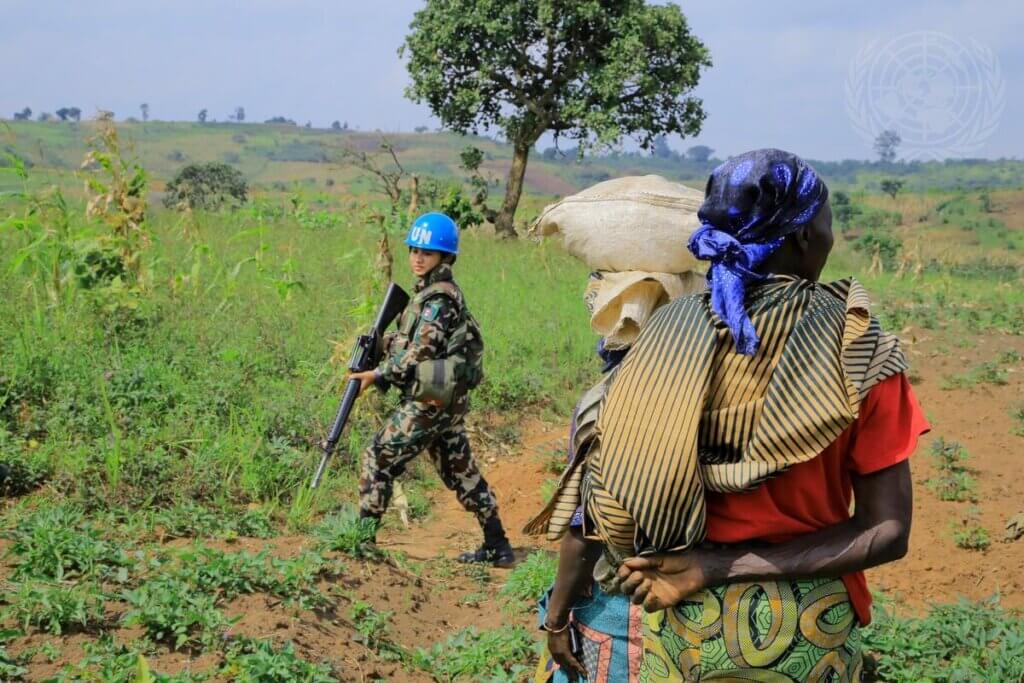
Civilians worldwide are facing increasingly severe impacts from conflicts, with women and children disproportionately affected. Conflicting parties are disregarding International Humanitarian Law and International Human Rights Law, leading to direct attacks on civilians and the destruction of vital infrastructure. Additional factors, such as climate change, misinformation, and organized crime, exacerbate these conflicts, highlighting the urgent need for effective civilian protection.
This situation prompted the United Nations (UN) Security Council to explicitly authorize peacekeeping missions aimed at safeguarding civilians, particularly after tragic events like the targeted violence seen in Rwanda and Srebrenica during the late 20th century. Since then, the Security Council has initiated 16 multidimensional peacekeeping operations with mandates focused on civilian protection. Despite this, there has been limited exploration into how various peace operations can contribute to civilian safety, largely due to departmental silos within the UN Secretariat.
Current geopolitical divisions within the Security Council, along with an array of conflicts vying for attention and financial limitations, necessitate a broader evaluation of peace operation models. Recent efforts to enhance the role of regional organizations and multilateral coalitions in peace support operations have also faced challenges.
The primary challenge for the UN and its member states is to effectively address escalating protection needs in situations currently on the Security Council’s agenda. This is complicated by the lack of consensus on the future of peace operations and a liquidity crisis affecting UN mission functions. The UN’s Agenda for Protection emphasizes that where peacekeepers are deployed, civilians expect assistance in avoiding and addressing threats, regardless of the mission’s specific mandate or resources.
To strengthen the UN’s approach to civilian protection, this article outlines four key recommendations for the UN Secretariat as part of the Review on the Future of All Forms of UN Peace Operations.
Explore Innovative Protection Models and Scenarios
The Secretariat should consider a variety of new tasks and models to enhance peace operations. While some models focus on mobilizing missions to address protection concerns directly, many remain limited in their potential to support civilian safety. Future evaluations should determine how these models can effectively promote protection, identify necessary baseline capabilities, and assess any risks associated with meeting civilian expectations.
For example, ceasefire monitoring and verification missions, which may be favored in the near future, have been shown to foster trust among conflicting parties and implement confidence-building measures. However, these missions often lack the robust capabilities found in traditional peacekeeping operations, limiting their effectiveness in addressing broader humanitarian needs.
Additionally, emerging models, such as cybersecurity missions, would require careful consideration of protection implications, including early warning systems and safeguards for civilian infrastructure. A comprehensive approach to civilian protection must encompass various threats and operational environments.
Utilize the Full Spectrum of Existing Peace Operations
The UN Secretariat could produce a comprehensive assessment outlining how different types of peace operations—ranging from peacekeeping to special political missions—have contributed to civilian protection. This evaluation could serve as a crucial resource for the Security Council and member states, enabling them to understand the potential impacts and limitations of various peace operation forms.
In examining peacekeeping’s protective benefits, it is essential to go beyond missions with explicit civilian protection mandates. For instance, while the UN Peacekeeping Force in Cyprus lacks a specific protection mandate, it plays a vital role in ensuring the safety of civilians by monitoring ceasefires and supporting those caught in conflict zones.
Political missions can also contribute significantly to protection efforts through dialogue and advocacy, engaging with local communities, and building the capacities of host authorities to address protection issues. The UN Verification Mission in Colombia exemplifies how field-based political missions can physically protect civilians during emergency situations.
Enhance Partnerships and Coordination for Effective Protection
As future UN peace operations are likely to intersect with efforts by regional and coalition forces, clear communication and coordination will be essential. Recent deployments, such as those led by the East African Community and the Southern African Development Community in the Democratic Republic of the Congo, highlight the potential for regional missions to address security needs that exceed traditional peacekeeping mandates.
However, differing mandates and operational approaches can blur responsibilities and complicate coordination. Regional missions often focus on kinetic operations that prioritize neutralizing armed groups, which may not align with civilian protection objectives as effectively as UN peacekeeping missions.
To ensure comprehensive protection, the UN must articulate clear responsibilities for various organizations while recognizing the distinct contributions that regional forces can provide. The UN typically engages more deeply with local communities, while regional missions may feature a more militarized approach.
Proactive Planning for Peace Operations
When facing emerging threats to civilians, the UN Secretariat should leverage the authority of the Secretary-General to develop multiple options for peace operations designed to bolster civilian protection. This planning process should assess on-the-ground protection needs, the capabilities of local authorities, and the unique strengths of different peace operations.
Past reports from the Secretary-General on places like Sudan and Haiti have identified protection concerns but offered limited options for deploying peace operations. Ongoing contingency planning throughout a mission’s deployment is essential for adapting to evolving protection needs and ensuring effective responses.
In conclusion, developing flexible and effective peace operation models is crucial for addressing current and future challenges. The UN and its member states should prioritize civilian protection across all peace operations, ensuring that strategies reflect the experiences and needs of affected communities. Engaging in open, collaborative discussions on civilian protection will help refine peace operation models and mandates, ultimately enhancing their effectiveness in safeguarding vulnerable populations.