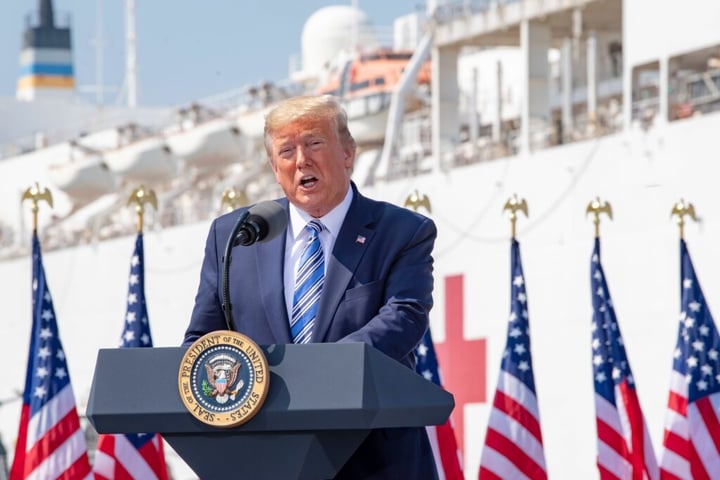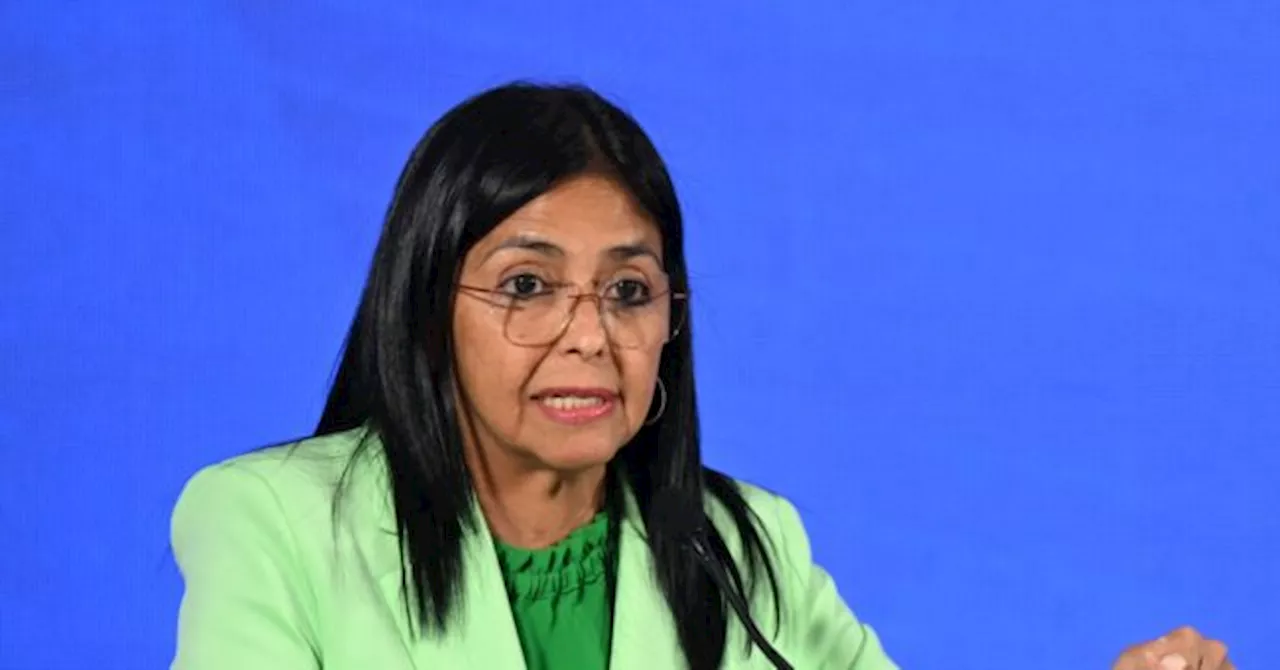
Delcy Rodríguez, the de facto leader of Venezuela, publicly dismissed a meme shared by former U.S. President Donald Trump that referred to him as the country’s “acting president.” Rodríguez made her remarks during a state broadcast on January 3, 2024, in the port city of Catia La Mar, emphasizing her role at the helm of the Venezuelan government. She accused Trump of attempting to undermine Venezuela’s sovereignty and asserted that her government remains committed to defending the nation against foreign attacks.
During the broadcast, Rodríguez expressed indignation over the meme’s portrayal, stating, “I’ve seen cartoons on Wikipedia about who’s in charge in Venezuela. Well, there is a government in charge in Venezuela.” She referred to Trump’s claim as a distortion of the political reality in Venezuela, where she insists her administration governs in collaboration with the people and adheres to international law.
Rodríguez’s comments were reported by the state-owned outlet Telesur, which noted that she characterized Trump’s meme as part of a broader effort to ignore the legitimate governance of Venezuela. “We are defending the rights of our beloved homeland against the illegal attacks of the U.S. government,” she stated, reinforcing her administration’s narrative of resisting external pressures.
On January 3, a U.S. law enforcement operation led to the arrest of Nicolás Maduro, the former president, and his wife, Cilia Flores. This event has intensified the political landscape in Venezuela, with Rodríguez now stepping into a more pronounced leadership role. She described the situation as one where there is an acting president in the U.S. and a president held hostage.
In the wake of these developments, Trump has made comments suggesting that Rodríguez is cooperating closely with U.S. officials, including Secretary of State Marco Rubio. Despite these assertions, Rodríguez has framed her government’s position as one of resilience and determination against foreign interference.
The ongoing tensions between the Venezuelan government and the U.S. have highlighted significant geopolitical dynamics in the region. Rodríguez’s strong stance against perceived U.S. aggression reflects a commitment to maintaining control over Venezuela’s political sovereignty and territorial integrity.
As the situation continues to evolve, it remains essential to monitor the implications of these exchanges on Venezuela’s internal stability and its relations with the United States. The political landscape is likely to shift further as both nations navigate this complex and highly charged environment.