Innovations in 3D printing technology are set to transform the way batteries are designed, allowing for custom shapes that maximize space efficiency. A new process developed by Gabe Elias enables the production of battery components—including anodes, cathodes, separators, and casings—without the need for expensive tooling. This advancement could significantly alter how batteries are integrated into devices, particularly in constrained spaces.
Traditionally, commercial batteries are produced in standardized cylindrical or rectangular shapes. While it is theoretically possible to create batteries in various sizes and forms, the costs associated with small-scale production have limited this capability. The breakthrough discussed by Lawrence Ulrich on Spectrum highlights the potential for 3D printing to create batteries tailored to fit unconventional spaces.
Maximizing Efficiency in Unique Devices
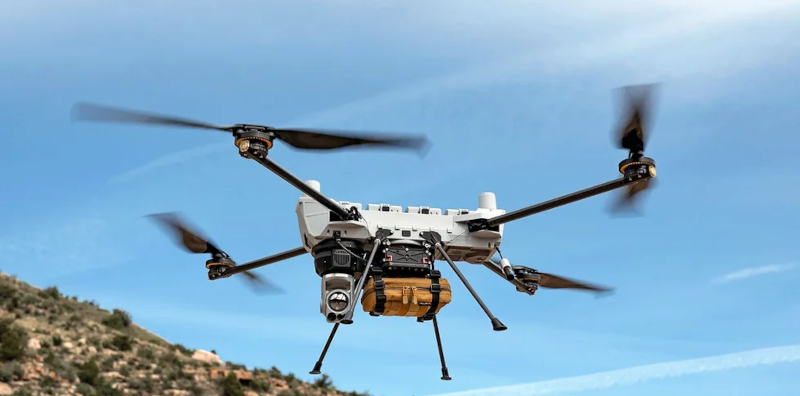
One of the most promising applications of this technology lies in unmanned aerial vehicles (UAVs). These devices often feature compact designs filled with avionics, which can leave little room for standard battery configurations. By employing 3D-printed batteries, manufacturers could utilize the entire interior of an aircraft wing, minimizing wasted space.
For instance, this new method could yield batteries shaped to fit the earpieces of smart glasses. In a prototype test, the innovative approach demonstrated that it could replace 48 cylindrical battery cells with a single printed battery, achieving a remarkable 35% increase in usable volume and a 50% boost in energy density. This capacity to produce more efficient batteries could greatly enhance the performance of various electronic devices.
Challenges and Future Prospects
Despite the exciting possibilities, there are challenges to overcome. The current 3D printing process requires the use of a liquid electrolyte and the ability to create thin layers of specialized materials, which may not be easily accessible to individual consumers. While the technology promises customization, producing batteries at home would not be straightforward.
As the technology matures, it raises intriguing questions about future applications. Imagine a laptop powered by a battery that evenly distributes weight, eliminating the imbalance caused by traditional battery designs. The potential for custom-sized batteries could lead to more efficient and aesthetically pleasing electronic devices.
The ongoing developments in 3D printing battery technology not only promise to enhance efficiency but also open up new frontiers in design and functionality. As companies explore these advancements, the future may hold a more sustainable and customized approach to energy storage solutions.