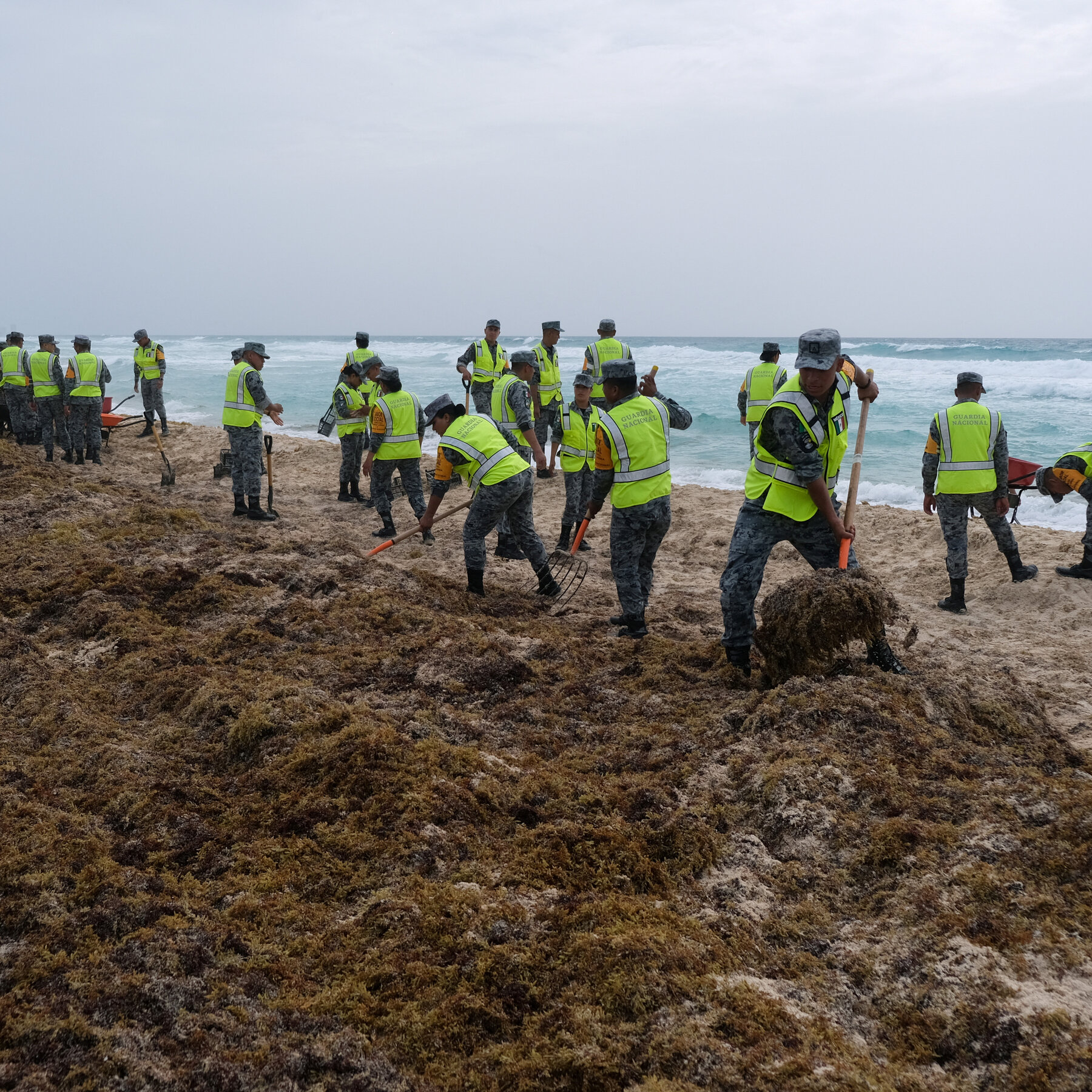
Recent observations reveal significant shifts in seaweed patterns across the Atlantic Ocean. A massive bloom of yellowish-brown seaweed, known as Sargassum, has surged along the Equator, while a historically significant patch in the northern Caribbean is rapidly diminishing.
The proliferation of Sargassum, particularly in the Caribbean Sea, has raised concerns among environmentalists and local communities. According to the National Oceanic and Atmospheric Administration (NOAA), approximately 20 million tons of this seaweed have been recorded as of July 2023. This marks a notable increase compared to previous years, with blooms now covering an area of around 350,000 square kilometers.
Environmental Impact and Concerns
The escalating blooms present a challenge for coastal regions. Beaches are becoming overwhelmed with seaweed, disrupting local tourism and fishing industries. Communities that rely on pristine coastlines for their livelihood have reported significant losses as tourists avoid areas plagued by the algae. The thick mats of Sargassum not only affect aesthetics but also pose environmental risks, including oxygen depletion in surrounding waters and potential harm to marine life.
In contrast, a traditional Sargassum patch located further north, which has existed for centuries, is experiencing a concerning decline. Scientists are investigating the reasons behind this disappearance, which could be linked to changing oceanic conditions and climate factors. The loss of this patch not only disrupts local ecosystems but also alters the balance of nutrient flows in the ocean.
Scientific Insights and Future Projections
Researchers from various institutions are analysing data to understand the broader implications of these changes. The increase in Sargassum blooms is thought to be influenced by nutrient runoff from agricultural practices, combined with rising sea temperatures. The combination of these factors creates an ideal environment for the seaweed to thrive.
While the Sargassum blooms are partially a natural phenomenon, their recent intensity has prompted discussions about the long-term effects of climate change. Studies suggest that if current trends continue, the frequency and size of these blooms could further escalate, leading to more extensive ecological and economic repercussions.
The scientific community emphasizes the need for comprehensive monitoring and research to better predict and mitigate the impacts of these seaweed blooms. As the situation evolves, it will be crucial for governments and environmental organizations to collaborate in addressing the challenges posed by both the expanding Sargassum and the vanishing northern patch.
In conclusion, the dual narratives of thriving and declining Sargassum patches underscore the complex relationship between climate change and marine ecosystems. As these changes unfold, the urgent need for proactive measures to safeguard coastal communities and biodiversity becomes increasingly clear.