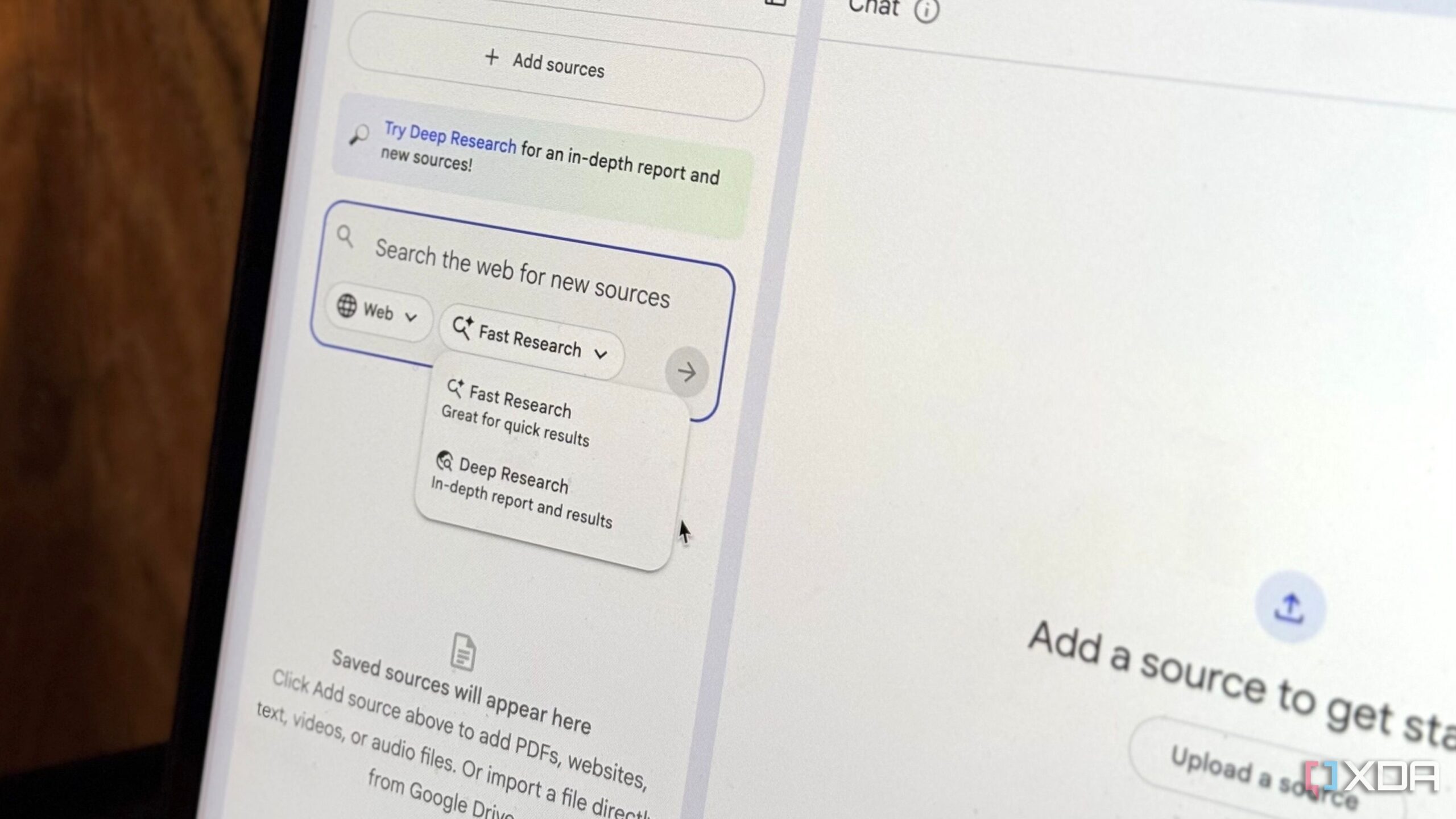
Google’s AI tool, NotebookLM, has significantly improved its functionality with the integration of the Deep Research feature from Gemini, transforming the way users discover and compile research sources. This enhancement allows users to gather information efficiently, addressing previous limitations where users struggled to find relevant material.
Transforming Research Methodologies
Traditionally, NotebookLM relied on users to provide the initial sources, which limited its effectiveness in source discovery. The recent upgrade introduces a more sophisticated source discovery feature that generates one-line descriptions for citations, enabling users to select which citations to incorporate into their notebooks. This development enhances the overall user experience, particularly for those seeking in-depth information.
Previously, users often resorted to manual searches, using standard search engines to find sources. This method proved time-consuming and often failed to yield comprehensive results. With Deep Research, users can simply input their learning objectives. For instance, if someone wants to explore “The impact of regulatory changes on crypto-staking in 2025,” they can submit this query directly to NotebookLM. The tool then constructs a research plan and generates a report that serves as an introductory guide, allowing users to become informed on topics quickly.
Diving Deep into Niche Topics
Another advantage of the Deep Research feature is its ability to facilitate deep dives into specialized areas of interest. When researching niche topics, users often find that conventional search engines provide superficial information. In contrast, Deep Research identifies specific documents, such as white papers and detailed analyses, that enhance the user’s understanding of the subject matter.
For example, when investigating sustainable coffee practices, users can bypass the basics and focus on advanced discussions and studies that are often hidden in traditional searches. This capability saves users valuable time that would otherwise be spent combing through less relevant content.
Despite its strengths, the tool is not without limitations. Occasionally, it may produce irrelevant connections or become fixated on tangentially related sources. Users are still encouraged to read the original documents to ensure comprehensive understanding.
Streamlined Document Discovery
The integration of Deep Research also streamlines the process of locating technical papers and user manuals, which can be particularly challenging with conventional search methods. As a research-oriented tool, NotebookLM excels at identifying high-quality documents and long-form content that simpler search engines may overlook. This functionality is particularly beneficial for users seeking academic discussions or technical documentation that are essential for thorough research.
Creating Comprehensive Study Guides
NotebookLM offers additional tools that enhance the study experience, allowing users to generate study guides, mind maps, and audio overviews directly from the Deep Research reports. This integration eliminates the cumbersome need to manually reformat reports into usable study materials. Users can now easily access and customize learning resources that cater to their specific needs.
While Deep Research is a powerful ally in the quest for knowledge, users should remain aware of its limitations. It is not a substitute for critical reading and analysis. Instead, it serves as a valuable tool to combat blank page syndrome, providing a structured approach to research that allows users to focus on understanding complex concepts.
With these enhancements, NotebookLM positions itself as a leading research tool in the digital landscape, empowering users to navigate the vast ocean of information with greater ease and efficiency.