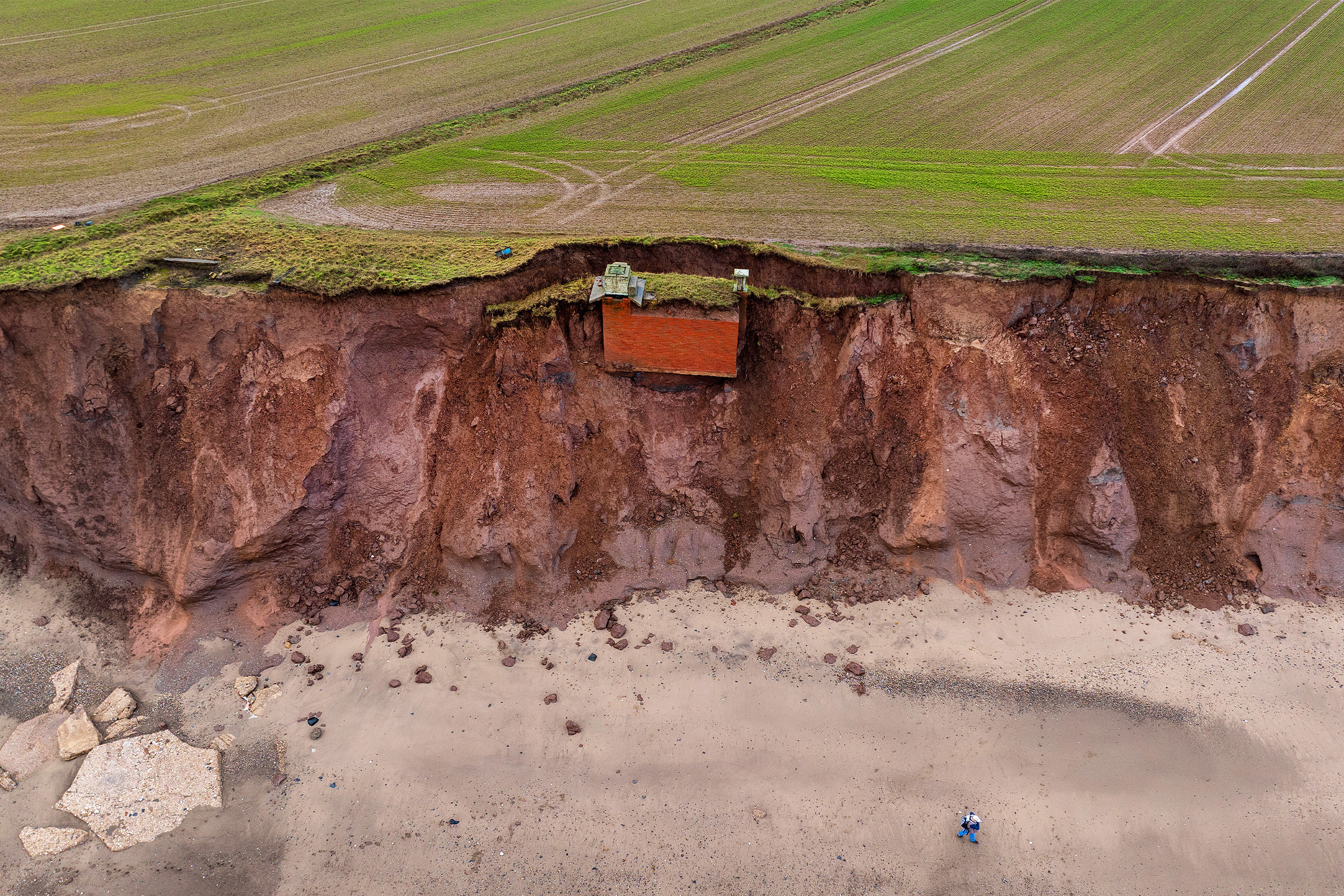
A nuclear bunker located near Tunstall on the East Yorkshire coast is in imminent danger of collapsing into the sea due to severe coastal erosion. Built in 1959 as part of the UK’s Cold War defense strategy, the structure is now just days away from falling off the edge of a crumbling cliff, according to reports from the BBC.
The East Riding of Yorkshire Council has issued warnings to local residents, urging them to stay clear of both the top and the base of the cliff to prevent potential injuries from any collapse. The precarious state of the bunker highlights the ongoing issue of erosion along one of Europe’s most vulnerable coastlines.
“This bunker hasn’t got long left, perhaps just a few days,” said Davey Robinson, an amateur historian who has been documenting the bunker’s decline. Robinson and his partner have made daily visits to the site over the past nine days, sharing their videos on social media, which have garnered interest from audiences worldwide.
The bunker, officially known as the Tunstall Royal Observer Corps Post, served as a lookout point during the Cold War. Its purpose was to monitor nuclear explosions and communicate alerts to other bunkers across the country. Today, it stands as a poignant reminder of the past, now becoming a victim of the environmental challenge of coastal erosion.
Environmental Implications of Coastal Erosion
Coastal erosion is a natural process, but it is being exacerbated by rising sea levels linked to global warming. Current estimates suggest that around 17 percent of the UK’s coastline, which spans over 10,000 miles, is affected by this phenomenon. For communities like Tunstall, the implications are profound as they witness the physical loss of land and historical structures.
“This whole area is eroding at a rapid rate,” Robinson noted, emphasizing that the visible deterioration of the bunker serves as a stark indicator of the environmental issues facing the region.
As climate change continues to influence weather patterns and sea levels, the fate of the Tunstall bunker reflects broader concerns about coastal communities and their sustainability. The situation raises critical questions about preservation efforts for historical sites and the urgent need for effective environmental policies.
In summary, the impending collapse of the Tunstall nuclear bunker not only marks the end of a historical relic but also illustrates the pressing challenges posed by climate change and coastal erosion. As local authorities and communities grapple with the realities of their changing environment, the bunker stands as a symbol of both past anxieties and present vulnerabilities.