Each September, the editors at IEEE Spectrum embark on a mission to identify promising technological advancements for their upcoming January forecast issue. This annual endeavor focuses on projects that aim to solve significant challenges or revolutionize industries, often overlooked by mainstream technology media. The team prioritizes innovations that align with their motto of advancing technology for the benefit of humanity.
In reviewing the last two decades of January issues, it becomes clear that while some major projects, such as the James Webb Space Telescope, have received ample attention, many others have remained under the radar. Last January, Senior Associate Editor Emily Waltz reported on startups pioneering ocean-based carbon capture technologies. For the upcoming issue, she returns with a feature on grid-scale energy storage, spotlighting a novel solution that could reshape the landscape of energy management.
Waltz visited Sardinia to investigate the innovative “bubble battery” developed by the Milan-based company Energy Dome. This technology has the capability to store up to 200 megawatt-hours of energy by compressing and decompressing pure carbon dioxide within an inflatable dome. Such modular storage solutions are expected to play a critical role in supporting AI data centers, according to Senior Editor Samuel K. Moore.
Moore, who previously explored gravity energy storage in January 2021, noted, “When we think about energy storage, our minds usually go to grid-scale batteries. Yet these bubbles, which are in many ways more capable than batteries, will be sprouting up all over the place, often in association with computing infrastructure.”
In addition to energy storage advancements, this issue features a comparison of two startups working on radio-based cables designed to replace conventional copper wires and fiber optics in data centers. These radio systems promise to connect processors up to 20 meters apart while consuming only a third of the power required by optical-fiber cables and costing a third as much. The next step involves integrating these radio connections with GPUs to reduce cooling challenges and support the growing demands of data centers and AI technologies.
The article also highlights the medical field, where innovations are making significant strides. For example, HistoSonics is advancing treatment for pancreatic cancer, a disease that claims nearly half a million lives annually worldwide. Using noninvasive focused ultrasound, the company creates cavitation bubbles that destroy tumors without harming surrounding tissues. This year, HistoSonics is concluding kidney trials and initiating studies focused on pancreatic cancer.
The past two decades have seen a remarkable rise in drone technology. In 2018, IEEE Spectrum reported on Zipline, a startup deploying autonomous drones for medical supply deliveries in rural Rwanda. Fast forward to today, Zipline boasts a market capitalization of approximately US $4 billion and operates in several countries, including the United States and Japan, having completed nearly 2 million drone deliveries.
In the latest issue, journalist Robb Mandelbaum covers the Wildfire XPrize competition, which aims to develop innovative methods for suppressing wildfires before they escalate. The XPrize teams are working to enhance detection and response times beyond what current firefighting tactics can achieve, potentially saving lives and property.
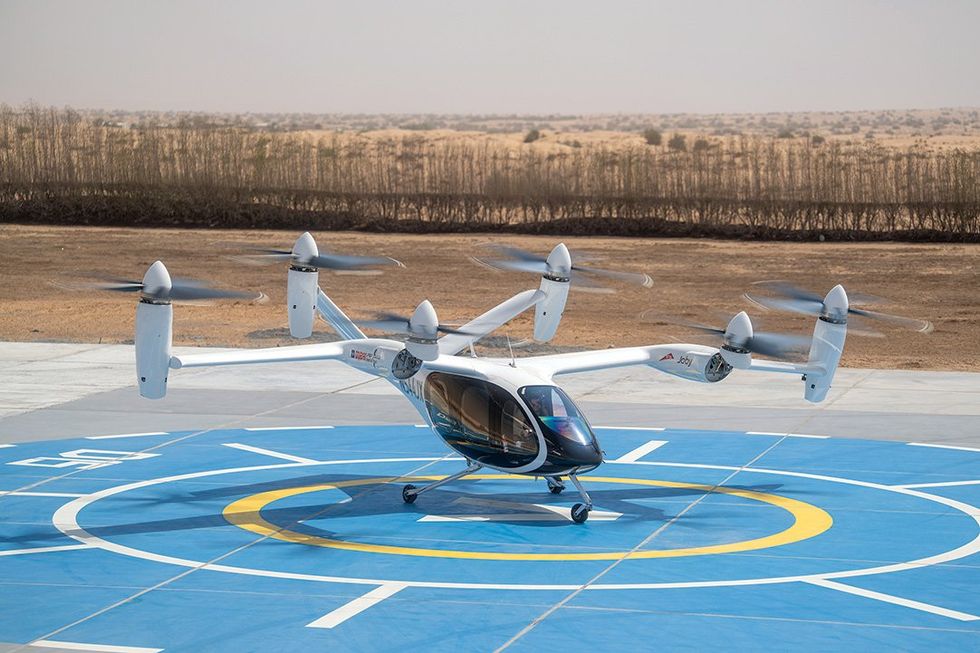
This issue is packed with an array of other groundbreaking technologies, including Porsche’s wireless home charger for electric vehicles, the world’s first electric air taxi service, neutral-atom quantum computers, interoperable mesh networks, and robotic baseball umpires. As the technological landscape continues to evolve, it remains to be seen which of these innovations will ascend to greater prominence in the coming years.