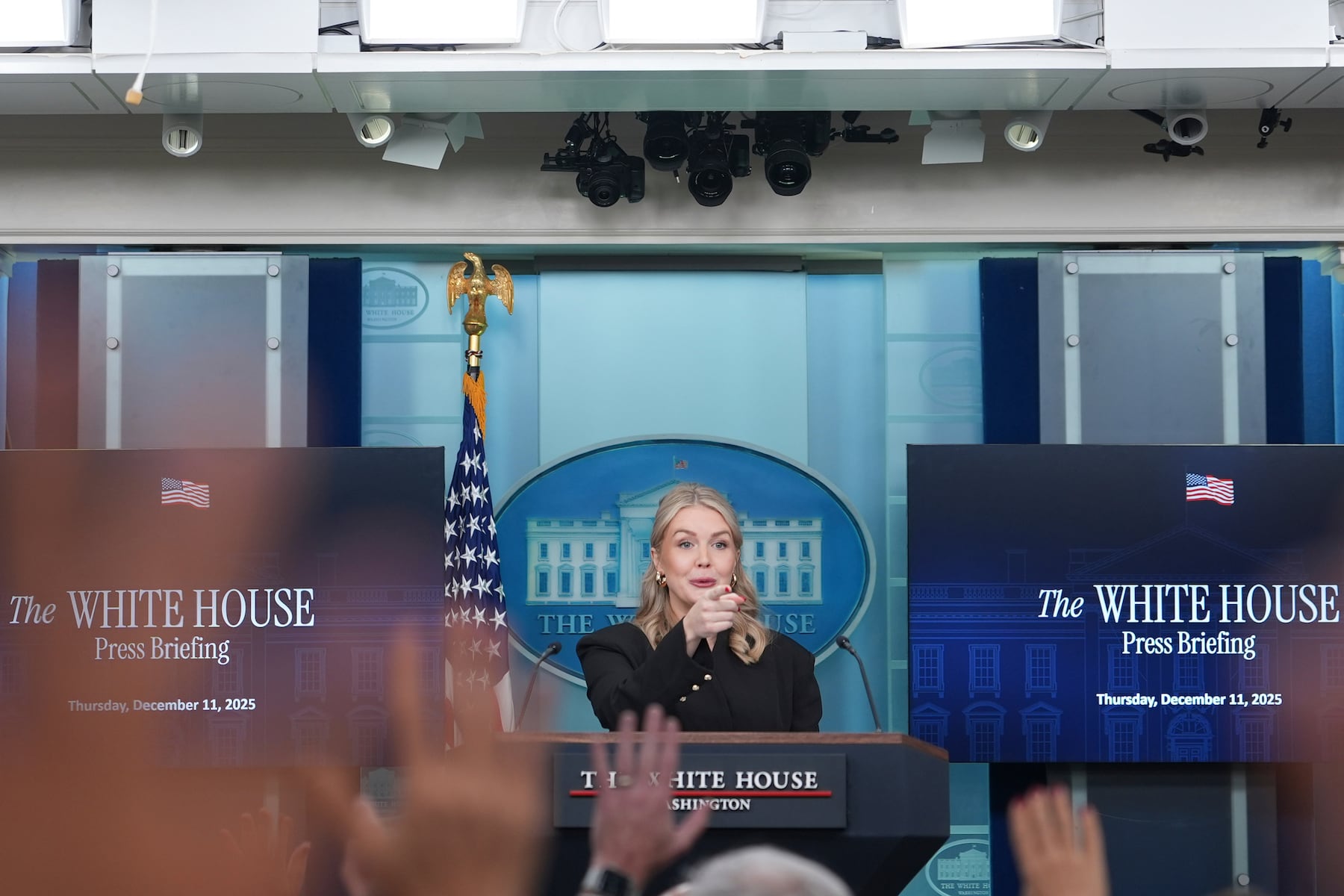
During a press briefing on December 11, 2025, White House press secretary Karoline Leavitt proclaimed positive developments in the U.S. economy, highlighting a decrease in inflation and an increase in real wages for American workers. Leavitt stated, “Inflation as measured by the overall CPI has slowed to an average 2.5% pace,” and noted that “real wages are increasing roughly $1,200 dollars for the average worker.”
Her assertions were met with skepticism, particularly after CNN political correspondent Kaitlan Collins attempted to ask a follow-up question. Instead of addressing the inquiry, Leavitt redirected the conversation, criticizing Jen Psaki, her predecessor, for allegedly disseminating “utter lies” during her time in office. Leavitt insisted, “Everything I’m telling you is the truth backed by real, factual data.”
Leavitt’s claims about economic progress have drawn scrutiny. The actual inflation rate for September was reported at 3%, contradicting her stated figure. Additionally, CNN business editor David Goldman pointed out that U.S. workers faced the lowest annual paycheck growth since May 2021, raising questions about the accuracy of Leavitt’s positive economic narrative.
Orwellian Echoes in Modern Political Discourse
The language used by Leavitt during the briefing has led some observers to draw comparisons to George Orwell’s novel, 1984. According to historian Laura Beers from American University, Leavitt’s proclamations evoke the idea of “doublethink,” a concept Orwell described as the ability to accept two contradictory beliefs simultaneously. The Ministry of Plenty in Orwell’s narrative issued inflated statistics that bore no resemblance to reality, a tactic that resonates with Leavitt’s approach.
In her defense of President Donald Trump, Leavitt has repeatedly called him the “most transparent president in history,” a claim that critics argue undermines the concept of transparency itself. This framing has been characterized as a form of Orwellian doublespeak, where language is manipulated to obscure the truth.
Leavitt’s defense of Trump’s record on transparency has faced backlash, especially following a controversial incident involving Bloomberg News journalist Catherine Lucey. During the exchange, Trump dismissed Lucey’s question, prompting further criticism of the administration’s handling of the press.
Controversial Claims and Political Language
Over the past ten months, Leavitt’s statements have included several contentious claims. She asserted that the now-dismantled U.S. Agency for International Development, or USAID, provided a $32,000 grant for a “transgender comic book” in Peru, a statement that has been widely debunked. Furthermore, she misrepresented the “One Big Beautiful Bill,” claiming it eliminated taxes on tips, overtime, and Social Security, while the reality is that there are caps on these deductions.
Additionally, Leavitt has made statements regarding the phrase “peace through strength,” attributing it to Trump despite its longstanding use by previous presidents, particularly Ronald Reagan. Her remarks have often aimed to diminish the credibility of political opponents, including U.S. Senator Mark Kelly, whom she accused of provoking disorder with his calls for servicemen and women to disobey illegal orders.
The evolving nature of political language, as described in Orwell’s essay “Politics and the English Language,” has become increasingly evident. As governments often manipulate language to frame narratives, Leavitt’s use of political rhetoric raises concerns about the effectiveness of communication in public discourse.
As the political landscape continues to shift, the implications of Leavitt’s statements serve as a reminder of the importance of accountability and transparency in government. The ongoing dialogue surrounding economic conditions and political narratives remains crucial as citizens seek clarity and truth in the messages delivered from the highest levels of government.