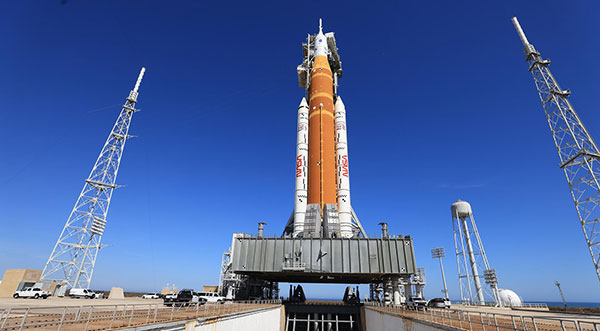
NASA is taking significant measures to potentially roll back the Artemis II rocket and the Orion spacecraft to the Vehicle Assembly Building (VAB) at the Kennedy Space Center in Florida. This decision follows an observation on February 21, 2024, of an interrupted flow of helium to the Space Launch System (SLS) rocket’s interim cryogenic propulsion stage.
Teams at NASA are actively analyzing data to identify the cause of the helium flow issue. Currently, operators are employing a backup method to ensure the environmental conditions for the upper stage engines and the rocket remain stable. The spacecraft is in a safe configuration as engineers assess the situation.
Details of the Helium Flow Issue
The helium is crucial for maintaining proper environmental conditions for the propulsion stage’s engine, as well as for pressurizing the liquid hydrogen and liquid oxygen propellant tanks. While the systems functioned effectively during the Artemis II wet dress rehearsals, problems arose during normal operations following the rehearsal, which concluded on February 19, 2024.
NASA teams are investigating several potential causes for the helium flow issue, including the interface between the ground and rocket lines, a valve within the upper stage, and a filter that connects the ground systems to the rocket. They are also reviewing data from the Artemis I mission, where similar helium-related pressurization challenges were encountered before launch.
Impact on Launch Schedule
The rollback to the VAB would signify that NASA will not launch Artemis II during the March launch window. However, the agency is working to keep the April window open, depending on the results of the ongoing investigations and the effectiveness of repair efforts. Preparations are underway to remove the access platforms that were installed at Launch Pad B; these platforms cannot be removed during high wind conditions, which are expected soon.
NASA’s Artemis II mission aims to further human exploration of space, with astronauts including Reid Wiseman, Victor Glover, Christina Koch, and Jeremy Hansen scheduled to participate. The crew recently completed an integrated ground systems test at Kennedy Space Center to ensure readiness for their upcoming launch.
As the situation develops, NASA remains committed to addressing the helium flow issue promptly and efficiently, with a focus on maintaining safety and mission objectives.