Researchers are reevaluating the rotational dynamics of Venus to better understand the behavior of exoplanets located in the habitable zones of solar-type stars. The study, led by Sylvio Ferraz-Mello, employs the creep tide theory to examine how dense atmospheres influence planetary rotation over time. This investigation aims to shed light on potential outcomes for exoplanets that may host life.
The primary focus of the study is the impact of gravitational tidal torque on planetary behavior. As planets develop dense atmospheres, their rotational patterns can shift towards either synchronous or asynchronous states. The mathematical analysis conducted in this research highlights the contributions of both tidal and atmospheric torques, offering a comprehensive view of how these forces interact.
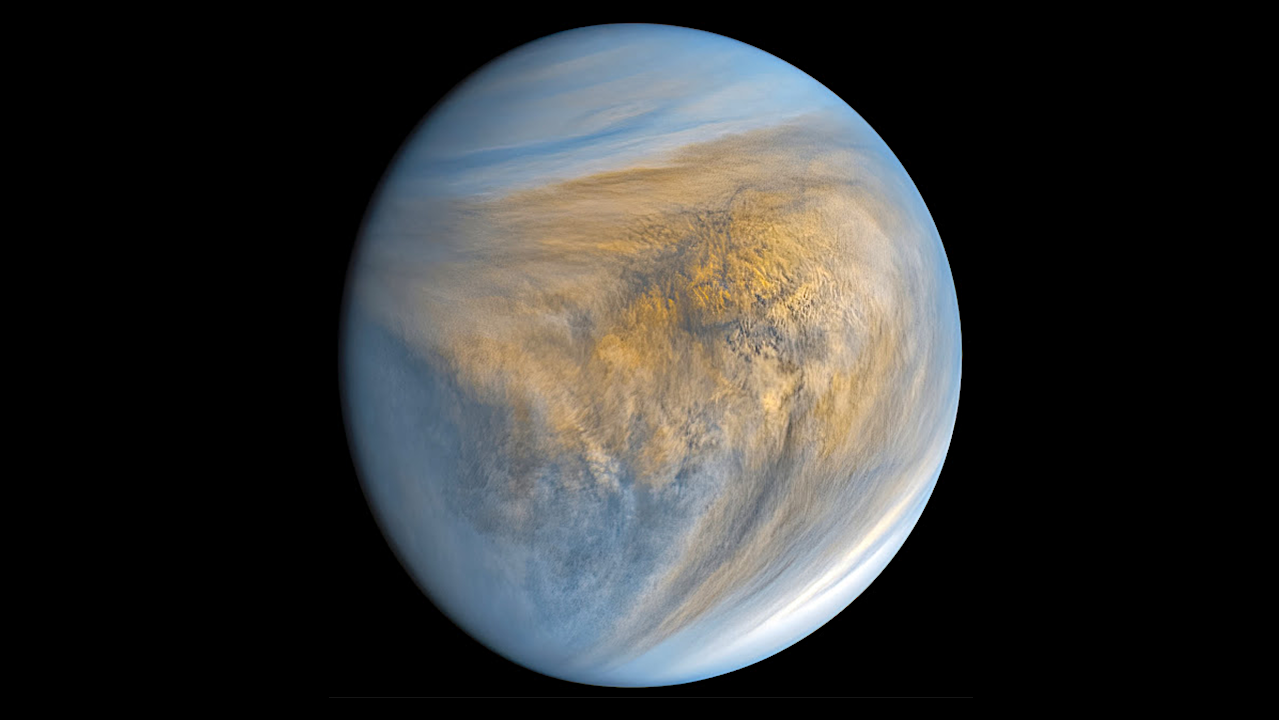
Venus serves as a key example in this research, showcasing how a planet’s primordial rotation may be altered by atmospheric conditions. The findings suggest that, over time, a planet could transition to a retrograde rotation, similar to what is observed on Venus. This notable shift in rotational dynamics raises important considerations for the study of exoplanets.
Understanding Tidal Dynamics and Atmospheric Influence
The research utilizes the creep tide theory to calculate the gravitational tidal torque exerted on planets. By analyzing the differential equations that arise from the joint effects of tidal and atmospheric torques, the team aims to predict the long-term rotational behaviors of exoplanets.
The study indicates that the formation of a dense atmosphere can significantly modify a planet’s initial rotation. For instance, the rotational elements of Venus before and after its rotation reversal reveal substantial variations. This includes changes in obliquity and equinox, as well as shifts in rotation and orbital periods.
The implications of these findings extend beyond Venus. As scientists explore exoplanets within habitable zones, understanding how atmospheres can affect rotational dynamics will be crucial in assessing their potential for sustaining life.
Future Considerations for Astrobiology
This research will be presented at the XIII Taller de Ciencias Planetarias in Montevideo in 2026, providing an opportunity for further discussion on the implications of these findings. The ongoing exploration of planetary atmospheres and their effects on rotation can lead to a deeper understanding of the conditions necessary for life beyond Earth.
The detailed analysis and mathematical framework established in this study are accessible through the preprint available on arXiv, further contributing to the discourse in the fields of Earth and Planetary Astrophysics. As our knowledge of exoplanets expands, the insights gained from Venus’s unique rotational dynamics may play a pivotal role in shaping future research in astrobiology.