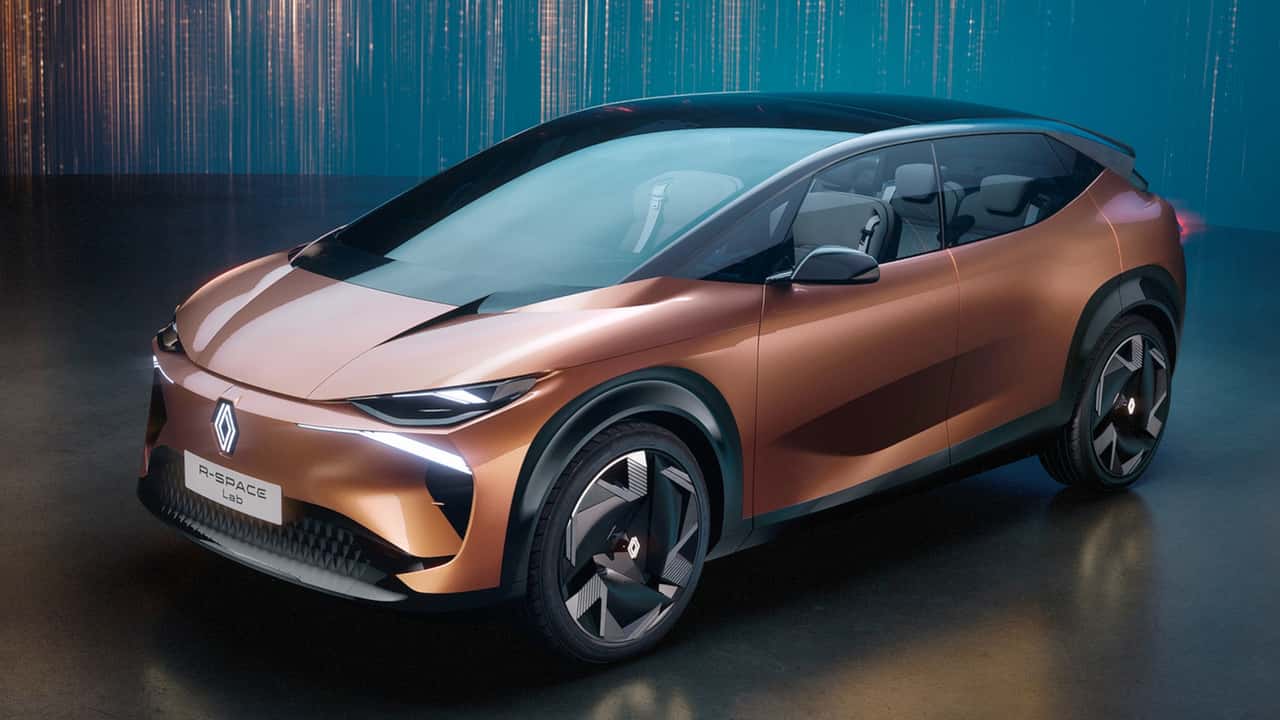
Renault has introduced its latest concept vehicle, the R-Space Lab, designed to explore innovative interior designs and user-centric features for the future of mobility. Developed under the company’s internal innovation platform, Garage Futurama, this concept aims to showcase ideas relevant to vehicles expected to be on the market around 2030. Although it bears similarities to the Megane and the potential revival of the Espace minivan, Renault emphasizes that this model does not correlate with any specific production vehicle plans.
The R-Space Lab embodies Renault’s “voitures à vivre” philosophy, focusing on crafting vehicles that prioritize everyday user needs. Its interior features a heavily digitized cockpit, highlighted by a curved OpenR Panorama display that spans the entire dashboard. This display integrates essential driving information, multimedia functions, and alerts from driver-assistance systems, while most controls are accessible via a central touchscreen.
Innovative Safety and Design Features
One notable addition is a tactile alcohol detector aimed at promoting safety among younger drivers. Renault is also exploring artificial intelligence applications to support features such as a digital safety assistant and personalized vehicle adjustments.
The vehicle’s compact one-box layout measures approximately 4.5 meters (14.8 feet) in length and 1.5 meters (4.9 feet) in height, allowing for a flexible cabin design. By integrating passenger-side airbags into the seats, the dashboard remains streamlined, offering space for a configurable glovebox that can function as storage or transform into a shelf. The front passenger seat can slide significantly back to facilitate communication with rear passengers, enhancing the overall user experience.
In the rear, three individual seats of equal width provide versatility. The seatbacks can fold down, and the seat cushions can flip up, creating additional cargo space as needed. This modular design allows for the accommodation of larger items, such as bicycles, by reconfiguring the seating area. The rear doors open to a full 90 degrees, ensuring easier access.
Emphasizing Space and Usability
A significant aspect of the R-Space Lab’s design is its emphasis on natural light and a feeling of spaciousness. The vehicle features expansive glass areas, with a windshield that flows into a fully glazed roof. Slim body pillars and frameless doors are designed to enhance the cabin’s openness while allowing more daylight to enter.
Renault’s R-Space Lab serves as a platform for examining how spatial design, usability, and digital integration can harmonize in future vehicle concepts. As the automotive industry continues to evolve, Renault’s innovative approach may influence the direction of its upcoming models, potentially steering away from the retro design elements seen in recent vehicles like the Twingo, 4, and 5.
While the R-Space Lab represents a forward-thinking vision, it also raises questions about the future of vehicle design and functionality. The potential revival of the Espace minivan could indicate a shift towards more ambitious designs, reminiscent of the daring Avantime, as Renault seeks to redefine the people mover segment.