An international team of researchers led by experts from Cornell University has made significant strides in understanding how psilocybin, the active compound in magic mushrooms, can help treat depression. Their findings, published on December 5, 2023, in the journal Cell, reveal that a single dose of psilocybin can alter brain connections, potentially providing a pathway for new therapeutic interventions.
The study specifically demonstrates that psilocybin weakens cortico-cortical feedback loops. These loops can trap individuals in cycles of negative thinking, a hallmark of depression. Furthermore, the research indicates that psilocybin enhances pathways to subcortical regions, which play a crucial role in translating sensory perceptions into actions, thereby improving sensory-motor responses.
Innovative Methods Reveal Brain Changes
Led by postdoctoral researcher Quan Jiang and senior author Alex Kwan, a professor of biomedical engineering at Cornell, this research builds on previous studies that have explored the effects of psychiatric drugs on brain circuitry. Kwan’s lab is dedicated to uncovering how substances like psilocybin, ketamine, and 5-MeO-DMT can reshape neural connections with the aim of developing effective treatments for mental health conditions.
In earlier work, Kwan’s team used high-resolution optical imaging to demonstrate that psilocybin induces structural plasticity in the brain. This phenomenon involves the rapid growth of dendritic spines, which are essential for forming synaptic connections. Kwan expressed enthusiasm about the earlier findings but noted a crucial gap in understanding where these new connections form. He stated, “Our study showed that the rewiring in the brain lasts a long time.”
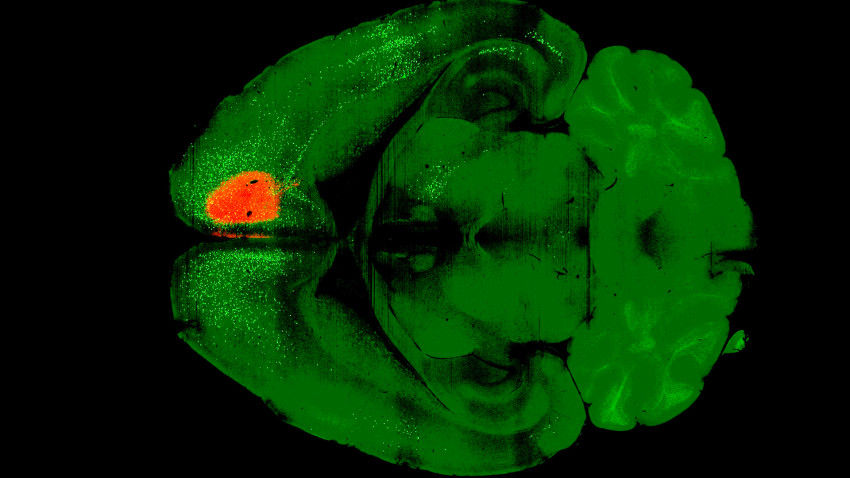
To address this gap, the researchers employed a novel approach that involved combining psilocybin with a modified form of the rabies virus, developed in collaboration with the Allen Institute for Brain Science in Seattle. The rabies virus, known for its ability to traverse synapses, served as a mapping tool for the brain’s intricate wiring.
Mapping the Brain’s Connectivity
The research team administered a single dose of psilocybin to the frontal cortical pyramidal neurons of mice. After a day, they introduced a variant of the rabies virus capable of labeling connected neurons with fluorescent proteins. Following a week of incubation, the researchers imaged the brains of the treated mice and compared them with a control group that received only the virus.
The results highlighted that psilocybin significantly weakened recurrent connections within the cortex—feedback loops that often contribute to the ruminative thought patterns seen in depression. Kwan explained, “Rumination is one of the main points for depression, where people have this unhealthy focus and they keep dwelling on the same negative thoughts.” By diminishing these feedback loops, the research supports the idea that psilocybin can help rewire the brain in ways that disrupt these cycles.
Additionally, the study found that the sensory areas of the brain became more strongly linked to subcortical regions, enhancing the connection between perception and action. Kwan noted that the extent of rewiring was surprising, stating, “This is really looking at brain-wide changes. That’s a scale that we have not worked at before.”
The research also indicated that the level of neural activity in specific brain regions may influence how psilocybin alters connections. This observation led to the intriguing possibility that manipulating neural activity could enhance positive plasticity while mitigating negative effects. Kwan emphasized the therapeutic potential of this insight, suggesting that it could pave the way for targeted treatments that optimize beneficial brain changes.
Co-authors of the study include postdoctoral researcher Ling-Xiao Shao; doctoral student Amelia D. Gilbert; and several collaborators from Yale University, the University of California, Irvine, and the Chinese University of Hong Kong. The research was funded by One Mind and the National Institutes of Health.
This groundbreaking study highlights the promise of psilocybin not just as a treatment for depression, but also as a tool for understanding the brain’s complex neural networks. As research continues, it may lead to innovative approaches in the field of mental health treatment.