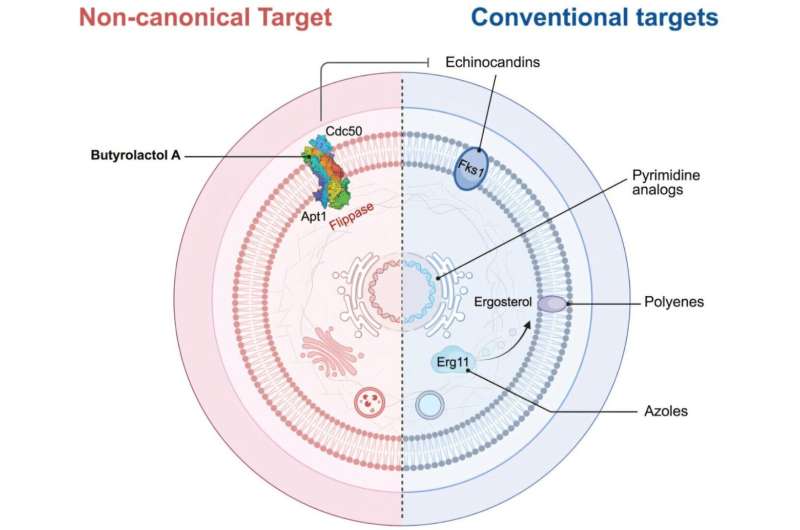
Fungal infections claim millions of lives each year, and current medical treatments often fall short. Researchers at McMaster University have identified a promising molecule, butyrolactol A, which shows potential in combating drug-resistant fungal infections, particularly those caused by the pathogen Cryptococcus neoformans.
Cryptococcus infections pose significant health risks, especially for individuals with weakened immune systems, such as cancer patients and those living with HIV. This pathogen is notorious for its resistance to existing antifungal treatments, alongside other dangerous fungi like Candida auris and Aspergillus fumigatus, all of which are prioritized by the World Health Organization due to their threat to public health. Unfortunately, the current arsenal for treating these infections is limited to three main drug classes, with amphotericin often criticized for its severe side effects.
According to Gerry Wright, a professor in McMaster’s Department of Biochemistry and Biomedical Sciences, the existing treatments are inadequate. He explains that while azoles can inhibit fungal growth, they do not kill the fungi outright. Furthermore, echinocandins have proven ineffective against resistant strains of Cryptococcus.
Exploring New Avenues for Treatment
In response to the urgent need for new treatments, scientists are investigating “adjuvants”—compounds that enhance the effectiveness of existing antifungal medications without directly killing pathogens. Wright’s research team focused on identifying adjuvants capable of sensitizing Cryptococcus to current antifungal drugs. Their efforts led to the discovery of butyrolactol A, a molecule derived from certain Streptomyces bacteria that had been overlooked since its initial discovery in the early 1990s.
Initially, Wright was skeptical about the significance of butyrolactol A. He recalls, “When it showed up in our screens, my first instinct was to walk away from it.” However, postdoctoral fellow Xuefei Chen encouraged further investigation, believing that the molecule could potentially revive a class of antifungal medications.
After extensive research, the team uncovered the mechanism behind butyrolactol A’s efficacy. Chen found that it obstructs a crucial protein complex in Cryptococcus, rendering the fungus more susceptible to antifungal treatments. This breakthrough suggests significant clinical potential, as the same mechanism appears to function in Candida auris as well.
A Decade in the Making
The findings, published in the journal Cell in November 2025, represent over a decade of research. “The initial screening that highlighted butyrolactol A took place in 2014,” Wright notes. “Thanks to Chen’s determination, we have now identified a viable drug candidate and a novel target for future treatments.”
This discovery marks an important milestone for Wright’s lab, which has recently found two antifungal compounds and three new antimicrobial agents within the past year. The implications of this research extend beyond just one molecule; it opens up new avenues for addressing the growing concern of drug-resistant fungal infections, thereby potentially saving countless lives in the future.
As the world grapples with increasing rates of fungal resistance, the work of researchers at McMaster University underscores the importance of innovation in the fight against these deadly pathogens. The advancements made through the study of butyrolactol A could pave the way for more effective treatments, highlighting the need for continued investment in infectious disease research.